A Doll's House Study Guide - AP Lit, SAT Reading, Close Reading, and Essay Practice
A practical guide for AP English Literature, SAT Reading, IB English, and school essays, with key passages, literary devices, practice questions, and thesis models.
This study guide is built for students who need to discuss A Doll's House with textual evidence. If you want the full plot explanation first, start with the main article.
Who This Guide Is For
Use this page to move from plot memory to literary argument. A Doll's House is especially useful for essays about dramatic irony, realistic drama, symbolism, gender, marriage, law, money, reputation, and selfhood because all of those pressures appear inside one room.
By the end, you should be able to:
- explain how Ibsen turns domestic objects into dramatic symbols
- distinguish legal guilt from moral responsibility in Nora's forgery
- analyze Torvald's pet names as characterization, diction, and power
- connect the tarantella, letterbox, Rank's cards, and final door to performance and control
- write about Mrs. Linde and Krogstad without flattening them into helper and villain
- answer SAT-style questions about function, inference, tone, diction, structure, and symbol
1. Quick Review
- Original title: Et dukkehjem
- English title: A Doll's House
- Author: Henrik Ibsen
- First performed: 1879
- Main setting: the Helmer drawing room over Christmas
- Source used here: Project Gutenberg eBook #2542, translated by R. Farquharson Sharp
- Central conflict: Nora secretly borrowed money and forged a signature to save Torvald, then faces exposure when Krogstad threatens to reveal the debt
- Core themes: marriage, performance, law, money, gender, reputation, self-education, motherhood, truth, freedom
- Common exam angles: dramatic irony, symbolic props, realism, social critique, foil characters, moral reversal, ending interpretation
One-sentence summary:
Nora Helmer's hidden loan exposes that her comfortable marriage has treated her less as a moral adult than as a decorative doll.
2. Plot Structure for Exams
Exposition
Nora enters with Christmas parcels and appears playful, childish, and financially careless. Torvald's pet names and money lectures establish the marriage's hierarchy before the audience knows Nora's secret. The room seems cozy, but the hidden macaroons and hidden tree already make domestic happiness depend on concealment.
Inciting Incident
Mrs. Linde's visit leads Nora to reveal the hidden loan. That confession reframes Nora's earlier behavior: her requests for money are tied to repayment, not mere extravagance. Krogstad then threatens to expose Nora's forged signature unless she persuades Torvald to preserve his bank position.
Rising Action
Nora tries to influence Torvald, considers asking Dr. Rank for help, panics over Krogstad's letter, and uses the tarantella to delay Torvald from reading it. The action tightens around controlled access: Torvald controls Krogstad's job, the mailbox key, Nora's public performance, and the language of moral judgment.
Countermovement
Mrs. Linde and Krogstad create a counter-plot. Their reunion shows two adults speaking more plainly than Nora and Torvald can. Krogstad offers to retrieve the letter, but Mrs. Linde insists that the truth must come out. That choice moves the play from blackmail plot to marriage diagnosis.
Climax
Torvald reads Krogstad's accusation and reacts with fear for his reputation rather than gratitude for Nora's sacrifice. Nora's imagined miracle collapses. The important point is not only that he is angry; it is what his anger protects: public honor, male authority, and the household's appearance.
Resolution
Krogstad returns the bond, Torvald declares the danger over, and Nora recognizes that the deeper problem remains. She leaves to educate herself and discover what she believes. The ending is structured as recognition after evidence, not as sudden impulse.
Exam point: do not reduce the play to "Nora leaves." A stronger claim explains how Ibsen prepares the exit through props, dialogue, law, money, and the collapse of Torvald's protective language.
3. Key Original Passages for Close Reading
These passages are short enough to use in essays but rich enough to support device-based analysis. For each passage, identify speaker, dramatic situation, diction, and connection to the play's larger argument.
For AP Lit writing, avoid dropping these lines as proof by themselves. Each quotation needs three moves: first, name the dramatic pressure around the line; second, mark a word or image that carries the pressure; third, connect that word to the structure of the play. In A Doll's House, a short phrase often matters because it is spoken inside a household script.
Passage 1: Torvald's pet name
Is that my little lark twittering out there?
Context: Torvald calls to Nora from his study in Act I.
Close reading: The bird image sounds affectionate, but "little" and "twittering" make Nora ornamental and childlike.
Essay use: Use it for characterization, gendered language, and the marriage's unequal emotional script.
Exam angle: A strong paragraph can argue that the line trains the audience to hear domination inside affection. Torvald does not need to insult Nora openly; the affectionate image already places her below him. The verb "twittering" reduces speech to pleasing sound, which prepares the final reversal when Nora stops performing charming noise and demands serious conversation.
Passage 2: Debt as doctrine
No debt, no borrowing.
Context: Torvald lectures Nora about money early in Act I.
Close reading: The repeated negatives turn financial caution into moral law. The irony is that Nora's secret borrowing saved him.
Essay use: Use it to discuss dramatic irony, money, law, and the gap between public principle and private dependence.
Exam angle: Torvald believes he is teaching Nora financial morality, but the audience later understands that his life and authority have already depended on the act he condemns. The line therefore exposes how moral certainty can be built on ignorance.
Passage 3: Freedom and home
There can be no freedom or beauty about a home life that depends on borrowing and debt.
Context: Torvald expands his rule against borrowing.
Close reading: "Freedom" and "beauty" make debt an aesthetic and moral stain. Torvald imagines home as pure only when its financial structure is visible and respectable.
Essay use: Use this line to connect money with domestic ideology.
Exam angle: The irony is deeper than hypocrisy. Torvald's sentence is partly true: debt does endanger the home. But he cannot see that the danger comes from a social order that makes Nora's moral action illegal and unspeakable.
Passage 4: Law and motive
The law cares nothing about motives.
Context: Krogstad explains why Nora's forgery is dangerous.
Close reading: The sentence separates legal judgment from moral intention. Nora saved Torvald, but the law reads the signature, not the love behind it.
Essay use: Use it for essays on gender, law, and moral contradiction.
Exam angle: Do not write that Ibsen simply rejects law. A more precise claim is that the play tests what happens when law has no language for female sacrifice under unequal conditions. Krogstad's sentence is frightening because it is technically right and morally incomplete at the same time.
Passage 5: Rank's black cross
I shall send you my card with a black cross on it.
Context: Dr. Rank tells Nora how he will announce his approaching death.
Close reading: The calling card turns social etiquette into a death notice. The polite object carries unbearable truth.
Essay use: Use it to discuss hidden decay, mortality, inheritance, and the contrast between manners and reality.
Exam angle: Rank's card belongs to the same symbolic system as the letterbox and bond. All three are small paper objects that carry truths the household cannot comfortably speak. Rank's black cross also darkens the Christmas setting: even in a festive room, mortality and inheritance are already present.
Passage 6: The wonderful thing
A wonderful thing is going to happen!
Context: Nora imagines that Torvald will respond heroically when Krogstad's letter is read.
Close reading: The phrase sounds hopeful, but it is also desperate. Nora needs a miracle because ordinary marriage has no honest language for what she has done.
Essay use: Use it to analyze expectation, dramatic irony, and the collapse of romantic protection.
Exam angle: The "wonderful thing" is not simply Torvald forgiving Nora. Nora imagines he will take public blame, prove his love, and make the illegal act morally intelligible. The phrase becomes tragic because the audience watches her hope depend on a version of Torvald the play has already taught us to doubt.
Passage 7: Serious conversation
Sit down. It will take some time; I have a lot to talk over with you.
Context: After Torvald's two reactions to the letters, Nora changes clothes and begins the final conversation.
Close reading: The plain command reverses the marriage's usual speech pattern. Nora stops coaxing and starts directing the scene.
Essay use: Use it for essays on structure, voice, and Nora's shift from performance to judgment.
Exam angle: This line marks a staging change. The tarantella was frantic motion used to delay truth; the final conversation is stillness used to name truth. A strong essay can compare those two kinds of performance.
Passage 8: The doll-wife
I have been your doll-wife.
Context: Nora names the structure of her marriage in the final conversation.
Close reading: The compound phrase condenses play, possession, beauty, and powerlessness into one image.
Essay use: Use it as central evidence for the title, marriage, and objectification.
Exam angle: This line is useful because it is both metaphor and diagnosis. Nora is not saying only that Torvald was unkind. She is saying the entire form of their home made her into an object arranged for someone else's pleasure. Connect the line to earlier pet names and to the staging of the drawing room.
Passage 9: Duties to the self
I have other duties just as sacred.
Context: Torvald insists that Nora's sacred duties are to husband and children.
Close reading: Nora keeps the religious seriousness of "sacred" but redirects it. She does not reject ethics; she widens the field of ethical obligation.
Essay use: Use it for essays on religion, motherhood, gender ideology, and moral agency.
Exam angle: This line helps avoid a shallow "Nora rejects duty" reading. She claims a different duty: the duty to become a person capable of judgment. That distinction makes the ending ethically serious rather than merely rebellious.
Passage 10: Women and sacrifice
It is a thing hundreds of thousands of women have done.
Context: Torvald says no man would sacrifice honor for the one he loves.
Close reading: Nora turns her private crisis into a collective indictment. The number is broad, not statistical, because it points to historical repetition.
Essay use: Use it to connect the marriage plot with social critique.
Exam angle: This is one of the clearest moments when Nora out-argues Torvald. His honor sounds universal to him, but she reveals that women have long sacrificed social standing, comfort, and safety for family survival. The line expands the play beyond one household without leaving the room.
4. Close Reading Procedure
Step 1: Ask who controls the language
Torvald controls much of the early language: pet names, moral rules, financial judgments, definitions of womanhood, and what counts as childish or serious. Nora survives by speaking inside that script until it fails.
When writing, do not simply say Torvald is patronizing. Show how his language builds a world in which Nora must be small to be loved. "Little" makes Nora miniature; "lark" makes her decorative; "twittering" makes speech into sound. That sequence turns a cute line into evidence about gendered power.
Step 2: Track objects as symbols
The macaroons, Christmas tree, letterbox, tarantella costume, visiting card, bond, rings, keys, and final door all carry meaning. Ibsen's realism works by making ordinary household objects reveal power.
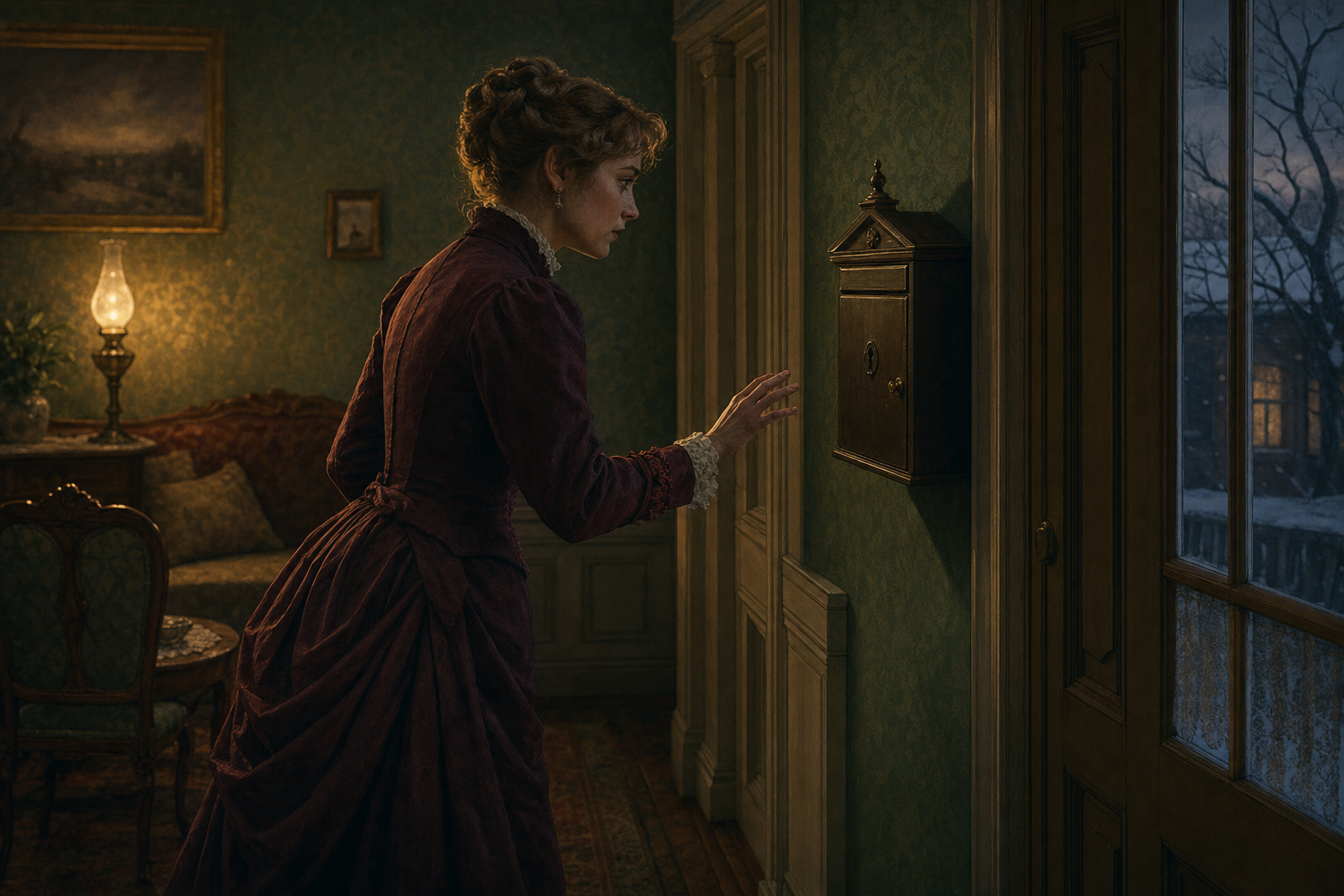
The letterbox is especially useful: it is inside the home, but Nora cannot open it. That spatial fact converts a prop into a miniature model of the marriage. A timed essay can pair objects rather than list them: macaroons and letterbox show secrecy escalating; tarantella and door show performance turning into action; cards and bond show paper carrying social death.
Step 3: Separate law from morality
Nora forged a signature, which is legally wrong. But she did it to save Torvald's life, and the society around her gave her few lawful options.
Strong essays hold both truths at once. The play is not saying forgery is harmless. It is saying a legal system can expose its own injustice when it criminalizes an act of sacrifice while protecting male reputation.
This distinction also helps with Krogstad. He is not morally innocent, but his situation shows that respectability can become a permanent sentence. When Mrs. Linde recognizes him as someone capable of change, the play contrasts human judgment with social labeling.
Step 4: Watch the two-letter structure
The final crisis has two letters, not one. The first letter tests Torvald under threat and reveals fear. The second removes the threat and reveals conditional forgiveness. Nora's decision follows both tests, so the ending is structured as recognition rather than shock value.
In essays, make the sequence explicit. If Torvald only raged, a reader might call it a bad moment. But his relief after the second letter proves that his restored tenderness depends on public safety, not understanding Nora's moral life.
Step 5: Read the ending as education
Nora says she must educate herself. That phrase prevents the ending from becoming simple triumph. She leaves because she does not yet know enough, not because she has solved everything.
This matters for thesis writing. "Nora chooses freedom" is acceptable but thin. "Nora chooses the uncertain conditions required for moral education over the safe role that prevents judgment" is stronger because it explains why uncertainty is part of the ending's ethics.
Worked example: "I have been your doll-wife"
Literal situation: Nora explains that Torvald has treated her as her father once did.
Evidence: doll-wife.
Device: metaphor, title symbol, domestic imagery.
Meaning: Nora's role has been decorative and controlled, not equal or adult.
Essay sentence: Ibsen's "doll-wife" metaphor transforms the pleasant Helmer home into a miniature theatre of possession, revealing that Nora's charm has been cultivated as a substitute for personhood.
5. Why Literary Devices Matter
Dramatic irony: audience knowledge before Torvald
The audience knows Nora's sacrifice before Torvald does. That makes Torvald's money lectures and moral certainty painful rather than merely comic.
This irony also changes the audience's relation to Nora. At first, she may look childish because she hides macaroons and coaxes money from Torvald. Once the loan is revealed, those same behaviors become survival tactics inside a marriage that cannot handle her adult competence.
Symbolic props: domestic objects with public force
Ibsen's objects are realistic, but they are never neutral. The macaroons reveal secret appetite; the letterbox reveals control; Rank's cards announce death through etiquette; the bond turns love into legal evidence; the door becomes the sound of irreversible selfhood.
The props also escalate. The macaroons are private and almost comic; the bond and letter are legal and dangerous; the door is public, audible, and irreversible. That movement lets an essay track how domestic secrecy becomes social rupture.
Foil structure: Nora and Mrs. Linde
Mrs. Linde shows a woman who has lived through work, compromise, and economic necessity. Nora seems sheltered beside her, but Nora's secret labor gradually narrows the gap.
The foil is not a simple contrast between wise woman and foolish woman. Mrs. Linde has been forced into adulthood by economic need, while Nora has been forced to hide adulthood behind childish performance.
Moral reversal: Krogstad and Torvald
At first Krogstad seems morally corrupt and Torvald respectable. By the end, Krogstad can choose mercy, while Torvald's respectability is exposed as fear.
This reversal is one of Ibsen's strongest essay topics. Krogstad has done wrong and uses coercion, but he responds to recognition by changing course. Torvald has social status and clean language, but he responds to danger by abandoning Nora emotionally.
Realism: ordinary room, extraordinary pressure
The play's realism matters because the crisis does not require melodrama. A living room, a job, a debt, a letterbox, and a marriage vocabulary are enough to create tragedy.
Realism also makes the ending harder to dismiss as fantasy. Nora does not escape into a romantic alternative or a heroic public role. She walks out into uncertainty because the ordinary room has become intellectually impossible.
Theatrical performance: tarantella and dollhood
The tarantella is performance inside performance. Nora dances a socially acceptable role while using it to delay catastrophe. Torvald believes he is shaping a beautiful wife for public display; Nora is trying to keep the letter unread.
That double meaning connects to the title. Nora's whole marriage has been theatrical. She has been staged, admired, corrected, and applauded, but not heard. The ending breaks that theatrical arrangement by making her stop performing and speak as a critic of the stage itself.
Counterpoint: Mrs. Linde and Krogstad
The secondary plot is not filler. Mrs. Linde and Krogstad show what Nora and Torvald lack: adult need spoken without ornament. Their reunion is not perfect romance, but it is honest negotiation.
This counterpoint keeps the play from saying all dependency is false. The problem is not needing another person. The problem is a relationship where one person's need becomes control and the other person's sacrifice must stay invisible.
6. Turning Character Analysis into Essay Language
Before writing about a character, ask four questions:
- Role: What function does the character serve in the work?
- Pressure: What desire, fear, rule, or conflict shapes the character?
- Device: How does Ibsen present that character: dialogue, contrast, irony, prop, staging, or timing?
- Essay sentence: What arguable claim can this character support?
Nora Helmer
performer who becomes a moral subject
Nora's arc moves from charming performance to self-education. Her secrecy is not evidence of emptiness; it is evidence that adult capacity has been forced underground.
Essay sentence: Nora's final exit is prepared by the revelation that her childishness has been a role demanded by marriage, not her natural identity.
Torvald Helmer
respectable husband whose love depends on control
Torvald's tenderness is conditional. He loves Nora as long as she confirms his authority and social image.
Essay sentence: Torvald's collapse after Krogstad's letter reveals that his moral language protects reputation more than love.
Mrs. Linde
foil and practical truth-teller
Mrs. Linde's work history gives her a reality Nora has been denied. She pushes the plot toward truth rather than comfort.
Essay sentence: Through Mrs. Linde, Ibsen contrasts decorative domesticity with the hard knowledge produced by work and necessity.
Krogstad
threatening creditor who can still change
Krogstad's social disgrace makes him dangerous, but his reunion with Mrs. Linde shows that moral recovery requires recognition.
Essay sentence: Krogstad functions as a dark mirror of Nora, proving that forgery becomes socially meaningful through reputation and power.
Dr. Rank
polite death inside the household
Rank's inherited illness turns the drawing room into a place where mortality is present but managed through manners.
Essay sentence: Dr. Rank's black-cross cards show how Ibsen uses polite objects to carry truths the Helmer home cannot speak directly.
Anne-Marie
class labor beneath ideal motherhood
Anne-Marie reminds readers that motherhood in the play is shaped by money and work, not only sentiment.
Essay sentence: Anne-Marie's history exposes the class sacrifice hidden beneath Torvald's idealized language about mothers and children.
7. Thesis Builder for Major Themes
Marriage
Performance and Control
Weak thesis: Nora and Torvald have a bad marriage.
Strong thesis: Ibsen presents the Helmer marriage as a performance of affection in which Nora must appear childlike so Torvald can appear protective.
Law
Forgery and Moral Motive
Weak thesis: Nora breaks the law.
Strong thesis: Nora's forgery exposes a conflict between legal respectability and moral sacrifice in a society that restricts women's agency.
Props
Objects as Power
Weak thesis: The letterbox is important.
Strong thesis: The locked letterbox turns domestic space into a symbol of male control because Nora's truth is inside the home but outside her reach.
Reputation
Respectability and Fear
Weak thesis: Torvald cares what people think.
Strong thesis: Torvald's response to the first letter reveals that respectability can imitate morality while actually protecting fear, status, and self-image.
Ending
Selfhood Before Role
Weak thesis: Nora leaves Torvald.
Strong thesis: Nora's exit rejects reconciliation because she recognizes that wifehood and motherhood cannot be ethical if they erase personhood.
8. SAT Reading Sample
These are SAT-style practice questions, not official College Board questions. Each one is tied to a scene, quotation, or recurring device from A Doll's House.
Question 1
Torvald's pet names for Nora primarily function to:
- A. establish their marriage as fully equal
- B. reveal affection mixed with belittling control
- C. prove Nora dislikes animals
- D. introduce a literal bird motif only
Answer: B. The names sound loving but repeatedly make Nora small and decorative. A ignores hierarchy, while C and D literalize figurative language.
Question 2
The macaroons in Act I most strongly symbolize:
- A. Nora's hidden appetite and small acts of secrecy
- B. Torvald's profession at the bank
- C. Mrs. Linde's poverty
- D. Krogstad's legal education
Answer: A. Nora's secret eating reveals how even small pleasures are regulated in the Helmer home.
Question 3
Torvald's "No debt, no borrowing" is ironic because:
- A. he secretly works for Krogstad
- B. Nora's hidden loan helped save his life
- C. Mrs. Linde dislikes money
- D. Dr. Rank owns the house
Answer: B. Torvald's moral certainty depends on ignorance of Nora's sacrifice.
Question 4
Krogstad's claim about law and motives mainly shows:
- A. law always understands private sacrifice
- B. Nora has no moral conflict
- C. legal judgment can ignore ethical intention
- D. Torvald forged the bond
Answer: C. The play separates Nora's motive from the legal meaning of the signature.
Question 5
Mrs. Linde functions as Nora's foil because she:
- A. has lived through work and necessity
- B. has never made a sacrifice
- C. agrees with Torvald about everything
- D. wants Nora to remain childish
Answer: A. Mrs. Linde's adult labor contrasts with Nora's sheltered performance.
Question 6
The locked letterbox is important because it:
- A. proves Torvald has no authority
- B. belongs to Dr. Rank
- C. hides the Christmas tree
- D. contains a secret Nora cannot access
Answer: D. The prop makes male control visible inside the domestic space.
Question 7
The tarantella scene is best read as:
- A. pure celebration with no tension
- B. Nora converting panic into performance
- C. Mrs. Linde's wedding dance
- D. Krogstad's legal argument
Answer: B. Nora dances to delay Torvald and manage her terror through spectacle.
Question 8
Dr. Rank's black-cross card links:
- A. banking and Christmas gifts
- B. law and geography
- C. childhood and school
- D. etiquette and mortality
Answer: D. A polite visiting card becomes a sign of death.
Question 9
The phrase "A wonderful thing is going to happen" mainly reveals Nora's:
- A. certainty that Krogstad has forgiven her
- B. hope that Torvald's love will become public sacrifice
- C. plan to avoid the tarantella
- D. indifference to the letter
Answer: B. Nora imagines Torvald will take the burden on himself, a hope his later reaction destroys.
Question 10
Torvald's reaction to Krogstad's first letter reveals that he:
- A. immediately understands Nora's sacrifice
- B. values reputation before Nora's motive
- C. wants to confess publicly
- D. already knew the secret
Answer: B. He thinks first about scandal, not gratitude or love.
Question 11
The second letter is dramatically important because it:
- A. erases Nora's insight
- B. proves Krogstad never changed
- C. makes Torvald's forgiveness depend on safety
- D. ends the play before Nora speaks
Answer: C. Torvald is forgiving only once the public danger disappears.
Question 12
Nora's command that Torvald sit down before their final conversation marks:
- A. her return to childish play
- B. Torvald's complete control of the scene
- C. a shift from performance to direct speech
- D. the end of all conflict
Answer: C. Nora stops coaxing and begins directing the conversation.
Question 13
Nora's "doll-wife" metaphor suggests that:
- A. she enjoyed being treated as a toy
- B. Torvald works as a dollmaker
- C. the children caused the conflict
- D. her marriage has denied adult equality
Answer: D. The metaphor names decorative control and objectification.
Question 14
The play's single main setting helps Ibsen:
- A. make domestic space reveal social power
- B. avoid all social criticism
- C. turn the play into travel writing
- D. remove suspense
Answer: A. The drawing room becomes a focused site of law, gender, money, and performance.
Question 15
Krogstad's reunion with Mrs. Linde complicates him by showing:
- A. he cannot change
- B. recognition can restore moral possibility
- C. he is Torvald's brother
- D. he never threatened Nora
Answer: B. Mrs. Linde sees him as more than his public disgrace.
Question 16
Anne-Marie, the nurse, quietly emphasizes:
- A. Nora's hatred of children from the start
- B. Torvald's musical talent
- C. the economic cost hidden beneath idealized motherhood
- D. Rank's legal authority
Answer: C. Her history shows that caregiving is shaped by class and money.
Question 17
Nora's final desire to educate herself means:
- A. she wants the right to develop judgment
- B. she already knows every answer
- C. she rejects thinking
- D. she wants Torvald to hire a tutor for himself
Answer: A. The ending is about moral growth, not finished certainty.
Question 18
The Christmas tree most likely reinforces:
- A. Krogstad's career success
- B. Mrs. Linde's childhood
- C. Norway's geography
- D. decorative domestic display under strain
Answer: D. It mirrors the household's attractive surface and concealed disorder.
Question 19
When Nora says "I have other duties just as sacred," she mainly:
- A. denies that ethics matter
- B. claims selfhood as a moral obligation
- C. accepts Torvald's definition of motherhood
- D. changes the topic to banking
Answer: B. Nora widens sacred duty to include the duty to become a judging person.
Question 20
Which claim best captures the play's central conflict?
- A. A holiday party is difficult to plan.
- B. A bank manager dislikes Christmas.
- C. A hidden debt exposes the unequal structure of a respectable marriage.
- D. A doctor cures Nora's illness.
Answer: C. The debt plot reveals marriage, gender, law, and reputation.
9. AP Lit Essay Questions
Use these AP Lit-style prompts to turn scenes into thesis-driven essays.
Essay Question 1
Analyze how Ibsen uses Torvald's pet names to establish the emotional and power structure of the Helmer marriage.
Essay Question 2
Discuss the macaroons as a small but revealing symbol of secrecy, appetite, and control.
Essay Question 3
Analyze Nora's loan and forgery as a conflict between law and moral intention.
Essay Question 4
Compare Nora and Mrs. Linde as foils. How does each woman's economic history shape her understanding of marriage?
Essay Question 5
Write about Krogstad as both antagonist and social mirror. How does the play complicate his guilt?
Essay Question 6
Analyze the letterbox as a symbolic prop. How does its placement inside the home make power visible?
Essay Question 7
Discuss Dr. Rank's function in the play's treatment of inherited decay, secrecy, and unspoken desire.
Essay Question 8
Analyze the tarantella scene as performance under pressure.
Essay Question 9
Explain how Ibsen uses the Christmas setting to contrast domestic warmth with hidden crisis.
Essay Question 10
Analyze Torvald's response to Krogstad's first letter as a revelation of character.
Essay Question 11
Discuss the structural importance of the second letter. Why does Torvald's relief matter as much as his anger?
Essay Question 12
Write about the title metaphor. What does it mean for a home to be a doll's house?
Essay Question 13
Analyze how Ibsen uses realism to make ordinary domestic life politically and morally serious.
Essay Question 14
Compare Torvald and Krogstad as men concerned with reputation. Which one proves more capable of moral change?
Essay Question 15
Discuss Anne-Marie and the children as part of the play's argument about motherhood.
Essay Question 16
Analyze Nora's final conversation as a scene of education rather than simple rebellion.
Essay Question 17
Explain how Ibsen builds suspense through delayed reading, locked objects, and withheld truth.
Essay Question 18
Discuss whether the play presents Nora's exit as liberation, uncertainty, or both.
Essay Question 19
Analyze the relation between performance and authenticity across Nora's arc.
Essay Question 20
Write a thesis-driven essay about the final door slam as both theatrical sound and thematic symbol.
10. Model Thesis Bank
Use these as models, then adapt them to the exact prompt.
- Ibsen uses Torvald's animal pet names to make affection itself reveal hierarchy, turning marriage language into a system of miniature control.
- The macaroons symbolize Nora's hidden appetite for small freedoms inside a marriage that regulates even pleasure.
- Nora's forgery exposes the failure of a legal system that can punish sacrifice while protecting male authority.
- Mrs. Linde functions as Nora's foil by embodying economic adulthood rather than decorative dependence.
- Krogstad's disgrace mirrors Nora's danger, showing how reputation can define morality more harshly than motive.
- The locked letterbox turns the Helmer home into a structure where Nora's truth is present but controlled by Torvald.
- Dr. Rank's illness brings hidden decay into the drawing room and parallels the marriage's concealed sickness.
- The tarantella converts Nora's terror into performance, showing how femininity becomes both prison and temporary weapon.
- The Christmas setting intensifies the contrast between domestic display and moral crisis.
- Torvald's reaction to the first letter reveals that his love is conditional on public safety and private control.
- The second letter does not save the marriage; it clarifies that Torvald's forgiveness is based on reputation rather than understanding.
- The doll-house metaphor shows that the Helmer home is arranged for appearance, play, and possession rather than equality.
- Ibsen's realism gives ordinary props enough pressure to expose an entire social order.
- Torvald and Krogstad both fear social disgrace, but Krogstad proves more capable of moral change because he can respond to recognition.
- Anne-Marie's history reveals the class labor hidden beneath idealized motherhood.
- Nora's final conversation is an education scene because she learns to name the system that shaped her.
- Ibsen builds suspense by making truth physically present but temporally delayed.
- Nora's exit is liberating precisely because it is uncertain; she chooses development over safe dollhood.
- The play defines authenticity as the painful movement from pleasing performance to self-directed judgment.
- The final door slam transforms a domestic sound into a theatrical symbol of modern selfhood.
11. Academic Vocabulary for Essays
- dramatic irony: when the audience knows something a character does not
- realism: drama that presents ordinary life and social conditions seriously
- symbolic prop: an object that carries thematic meaning beyond plot use
- foil: a character who clarifies another through contrast
- domestic ideology: beliefs about gender, marriage, home, and family duty
- reputation: public social standing that shapes private choices
- moral agency: the ability to judge and act ethically for oneself
- legalism: strict reliance on law without attention to motive or context
- patronizing diction: language that sounds kind while asserting superiority
- objectification: treating a person as a thing for use, display, or pleasure
- self-education: the process of forming one's own judgment
- social critique: literature's exposure of unjust norms or institutions
- subtext: meaning beneath what characters openly say
- theatricality: awareness of role, performance, audience, and staging
- delayed revelation: suspense created by postponing important truth
- moral reversal: a shift in how readers judge characters
- respectability: public approval based on manners, status, and conformity
- autonomy: the capacity to make independent choices
- rupture: a decisive break in a relationship or social order
- ambiguous liberation: freedom that is necessary but uncertain