Crime and Punishment Study Guide - AP Lit, SAT Reading, Close Reading, and Essay Practice
A practical guide for AP English Literature, SAT Reading, IB English, and school essays, with key passages, literary devices, practice questions, and thesis work.
This study guide is built for students who need to discuss Crime and Punishment with textual evidence. If you want the full plot explanation first, start with the main article.
Who This Guide Is For
Use this page to move from plot memory to academic argument: textual evidence → close reading → interpretation → thesis.
- organize the plot into exam-ready stages
- turn short textual evidence into interpretation
- connect literary devices to thesis and paragraph work
- practice SAT-style reading questions and AP Lit essay prompts
1. Quick Review
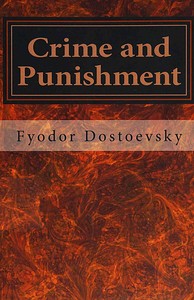
- Original title: Crime and Punishment
- Author: Fyodor Dostoevsky
- Published: 1866
- Source: Project Gutenberg eBook #2554
- Genre: psychological novel, philosophical fiction, Russian realism
- Core themes: Guilt, Theory, Confession, Poverty
- Exam focus: plot structure, character motive, symbolism, diction, irony, and ending interpretation
2. Exam Plot Structure
1. Opening pressure
In hot, crowded Petersburg, Raskolnikov tests whether he can step beyond ordinary morality.
For exam writing, treat this as a meeting point of motive, pressure, and symbol, not as plot alone.
2. Rupture
The murder of the pawnbroker immediately exceeds theory when Lizaveta is also killed.
For exam writing, treat this as a meeting point of motive, pressure, and symbol, not as plot alone.
3. Key Original Passages for Close Reading
These passages are not just memorable quotations. Each one is a compact testing ground for close reading: speaker, situation, diction, syntax, image, tone, and theme all have to work together. In AP Lit, SAT Reading, IB English, and school essays, a short quotation only becomes useful when you can explain how its wording changes the meaning of the scene and the work as a whole.
Read each passage in three passes. First, establish the literal situation. Second, mark charged words or images. Third, turn that observation into an arguable claim. A strong paragraph does not merely identify a theme; it shows how a specific phrase, image, or sentence movement produces that theme.
For exam practice, treat the Context, Close reading, and Essay use notes as a three-part bridge: where the line appears, how it works, and how it can support an essay claim. The goal is to move from quotation to commentary without falling into plot summary.
Passage 1: ordinary and extraordinary men
Ordinary men have to live in submission, have no right to transgress the law... But extraordinary men have a right to commit any crime
Context: Porfiry summarizes Raskolnikov's published theory during the investigation.
Close reading: The blunt categories turn human life into an abstract hierarchy, exposing the violence inside the idea before the confession arrives.
Essay use: Use this for essays about ideology, pride, law, and dehumanization.
Passage 2: I could not do it
My God! Anyway I couldn't bring myself to it! I couldn't do it, I couldn't do it!
Context: Before the murder, Raskolnikov recoils from his own plan.
Close reading: The repetition breaks the smoothness of theory and lets bodily horror interrupt abstraction.
Essay use: Use this to show that conscience exists before legal punishment.
Passage 3: the candle and the eternal book
The candle-end was flickering out in the battered candlestick, dimly lighting up in the poverty-stricken room the murderer and the harlot who had so strangely been reading together the eternal book.
Context: Sonya reads the Lazarus story to Raskolnikov in her poor room.
Close reading: The sentence joins poverty, stigma, murder, and scripture in one visual field, making redemption begin in degradation.
Essay use: Use this for religious imagery, setting, and the novel's refusal to separate suffering from grace.
Passage 4: bowed down to suffering humanity
I did not bow down to you, I bowed down to all the suffering of humanity.
Context: Raskolnikov kneels before Sonya after confronting her social shame and endurance.
Close reading: The correction expands a personal gesture into a recognition of universal suffering.
Essay use: Use this in essays about compassion, humility, and Sonya's moral role.
Passage 5: murder without casuistry
I wanted to murder without casuistry, to murder for my own sake, for myself alone!
Context: Raskolnikov confesses to Sonya and strips away his false explanations.
Close reading: The word casuistry names the rationalizing language he now rejects, while repetition forces motive into the open.
Essay use: Use this for motive, confession, and the collapse of intellectual self-deception.
Passage 6: stand at the cross-roads
Go at once, this very minute, stand at the cross-roads, bow down, first kiss the earth which you have defiled and then bow down to all the world
Context: Sonya tells Raskolnikov what confession must physically require.
Close reading: The command turns repentance into public posture, location, and bodily action.
Essay use: Use this for essays about confession, public shame, and moral return.
Passage 7: beginning of a new story
That is the beginning of a new story--the story of the gradual renewal of a man, the story of his gradual regeneration
Context: The epilogue refuses to make legal punishment the whole ending.
Close reading: The repeated word story makes redemption a future process rather than an instant resolution.
Essay use: Use this for ending interpretation, regeneration, and the limits of punishment.
4. Close Reading Procedure
Close reading Crime and Punishment means tracking the gap between Raskolnikov's theory and the body, rooms, dreams, and conversations that expose its failure. Dostoevsky rarely lets an idea remain abstract. Pride becomes fever. Guilt becomes repetition. Confession becomes posture. Redemption begins in a poor room with a flickering candle and a Gospel reading.
Step 1: Locate the pressure on body and mind
Start with the literal situation: a cramped room, a feverish walk, Porfiry's office, Sonya's room, the crossroads, or Siberia. Then ask what pressure the place puts on Raskolnikov. Is he hiding, rationalizing, resisting compassion, being watched, or moving toward confession?
Step 2: Separate theory from reaction
Raskolnikov's theory claims that "extraordinary" people may transgress, but his body and language repeatedly betray panic. In an essay, compare what he says he believes with what the scene shows: hesitation before the crime, fever after it, nervous sparring with Porfiry, and need for Sonya's witness.
Step 3: Mark moral and religious diction
Words such as "ordinary," "extraordinary," "transgress," "casuistry," "suffering," "defiled," "confess," and "regeneration" carry the novel's argument. Do not define them generally. Explain how the word works in its scene: as excuse, accusation, spiritual pressure, or surrender.
Step 4: Watch repetition and broken syntax
Raskolnikov's language often stutters where theory should sound confident: "I couldn't do it," "for myself alone," "I am a murderer." Repetition is evidence because it shows a mind unable to make one clean explanation. Ask what the repeated phrase is trying to force into the open.
Step 5: Read setting as psychological and social evidence
Petersburg's heat, stairways, taverns, rented rooms, and crowded streets externalize pressure. Sonya's poor room makes grace appear where society sees degradation. The crossroads turns confession into public action. Use setting to connect psychology to poverty, social shame, and spiritual possibility.
Step 6: Convert observation into a claim
End with a claim that names the device, the local effect, and the larger meaning. Avoid "Raskolnikov feels guilty." A stronger claim explains how Dostoevsky makes guilt visible through syntax, illness, setting, or biblical allusion before legal punishment fully arrives.
Worked example: "murder without casuistry"
When Raskolnikov tells Sonya, "I wanted to murder without casuistry, to murder for my own sake, for myself alone," the literal scene is confession. The charged word is "casuistry," which names the rationalizing language he used to dress murder as philosophy. The repeated phrase "for myself" strips away his public excuses and leaves pride exposed.
That gives you a paragraph claim:
Through the repeated confession "for myself," Dostoevsky makes Raskolnikov's theory collapse into naked self-will, showing that the crime began not as social reform but as a test of pride.
5. Why Literary Devices Matter
In Crime and Punishment, literary devices matter because the plot is also an argument about consciousness. The murder happens early, but the novel's real work is done through interior conflict, repeated speech, symbolic rooms, religious allusion, and moral contrasts. For AP Lit and SAT Reading, name the device only after you can explain what pressure it creates.
Psychological realism: thought under pressure
Dostoevsky keeps the reader close to Raskolnikov's feverish calculations, evasions, and sudden reversals. Use psychological realism to explain why punishment begins before prison: his mind becomes the first courtroom.
Ideological diction: "ordinary" and "extraordinary"
The theory divides people into categories that sound intellectual but make violence easier to imagine. In an essay, show how this diction dehumanizes others and lets Raskolnikov mistake classification for moral insight.
Repetition: conscience breaking through language
"I couldn't do it" and "for myself alone" matter because repetition interrupts his explanations. The repeated words make hidden motive audible. Use repetition for paragraphs about guilt, confession, and the limits of rationalization.
Biblical allusion: Lazarus and moral resurrection
Sonya's reading of Lazarus places Raskolnikov beside a story of return from death. The allusion does not make redemption instant; it creates a pattern the epilogue only begins to fulfill. Use it to connect spiritual renewal with poverty and confession.
Setting: Petersburg as pressure
The hot streets, stairways, taverns, and cramped rooms make social suffering feel physical. Setting is useful evidence because Raskolnikov's isolation is never only private; it grows inside poverty, crowding, and urban shame.
Symbolism: candle, crossroads, and earth
The candle in Sonya's room joins poverty and spiritual attention. The crossroads makes confession public. Kissing the earth turns repentance into bodily contact with the world he has "defiled." Use these symbols to discuss moral return.
Foils and doubles: possible selves
Sonya, Svidrigailov, Razumikhin, and Luzhin all reflect possible paths around Raskolnikov: sacrificial compassion, amoral freedom, loyal human connection, and selfish respectability. Use foils to show that the novel tests choices, not just one man's psychology.
Irony: theory undone by consequence
Raskolnikov imagines a controlled act of transgression, but Lizaveta's murder, fever, and confession show consequences escaping theory. This irony supports essays about the failure of ideas that treat people as abstractions.
Ending structure: renewal as unfinished process
The epilogue calls redemption "the beginning of a new story," not the end of one. That structure matters: legal punishment is not enough without inward change. Use the ending to argue that regeneration is gradual, relational, and incomplete.
6. Turning Character Analysis into Essay Language
Character analysis is not a list of personality traits. In literary essays, a character matters because the character carries pressure: desire, fear, social expectation, moral conflict, self-deception, or change. A strong essay connects character to technique and theme in the same line of argument.
Use this four-part method before writing:
- Role: What function does the character serve in the work?
- Pressure: What desire, fear, rule, or conflict shapes the character?
- Device: How does the author present that character: contrast, irony, narration, symbolism, dialogue, setting?
- Essay sentence: What arguable claim can this character support?
A useful sentence frame:
Raskolnikov functions as a divided conscience, and Dostoevsky's use of interior monologue reveals how theory collapses under guilt and human need.
The cards below are meant to turn character notes into essay-ready claims, not to replace close reading. Use them as starting points for paragraphs that still need textual evidence.
Rodion Raskolnikov
theorist, murderer, and divided conscience
Raskolnikov wants to prove that he can step beyond ordinary morality, but his body and mind rebel against the theory before and after the crime.
Essay sentence: Dostoevsky uses Raskolnikov's fever, evasions, and confession to show that conscience survives the theories designed to silence it.
Sonya Marmeladova
suffering witness and moral companion
Sonya is socially humiliated but spiritually steady. She does not excuse Raskolnikov, but she gives him a way to imagine confession and renewal.
Essay sentence: Sonya makes redemption possible by answering Raskolnikov's abstraction with patient, embodied compassion.
Porfiry Petrovich
psychological investigator
Porfiry reads behavior as carefully as evidence. His interrogations make detection a contest over language, pride, and self-knowledge.
Essay sentence: Porfiry turns the investigation into psychological drama by making Raskolnikov confront the theory behind the crime.
Svidrigailov
dark double without repentance
Svidrigailov shows a version of freedom detached from moral return. His presence clarifies what Raskolnikov might become without confession.
Essay sentence: Svidrigailov functions as a dark double whose emptiness reveals the endpoint of desire without responsibility.
Dunya
moral resistance under social pressure
Dunya faces economic and sexual coercion without surrendering her judgment. Her choices expose the selfishness of men who claim to protect her.
Essay sentence: Dunya's resistance broadens the novel's moral conflict beyond Raskolnikov by exposing power used against vulnerable women.
7. Thesis Builder
Guilt
Mind and body
Weak: Raskolnikov feels guilty.
Strong: Dostoevsky makes guilt bodily before it is legal, using fever, fractured thought, and compulsive return to expose the failure of theory.
Theory
Ideas tested by pain
Weak: The theory is wrong.
Strong: The extraordinary-man theory collapses because it cannot answer Lizaveta, Sonya, or any suffering person as more than an obstacle.
Confession
Public return
Weak: He confesses at the end.
Strong: Confession becomes meaningful only when it moves from private torment into public acknowledgment and shared suffering.
Poverty
Social pressure
Weak: The characters are poor.
Strong: Petersburg's poverty turns moral choice into pressure, showing how cramped rooms, debt, hunger, and shame intensify ethical conflict.
8. SAT Reading Sample
These SAT-style questions are based on actual scenes and passages from the work. They are not official College Board questions; use them to practice inference, function, tone, vocabulary, structure, and evidence.
Question 1
When Porfiry summarizes the ordinary and extraordinary men theory, what is the main effect of the categories?
- A. They prove Raskolnikov has already achieved moral greatness.
- B. They make the theory harmless because it stays abstract.
- C. They expose how abstract classification can prepare the mind to excuse violence.
- D. They show Porfiry has no interest in Raskolnikov's ideas.
Answer: C. The categories sound intellectual, but they divide people into those who must obey and those who may "transgress." A accepts the theory too easily, B misses its danger, and D ignores Porfiry's investigative pressure.
Question 2
Before the murder, Raskolnikov repeats that he could not do it. What does the repetition imply?
- A. His conscience and body resist the theory before the law ever intervenes.
- B. The repetition proves he feels no moral conflict.
- C. The line is only a practical complaint about timing.
- D. The scene shows the law has already punished him.
Answer: A. The broken repetition interrupts his theory with panic and revulsion, so guilt begins before the crime is legally discovered. B says the opposite, C makes the line too practical, and D moves punishment too early.
Question 3
In the murder scene, Lizaveta's unexpected arrival mainly changes the meaning of the crime by doing what?
- A. It confirms Raskolnikov's theory works exactly as planned.
- B. It keeps the violence limited to a single chosen victim.
- C. It makes the murder less morally serious.
- D. It destroys the illusion that the act can remain controlled, rational, or selective.
Answer: D. Lizaveta's arrival breaks the fantasy of a calculated, selective crime and exposes violence as uncontrolled consequence. A and B preserve the illusion, while C reduces the scene's moral shock.
Question 4
Raskolnikov's fever after the murder functions primarily as what?
- A. A sign that the murder has left him psychologically untouched.
- B. A physical sign that guilt has entered the body before it becomes confession.
- C. A simple illness unrelated to the moral plot.
- D. A proof that punishment is only legal, not inward.
Answer: B. The fever makes guilt bodily before Raskolnikov can confess or be convicted. A and C detach illness from conscience, and D contradicts the novel's inward punishment.
Question 5
The pawnbroker's apartment returning in memory suggests what?
- A. The apartment disappears from his mind once the crime is over.
- B. Memory protects him from moral pressure.
- C. The physical place becomes mental evidence that he cannot leave behind.
- D. The setting matters only as a route through Petersburg.
Answer: C. The apartment returns as an interior scene of guilt, turning physical space into mental evidence. A and B deny the recurrence, and D treats the setting as mere geography.
Question 6
Porfiry's questioning style is best described as what?
- A. A direct confession scene with no psychological tension.
- B. A neutral conversation about legal procedure only.
- C. A proof that Raskolnikov never fears being understood.
- D. A psychological pressure that makes Raskolnikov read himself while being read by another.
Answer: D. Porfiry's indirect questions make Raskolnikov monitor his own reactions, which turns interrogation into psychological pressure. A is too blunt, B too neutral, and C ignores Raskolnikov's anxiety.
Question 7
The Lazarus reading in Sonya's room mainly links what ideas?
- A. Spiritual renewal, poverty, shame, and the possibility of return from moral death.
- B. Legal punishment, wealth, and social success.
- C. A rejection of all religious language in the novel.
- D. A comic pause that avoids Raskolnikov's guilt.
Answer: A. The Lazarus allusion appears in Sonya's poverty-stricken room beside "the murderer and the harlot," joining degradation to possible renewal. B shifts to law and wealth, C denies the allusion, and D misses the scene's seriousness.
Question 8
When Raskolnikov bows before Sonya, what does his correction about suffering humanity reveal?
- A. He is mocking Sonya's poverty and shame.
- B. The gesture has no meaning beyond politeness.
- C. He recognizes in Sonya a broader human suffering that his theory had ignored.
- D. He believes Sonya is separate from other suffering people.
Answer: C. His correction expands the gesture from Sonya alone to "all the suffering of humanity," challenging the abstract cruelty of his theory. A and B cheapen the scene, and D reverses the expansion.
Question 9
The phrase "murder without casuistry" most directly rejects what?
- A. Sonya's demand for public confession.
- B. The rationalizing language Raskolnikov used to make murder sound like an idea.
- C. The reality that Raskolnikov committed the crime.
- D. The novel's concern with motive.
Answer: B. "Casuistry" names the clever reasoning that let him disguise selfish pride as philosophy. A points to a different scene, while C and D deny the confession's focus on motive.
Question 10
Sonya's command to stand at the crossroads makes confession what kind of act?
- A. A purely inward emotion that no one else should see.
- B. A legal technicality completed by paperwork.
- C. A way to avoid responsibility by leaving the city.
- D. A public and bodily acknowledgment rather than a private feeling.
Answer: D. Sonya's command names a place, posture, kiss, and public audience, making repentance physical and social. A hides confession, B narrows it to law, and C misreads the movement toward accountability.
Question 11
Svidrigailov's role as a double mainly helps the reader see what?
- A. It treats disorder as a rare exception.
- B. It says the exchange removes all uncertainty.
- C. A possible version of freedom without repentance, responsibility, or renewal.
- D. It ignores the calm logic of the claim.
Answer: C. Svidrigailov shows what life without moral return can look like: appetite, manipulation, and despair. A and B remove the threat of his double function, and D ignores why his calmness is disturbing.
Question 12
Dunya's confrontations with Luzhin and Svidrigailov develop which theme?
- A. Moral agency under social and gendered coercion.
- B. Dunya's complete lack of choice in every scene.
- C. The idea that respectability always protects women.
- D. Raskolnikov's theory without reference to family pressure.
Answer: A. Dunya resists men who try to control her through money, reputation, and threat, so her scenes widen the novel's moral pressure beyond Raskolnikov. B erases her resistance, C trusts false respectability, and D narrows the theme too much.
Question 13
Marmeladov's tavern speech mainly presents poverty as what?
- A. A sign that poor characters deserve contempt.
- B. An irrelevant comic interruption.
- C. A private problem with no social meaning.
- D. A social condition that produces shame while demanding compassion.
Answer: D. Marmeladov exposes degradation and self-reproach, but the scene also asks for pity toward suffering people. A accepts contempt, and B and C detach the tavern speech from the novel's social ethics.
Question 14
Razumikhin's loyalty functions as a contrast to what?
- A. It describes the game or system as stable and fair.
- B. Raskolnikov's dramatic isolation and self-dividing pride.
- C. It focuses on surface play and ignores coercion.
- D. It claims authority has no influence over the scene.
Answer: B. Razumikhin's practical care and loyalty expose how far Raskolnikov has withdrawn into pride and secrecy. A, C, and D are generic distractors that do not fit their character contrast.
Question 15
The repeated stairways and thresholds in the novel often suggest what?
- A. Movement between secrecy and exposure, crime and confession, fall and return.
- B. Decorative architecture with no thematic work.
- C. Social advancement without moral conflict.
- D. Escape from the city without consequence.
Answer: A. Stairways and thresholds repeatedly place Raskolnikov between hidden crime and possible exposure. B ignores the motif, while C and D simplify movement into progress or escape.
Question 16
Luzhin's false charity chiefly reveals what about respectability?
- A. It always protects vulnerable people from shame.
- B. It has no connection to money or power.
- C. It can disguise manipulation while using moral language for selfish ends.
- D. It proves Luzhin's generosity is sincere.
Answer: C. Luzhin uses respectable language and charity to control reputation and humiliate others. A and D trust his performance, and B ignores the financial leverage behind it.
Question 17
The dream of the beaten mare complicates Raskolnikov by showing what?
- A. He has no emotional response to suffering.
- B. Violence is only an abstract idea to him.
- C. The dream confirms his theory without conflict.
- D. Buried compassion remains inside a mind trying to justify violence.
Answer: D. The child's horror at the mare's suffering reveals compassion that his later theory tries to suppress. A and C deny the emotional conflict, and B ignores the dream's vivid bodily violence.
Question 18
In the Siberian epilogue, legal punishment alone is shown to be what?
- A. Insufficient without inward change and renewed relation to another person.
- B. Complete proof that regeneration has already finished.
- C. Unnecessary because guilt was never real.
- D. Purely political rather than moral.
Answer: A. Siberia supplies legal punishment, but the epilogue waits for inward change and renewed attachment to Sonya. B makes renewal too complete, C denies guilt, and D narrows punishment to politics.
Question 19
The phrase "beginning of a new story" affects the ending by doing what?
- A. It says the ending erases every question raised earlier.
- B. It treats the frame as unrelated to real rules.
- C. It makes redemption a future process rather than a completed reward.
- D. It claims imagination is rejected entirely.
Answer: C. The wording delays full closure: regeneration has begun, but it must unfold gradually beyond the main plot. A erases conflict too quickly, while B and D do not fit the epilogue's spiritual focus.
Question 20
Across the novel, cramped rooms and crowded streets mainly do what?
- A. Make the novel feel spacious and socially comfortable.
- B. Externalize psychological pressure and social suffering through setting.
- C. Remove poverty from the reader's attention.
- D. Turn Petersburg into a decorative travel map.
Answer: B. The cramped rooms and crowded streets make mental pressure and poverty visible in the environment. A says the opposite, while C and D reduce setting to decoration.
9. AP Lit Essay Questions
Use these prompts to practice building a defensible literary argument from specific scenes, not from plot summary alone.
Essay Question 1
Analyze how the extraordinary-man theory turns human beings into categories. How does Dostoevsky expose the violence hidden inside abstract reasoning?
Essay Question 2
Before the murder, Raskolnikov repeatedly recoils from his own plan. Explain how hesitation, disgust, and bodily reaction complicate his intellectual confidence.
Essay Question 3
The murder of Lizaveta breaks the logic Raskolnikov tries to impose on the crime. Discuss how this scene destroys the fantasy of controlled transgression.
Essay Question 4
Raskolnikov's fever and isolation appear before legal punishment. Analyze how the novel makes guilt psychological and physical.
Essay Question 5
The pawnbroker's apartment returns as memory and pressure. Explain how setting becomes evidence inside Raskolnikov's mind.
Essay Question 6
Porfiry investigates through conversation as much as proof. Discuss how interrogation becomes a struggle over language and self-knowledge.
Essay Question 7
Sonya's reading of Lazarus takes place in poverty and disgrace. Analyze how the scene connects degradation with the possibility of renewal.
Essay Question 8
Raskolnikov's bow before Sonya is both personal and universal. Explain how the gesture changes the novel's treatment of suffering.
Essay Question 9
The confession to Sonya strips away false motives. Analyze how repeated first-person language reveals pride, shame, and self-knowledge.
Essay Question 10
The crossroads command turns confession into a public act. Discuss why Dostoevsky makes repentance spatial and bodily.
Essay Question 11
Svidrigailov is not simply a villain. Explain how he operates as a dark double for Raskolnikov and clarifies the stakes of repentance.
Essay Question 12
Dunya resists men who treat her as a solution to their desires. Analyze how her choices expand the novel's critique of coercive power.
Essay Question 13
Marmeladov's tavern confession mixes self-accusation, performance, and social suffering. Discuss its function in the novel's moral world.
Essay Question 14
Compare Razumikhin's practical loyalty with Raskolnikov's isolation. How does ordinary decency become a literary counterforce?
Essay Question 15
Analyze the motif of stairs, thresholds, and crossings. How do these spaces mark movement between secrecy, exposure, and possible return?
Essay Question 16
Luzhin uses respectable language to disguise selfishness. Explain how Dostoevsky exposes moral calculation through tone and scene structure.
Essay Question 17
The dream of the beaten mare appears before the crime. Discuss how dream imagery reveals a compassion that the theory cannot erase.
Essay Question 18
The Siberian epilogue has often divided readers. Defend an interpretation of why Dostoevsky ends with gradual renewal rather than simple punishment.
Essay Question 19
Write an essay on Sonya as witness rather than passive saint. How does her presence reshape confession, suffering, and moral possibility?
Essay Question 20
Analyze how St. Petersburg functions as moral landscape. Use rooms, streets, heat, crowding, or taverns to show how setting pressures ethical choice.
10. Model Thesis Bank
- Dostoevsky uses the extraordinary-man theory to show how abstract ideas become dangerous when they classify living people as material for proof.
- Raskolnikov's pre-crime revulsion reveals that conscience resists the murder before legal punishment or social judgment begins.
- Lizaveta's death destroys the illusion of rational transgression by forcing Raskolnikov's theory to confront an unplanned innocent victim.
- Raskolnikov's fever turns guilt into bodily evidence, proving that punishment begins inside the self before the state can name it.
- The pawnbroker's apartment becomes a recurring mental site, showing that crime leaves spatial traces in memory.
- Porfiry's interrogations transform detective work into psychological reading, where guilt appears through language, pride, and evasion.
- The Lazarus scene joins poverty, stigma, and scripture to suggest that renewal begins where social respectability has failed.
- Raskolnikov's bow before Sonya breaks his abstraction by recognizing suffering humanity in a person his society despises.
- The phrase "murder without casuistry" marks the collapse of rationalization and the beginning of brutal self-knowledge.
- Sonya's crossroads command makes repentance public and embodied, insisting that inward guilt must become accountable action.
- Svidrigailov shows the emptiness of freedom without repentance, making him a dark alternative to Raskolnikov's possible renewal.
- Dunya's resistance exposes the moral poverty of men who turn economic vulnerability into control.
- Marmeladov's tavern confession makes poverty both personal shame and social indictment, demanding judgment and compassion at once.
- Razumikhin's loyalty challenges Raskolnikov's isolation by showing ordinary care as an ethical force.
- The motif of stairs and thresholds maps the novel's movement between secrecy, exposure, fall, and confession.
- Luzhin's false charity reveals how respectable language can become a tool for domination.
- The beaten mare dream preserves compassion inside Raskolnikov before the crime, undermining the hardness his theory requires.
- The Siberian epilogue argues that legal punishment is incomplete unless it opens into inward transformation and relation.
- Sonya functions as witness because she refuses both to excuse Raskolnikov and to reduce him permanently to his crime.
- St. Petersburg externalizes moral pressure through heat, crowding, debt, and cramped rooms, making social suffering inseparable from psychology.
11. Academic Vocabulary for Essays
- diction: word choice that shapes tone and meaning
- irony: a gap between appearance and reality
- symbolism: an object, image, or action carrying larger meaning
- narrative structure: the arrangement of events and perspectives
- foil: a character who clarifies another through contrast
- motif: a repeated image, word, or situation
- moral agency: the ability to choose and bear responsibility
- social pressure: force created by class, reputation, money, law, or family
- self-deception: a character's refusal to recognize an uncomfortable truth
- consequence: the cost or result of an action