The Count of Monte Cristo Study Guide - AP Lit, SAT Reading, Close Reading, and Essay Practice
A practical guide for AP English Literature, SAT Reading, IB English, and school essays, with key passages, literary devices, practice questions, and thesis work.
This study guide is built for students who need to discuss The Count of Monte Cristo with textual evidence. If you want the full plot explanation first, start with the main article.
Who This Guide Is For
Use this page to move from plot memory to academic argument: textual evidence → close reading → interpretation → thesis.
- organize the plot into exam-ready stages
- turn short textual evidence into interpretation
- connect literary devices to thesis and paragraph work
- practice SAT-style reading questions and AP Lit essay prompts
1. Quick Review
- Original title: The Count of Monte Cristo
- Author: Alexandre Dumas
- Published: 1844
- Source: Project Gutenberg eBook #1184
- Genre: historical adventure novel, revenge narrative
- Core themes: Revenge, Providence, Identity, Time
- Exam focus: plot structure, character motive, symbolism, diction, irony, and ending interpretation
2. Exam Plot Structure
1. Opening pressure
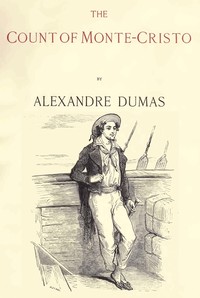
Young sailor Edmond Dantès is about to become captain and marry Mercédès.
For exam writing, treat this as a meeting point of motive, pressure, and symbol, not as plot alone.
2. Rupture
Danglars, Fernand, and Villefort converge in betrayal, and Dantès is imprisoned as a Bonapartist threat.
For exam writing, treat this as a meeting point of motive, pressure, and symbol, not as plot alone.
3. Key Original Passages for Close Reading
These passages are not just memorable quotations. Each one is a compact testing ground for close reading: speaker, situation, diction, syntax, image, tone, and theme all have to work together. In AP Lit, SAT Reading, IB English, and school essays, a short quotation only becomes useful when you can explain how its wording changes the meaning of the scene and the work as a whole.
Read each passage in three passes. First, establish the literal situation. Second, mark charged words or images. Third, turn that observation into an arguable claim. A strong paragraph does not merely identify a theme; it shows how a specific phrase, image, or sentence movement produces that theme.
For exam practice, treat the Context, Close reading, and Essay use notes as a three-part bridge: where the line appears, how it works, and how it can support an essay claim. The goal is to move from quotation to commentary without falling into plot summary.
Passage 1: the Pharaon returns to Marseilles
it is always an event at Marseilles for a ship to come into port
Context: The novel opens with a public arrival before betrayal has begun.
Close reading: The phrase makes Edmond's private happiness visible inside a watching commercial city.
Essay use: Use this for essays about public reputation, social visibility, and how innocence enters a political world.
Passage 2: providence watches over the deserving
There's a providence that watches over the deserving.
Context: Morrel blesses Edmond just before the systems around him turn hostile.
Close reading: The religious confidence is sincere, but later events test whether providence can be imitated by human revenge.
Essay use: Use this to discuss justice, providence, and the danger of making oneself an agent of fate.
Passage 3: arrested in the name of law
Edmond Dantes, replied the magistrate, I arrest you in the name of the law!
Context: Edmond is arrested at his betrothal feast through legal language he cannot answer.
Close reading: The official phrase gives private envy the voice of public authority.
Essay use: Use this for arguments about law, paperwork, and the conversion of jealousy into state violence.
Passage 4: hatred and vengeance
Hatred is blind, rage carries you away; and he who pours out vengeance runs the risk of tasting a bitter draught.
Context: The novel directly names the danger that will later define the Count's project.
Close reading: The metaphor of drinking vengeance makes revenge something the avenger must also consume.
Essay use: Use this for essays about revenge as self-poisoning rather than simple punishment.
Passage 5: Haydee turns trauma into evidence
It was a gloomy night; the wind was howling, and the rain fell in torrents.
Context: Haydee tells the history of betrayal at Yanina before Fernand is publicly exposed.
Close reading: The storm imagery turns personal memory into historical accusation with dramatic pressure.
Essay use: Use this for testimony, history, and the movement from hidden crime to public evidence.
Passage 6: I am Edmond Dantes
I am he whom you sold and dishonored--I am he whose betrothed you prostituted--I am he upon whom you trampled that you might raise yourself to fortune.
Context: The Count finally reveals the buried Edmond to Danglars.
Close reading: The repeated "I am" restores the victim underneath the performance of the Count.
Essay use: Use this for identity, recognition, and the moral cost of disguise.
Passage 7: wait and hope
all human wisdom is summed up in these two words,--Wait and hope.
Context: The final letter shifts the novel from control toward endurance.
Close reading: The compressed maxim replaces elaborate revenge plots with restraint, uncertainty, and time.
Essay use: Use this for ending interpretation, mercy, and the limits of human judgment.
4. Close Reading Procedure
Close reading The Count of Monte Cristo means asking how private injury becomes public evidence. Dumas builds the novel from documents, names, testimony, rumors, legal forms, prison lessons, and staged revelations. A strong paragraph does not simply say "Edmond wants revenge." It explains how the language of law, providence, wealth, and identity turns revenge into a moral test.
Step 1: Locate the public system around the private motive
Ask which system frames the scene: shipping trade, betrothal, police investigation, prison, inheritance, Paris society, courtroom testimony, or family reputation. Edmond's arrest is not only personal betrayal; it is betrayal translated into legal authority.
Step 2: Ask who controls evidence
Much of the novel turns on who can hide, destroy, produce, or interpret evidence. Danglars writes; Villefort suppresses; Faria teaches Edmond to read systems; Haydee testifies; the Count stages recognition. In essays, connect evidence to power.
Step 3: Track names, titles, and masks
Edmond Dantes, prisoner, Abbe Busoni, Sinbad, and the Count are not interchangeable labels. Each name gives him a different kind of power and distance from his former self. When a scene uses titles or self-naming, ask whether identity is being hidden, performed, restored, or judged.
Step 4: Mark legal, economic, and religious diction
Words such as "law," "fortune," "providence," "debt," "vengeance," "testimony," and "hope" carry the novel's central conflict. Legal words can hide private ambition. Religious words can dignify revenge. Economic words can reduce human life to calculation. Explain the pressure of the word in its scene.
Step 5: Read setting as moral pressure
Marseilles makes Edmond's future public; Chateau d'If turns time into punishment; Monte Cristo turns hidden treasure into power; Paris salons turn revenge into performance; courtrooms turn buried history into public record. Setting is not background. It decides what kind of truth can appear.
Step 6: Convert observation into a claim
End with a claim that names the device, the scene effect, and the moral question. Avoid "This shows revenge is bad." A stronger claim explains how Dumas makes revenge look like justice before forcing readers to see its danger.
Worked example: Edmond's arrest
When Villefort says, "I arrest you in the name of the law," the literal scene is Edmond's sudden arrest at his betrothal feast. The charged phrase is "in the name of the law." It sounds official and impersonal, but the reader knows that the legal process has been fed by an anonymous letter and Villefort's private self-protection.
That gives you a paragraph claim:
By placing Edmond's arrest inside the language of public law, Dumas shows how private envy and political fear can borrow institutional authority, turning an innocent man's happiness into state-sanctioned punishment.
5. Why Literary Devices Matter
In The Count of Monte Cristo, literary devices matter because the plot is full of action, but the exam argument lives in the pattern beneath the action. The question is not only what the Count does. It is how Dumas uses disguise, documents, setting, repetition, and irony to test whether human beings can safely act as providence.
Symbolism: treasure as moral instrument
The treasure of Monte Cristo is not simply reward. It gives Edmond the material power to repay kindness, punish enemies, and manipulate lives. Use the treasure in essays about whether compensation can become domination when wealth is joined to grievance.
Disguise: identity as performance
The Count's aliases let him enter different social worlds while hiding Edmond Dantes. Disguise is useful evidence because it creates power and isolation at once. A strong essay can argue that performance protects the victim but also delays his return to human feeling.
Legal diction: public language hiding private guilt
Phrases such as "in the name of the law" give betrayal an official sound. Villefort's legal authority becomes morally corrupt because it protects his ambition rather than truth. Use legal diction to show how Dumas separates justice from institutions that only imitate justice.
Dramatic irony: readers know what society does not
Paris society admires the Count without knowing the injured sailor underneath the mask. This gap lets Dumas turn social scenes into traps: the guilty speak freely because they do not recognize the witness before them. Use dramatic irony for essays about exposure and hidden history.
Setting: prisons, salons, and courts as truth machines
Chateau d'If teaches Edmond patience and system-reading; Paris salons let him stage revenge through manners; courtrooms let testimony force buried crimes into public view. Setting gives each truth a different form. Use setting to avoid summarizing the plot as a simple revenge chain.
Motif: documents, letters, and testimony
The denunciation letter, Villefort's records, Haydee's testimony, and trial revelations repeat one pattern: the past returns through evidence. This motif helps explain the novel's structure, where secret crimes do not stay private forever.
Repetition: self-naming and restored identity
When the Count repeats "I am he" to Danglars, the syntax restores Edmond beneath the constructed persona. The repetition is not decorative; it makes recognition unavoidable. Use this device for essays about identity, memory, and the moral cost of masks.
Diction of providence: justice or self-deception
"Providence" can express faith, but the Count's project risks turning the word into a justification for control. Contrast Morrel's grateful trust with the Count's staged omnipotence. This device supports essays about the danger of confusing divine justice with personal revenge.
Ending maxim: compression and moral revision
"Wait and hope" compresses the sprawling novel into two verbs. After hundreds of pages of planning, punishment, and revelation, the final maxim shifts value toward endurance and humility. Use it to argue that the ending revises revenge rather than simply celebrating it.
6. Turning Character Analysis into Essay Language
Character analysis is not a list of personality traits. In literary essays, a character matters because the character carries pressure: desire, fear, social expectation, moral conflict, self-deception, or change. A strong essay connects character to technique and theme in the same line of argument.
Use this four-part method before writing:
- Role: What function does the character serve in the work?
- Pressure: What desire, fear, rule, or conflict shapes the character?
- Device: How does the author present that character: contrast, irony, narration, symbolism, dialogue, setting?
- Essay sentence: What arguable claim can this character support?
A useful sentence frame:
Dantes functions as both wronged victim and self-made judge, and Dumas's use of disguise reveals how revenge can turn justice into performance.
The cards below are meant to turn character notes into essay-ready claims, not to replace close reading. Use them as starting points for paragraphs that still need textual evidence.
Edmond Dantes / the Count
victim, strategist, and tempted judge
Edmond is remade by prison, Faria's teaching, and treasure. As the Count, he can expose guilt, but his power tempts him to confuse justice with total control.
Essay sentence: Dumas uses Edmond's transformation into the Count to show that revenge may reveal truth while also endangering the avenger's moral judgment.
Mercedes
lost love and moral memory
Mercedes remembers Edmond before the Count existed. Her recognition interrupts the revenge plot by restoring the human life that punishment cannot recover.
Essay sentence: Mercedes makes memory a moral force because she sees the wounded Edmond beneath the Count's theatrical power.
Abbe Faria
teacher, father figure, and source of power
Faria gives Edmond language, history, strategy, and treasure. His gifts liberate Edmond from prison while also giving revenge a terrifying reach.
Essay sentence: Faria's legacy makes knowledge double-edged: it frees Edmond while equipping him to become a hidden judge.
Villefort
public justice hiding private guilt
Villefort protects his career by sacrificing Edmond. His later ruin shows that law becomes corrupt when its guardian uses it for self-preservation.
Essay sentence: Villefort embodies the novel's critique of institutions that punish the innocent to protect respectable guilt.
Danglars
envy, calculation, and social ascent
Danglars turns resentment into paperwork and later into financial power. His punishment mirrors his hunger for profit and control.
Essay sentence: Danglars shows how betrayal can become socially rewarded until the narrative forces hidden guilt into the open.
7. Thesis Builder
Revenge
Justice or control?
Weak: The book is about revenge.
Strong: Dumas presents revenge as both exposure and temptation, because the Count's punishments reveal crimes while pushing him toward godlike control.
Providence
Human judgment
Weak: Providence matters.
Strong: The novel tests whether Edmond can serve justice without mistaking his own design for providence.
Identity
Masks and recognition
Weak: The Count has many disguises.
Strong: The Count's masks create power, but recognition scenes with Mercedes and Danglars reveal the wounded Edmond they also conceal.
Time
Prison and patience
Weak: Time passes in the novel.
Strong: Time first turns Edmond into a strategist, then the ending asks him to accept waiting and hope rather than total control.
8. SAT Reading Sample
These SAT-style questions are based on actual scenes and passages from the work. They are not official College Board questions; use them to practice inference, function, tone, vocabulary, structure, and evidence.
Question 1
In the opening arrival of the Pharaon, which claim best explains the function of the watching city?
- A. It treats Marseilles as a neutral backdrop with no social force.
- B. It claims the scene is mainly about nautical description.
- C. It says Edmond's future is already private and protected.
- D. It places Edmond's private future inside public systems of trade, reputation, and politics.
Answer: D. The ship's arrival is "an event" because Marseilles is watching, trading, judging, and spreading reputation. A and B reduce the city to scenery, while C misses how public visibility makes Edmond vulnerable.
Question 2
When Danglars watches Edmond with hate while Morrel watches with affection, what is the best inference?
- A. The scene proves Edmond has already lost Morrel's trust.
- B. The contrast is only a description of where characters stand.
- C. The same public success produces admiration in one observer and resentment in another.
- D. Danglars' reaction is unrelated to later betrayal.
Answer: C. Dumas places admiration and resentment around the same promotion, showing that Edmond's rise creates social pressure before the plot turns violent. A contradicts Morrel's support, and B and D underread the contrast.
Question 3
The anonymous denunciation letter mainly transforms betrayal by doing what?
- A. It converts private envy into official language that the state can act upon.
- B. It proves the conspirators are willing to accuse themselves publicly.
- C. It makes the betrayal purely emotional and legally harmless.
- D. It removes politics from Edmond's arrest.
Answer: A. The letter gives jealousy a form the authorities can process, so private resentment becomes state action. B ignores the anonymity, C denies the legal effect, and D misses the Bonapartist danger.
Question 4
During Edmond's examination by Villefort, what does the legal setting emphasize?
- A. Edmond's innocence makes the examination safe.
- B. Innocent speech can be trapped when power controls which facts become dangerous.
- C. Villefort is interested only in discovering truth.
- D. The scene has no relation to politics or family reputation.
Answer: B. Edmond answers plainly, but Villefort controls which facts count as dangerous because the letter threatens his own father. A and C trust the legal process too much, and D ignores the political context.
Question 5
In the Chateau d'If scenes, the repeated marking of time most strongly suggests what?
- A. Edmond's imprisonment is brief and has little effect on identity.
- B. Time functions only as background chronology.
- C. The prison erases memory instead of sharpening it.
- D. Imprisonment steals Edmond's former life while training him in patience, memory, and system-reading.
Answer: D. Chateau d'If takes Edmond's youth and future, but the long duration also prepares the discipline he later uses as the Count. A and B shrink the prison's force, and C misses how memory fuels revenge.
Question 6
Faria's teaching in prison functions chiefly to do what?
- A. Turn Edmond's suffering into interpretive power that can later liberate and endanger him.
- B. Make Edmond forget the causes of his imprisonment.
- C. Prove that education removes all moral risk.
- D. Keep the prison scenes separate from the revenge plot.
Answer: A. Faria teaches Edmond languages, history, logic, and the meaning of the conspiracy, turning suffering into analysis. B contradicts Edmond's awakening, C ignores the danger of his new power, and D misses the prison's structural role.
Question 7
The treasure of Monte Cristo is best understood as what kind of symbol?
- A. It is only a reward for patience with no ethical complication.
- B. It represents ordinary inheritance law.
- C. A material instrument that tests whether compensation becomes justice or domination.
- D. It removes Edmond from all responsibility for his later actions.
Answer: C. The treasure lets Edmond repair some lives and orchestrate punishment, so it tests how power changes justice. A and D make the wealth morally simple, and B misidentifies its symbolic function.
Question 8
When Edmond becomes the Count, what does the new persona allow?
- A. A return to his old life without disguise.
- B. A theatrical form of power that lets him expose others while hiding himself.
- C. An escape from memory and recognition.
- D. A proof that names have no social effect.
Answer: B. The Count persona lets Edmond enter salons, manipulate conversations, and observe the guilty without being recognized. A and C deny the mask's function, and D ignores the novel's obsession with names.
Question 9
Mercedes recognizing the Count most directly complicates revenge by doing what?
- A. It proves the disguise has erased Edmond completely.
- B. It turns Mercedes into a figure unrelated to the past.
- C. It makes revenge easier by removing emotional conflict.
- D. It restores the emotional past that the Count's mask tries to manage.
Answer: D. Mercedes recognizes what the Count tries to bury, so revenge has to face love, loss, and time. A and C overstate the mask's success, and B detaches her from the scene's emotional pressure.
Question 10
Villefort's careerism helps develop which larger idea?
- A. Public office automatically guarantees moral judgment.
- B. Villefort's ambition has no effect beyond his own household.
- C. Public law becomes morally unstable when used to protect private ambition.
- D. Political reputation is irrelevant to Edmond's punishment.
Answer: C. Villefort uses his office to protect his career and family name, so law becomes a tool of self-preservation. A trusts office too much, and B and D make his ambition too small.
Question 11
Haydee's testimony against Fernand changes the plot because it does what?
- A. Transforms personal trauma into public historical evidence.
- B. Makes Fernand's crime remain a private rumor.
- C. Removes history from the revenge plot.
- D. Shows that testimony has no social consequence.
Answer: A. Haydee's story brings the betrayal at Yanina into public record, forcing Fernand's respectable identity to collapse. B, C, and D all deny the scene's evidentiary force.
Question 12
The Villefort household poisonings mainly extend which pattern?
- A. Domestic life remains untouched by earlier crimes.
- B. The Count's plan has no unintended consequences.
- C. Hidden guilt disappears once it is ignored.
- D. Hidden guilt returns as domestic catastrophe rather than remaining safely buried.
Answer: D. Villefort's household turns secrecy into catastrophe, showing that buried guilt spreads into the family sphere. A and C deny the return of the past, while B ignores the collateral damage around the Count's design.
Question 13
Benedetto's trial revelation most strongly shows what?
- A. The courtroom can only repeat official lies.
- B. Legal spectacle can expose crimes that earlier legal authority concealed.
- C. Benedetto's identity has no bearing on Villefort.
- D. The revelation resolves the novel without moral damage.
Answer: B. The trial turns Villefort's suppressed past into public knowledge, reversing the earlier misuse of law. A misses the exposure, C detaches the revelation from Villefort, and D makes the scene too neat.
Question 14
Danglars' captivity and hunger mirror what earlier flaw?
- A. His deep commitment to mercy.
- B. His indifference to money and comfort.
- C. His reduction of human life to appetite, profit, and calculation.
- D. His loyalty to Edmond during the opening chapters.
Answer: C. Danglars once valued profit over human life, and captivity turns appetite and money back against him. A, B, and D contradict his role in the betrayal and financial plot.
Question 15
The phrase about hatred being blind mainly warns that revenge can do what?
- A. Carry the avenger past justice into self-poisoning and excess.
- B. Guarantee moral clarity in every punishment.
- C. Protect the avenger from emotional damage.
- D. Turn hatred into a purely rational legal method.
Answer: A. The "bitter draught" metaphor suggests that the avenger must drink the poison he prepares. B, C, and D make revenge cleaner and safer than the warning allows.
Question 16
The Count's aid to Maximilien and Valentine affects the ending by doing what?
- A. It proves the Count has abandoned all power.
- B. It turns power toward restoration rather than only punishment.
- C. It erases the damage caused by every revenge plot.
- D. It has no relation to the novel's moral revision.
Answer: B. Helping Maximilien and Valentine lets the Count use planning to preserve life, not only expose guilt. A overstates his withdrawal, C erases remaining damage, and D misses the ending's turn toward restoration.
Question 17
When the Count reveals "I am Edmond Dantes," the repeated self-naming mainly does what?
- A. Makes the Count's old identity disappear forever.
- B. Shows that Danglars already understood the truth.
- C. Treats identity as a costume with no emotional weight.
- D. Restores the injured person hidden beneath the constructed identity.
Answer: D. The repeated "I am" strips away the Count's performance and forces Danglars to face Edmond as the injured victim. A and C erase the restoration, while B invents recognition before the reveal.
Question 18
The final movement away from Paris suggests what about control?
- A. The Count must release mastery before others can live beyond his design.
- B. Paris society has fully solved every moral problem.
- C. Control becomes more complete once the Count leaves.
- D. The ending rejects uncertainty and patience.
Answer: A. The departure shows the Count stepping back so Maximilien, Valentine, and others can live beyond his orchestration. B and C overstate closure and control, and D contradicts the final maxim.
Question 19
The maxim "Wait and hope" most strongly changes the meaning of justice by doing what?
- A. It says the ending erases every question raised earlier.
- B. It treats the frame as unrelated to real rules.
- C. It replaces calculated vengeance with endurance, humility, and uncertain futurity.
- D. It claims imagination is rejected entirely.
Answer: C. After a plot driven by calculation, the two verbs ask readers to value time and humility over total mastery. A overstates erasure, and B and D import ideas that do not fit the letter's moral focus.
Question 20
Across the novel, letters, registers, and testimony mainly serve what structural role?
- A. They keep all guilt private and unverifiable.
- B. They make the buried past return as evidence inside public institutions.
- C. They remove history from the revenge plot.
- D. They show that spoken testimony is always weaker than rumor.
Answer: B. The denunciation, records, and testimony structure the novel around evidence that resurfaces after years of concealment. A and C deny that return, and D turns the book's public testimony into rumor.
9. AP Lit Essay Questions
Use these prompts to practice building a defensible literary argument from specific scenes, not from plot summary alone.
Essay Question 1
Analyze how the Pharaon's arrival in Marseilles introduces public reputation before private betrayal. How does the opening setting prepare the novel's conflict between innocence and systems?
Essay Question 2
Discuss how Danglars, Fernand, and Villefort each translate desire into action. Your essay should distinguish envy, romantic jealousy, and career ambition rather than treating all betrayal as identical.
Essay Question 3
The denunciation letter is a small written object with enormous consequences. Explain how Dumas uses documents to convert rumor into state violence.
Essay Question 4
Examine the examination scene with Villefort as a conflict between innocent speech and political interpretation. How does the scene show law becoming dangerous?
Essay Question 5
The Chateau d'If is a prison, school, tomb, and rebirth chamber. Analyze how setting changes Edmond's identity over time.
Essay Question 6
Abbe Faria gives Edmond knowledge and treasure. Argue whether Faria's legacy is morally stabilizing, morally dangerous, or both.
Essay Question 7
The treasure seems like compensation for suffering. Explain how Dumas makes wealth an instrument, disguise, temptation, and test.
Essay Question 8
Analyze the Count's performance of identity in Paris. How do aliases, theatrical entrances, and controlled information create social power?
Essay Question 9
Mercedes recognizes a person whom others see only as a mysterious aristocrat. Explain how recognition interrupts revenge and restores moral memory.
Essay Question 10
Villefort represents law but hides guilt. Discuss how Dumas uses his household and career to expose the corruption of public respectability.
Essay Question 11
Compare Danglars and Fernand as beneficiaries of betrayal. How does the novel make social success depend on a crime that later returns?
Essay Question 12
Haydee's testimony transforms private suffering into historical evidence. Analyze how voice, memory, and public accusation reshape justice.
Essay Question 13
The poisonings in the Villefort house may seem melodramatic. Defend a reading of how they literalize hidden corruption.
Essay Question 14
Benedetto's trial turns the court into a stage where concealed origins reappear. Explain how this scene revises the earlier misuse of law against Edmond.
Essay Question 15
Analyze Danglars' punishment through hunger and captivity. How does it mirror his earlier values without becoming a simple revenge fantasy?
Essay Question 16
The Count often speaks and acts as if providence supports him. Evaluate how the novel tests that belief through unintended suffering.
Essay Question 17
Maximilien and Valentine make mercy necessary to the plot. Explain how their storyline changes the Count's idea of justice.
Essay Question 18
Discuss the significance of self-naming in scenes where the Count reveals Edmond Dantes. How does naming restore, accuse, and wound?
Essay Question 19
The ending asks readers to move from revenge to waiting and hoping. Analyze how this conclusion revises the meaning of heroic power.
Essay Question 20
Write an essay on the novel's structure of delayed revelation. How do secrets, documents, recognitions, and trials make the past govern the present?
10. Model Thesis Bank
- Dumas opens with the Pharaon's public arrival to show that Edmond's private happiness is already exposed to commercial, political, and social interpretation.
- Danglars' envy becomes destructive because it finds a bureaucratic form, proving that private resentment is most dangerous when institutions can act on it.
- Villefort's first interview with Edmond shows law becoming corrupt at the moment it treats innocence as a threat to career survival.
- The Chateau d'If transforms Edmond by turning time into education, grief into discipline, and isolation into a new capacity for interpretation.
- Faria's teaching liberates Edmond from ignorance but also equips revenge with intelligence, wealth, and historical reach.
- The treasure of Monte Cristo is morally unstable because it lets Edmond repair injustice while tempting him to control every consequence.
- The Count's aristocratic persona gives Edmond social power, but it also hides the vulnerable sailor whose loss gives the revenge plot meaning.
- Mercedes interrupts the Count's performance by recognizing Edmond, making memory a force that revenge cannot fully command.
- Villefort's household collapse shows that public guilt eventually returns as private catastrophe inside the family he tried to protect.
- Haydee's testimony proves that revenge must answer to historical truth, not merely personal pain.
- Benedetto's trial reverses the novel's first legal injustice by making the courtroom expose the crimes law once concealed.
- Danglars' punishment through hunger mirrors his reduction of life to profit, appetite, and calculation.
- The novel repeatedly uses letters and documents to show that writing can both destroy the innocent and recover buried truth.
- Dumas complicates providence by showing that the Count can expose guilt but cannot foresee every innocent person harmed by punishment.
- Maximilien and Valentine redirect the Count's power from vengeance toward preservation, making mercy part of justice rather than its opposite.
- The phrase "I am Edmond Dantes" restores the victim under the mask and turns self-naming into accusation.
- The movement from prison to palace to courtroom expands revenge from private memory into public reckoning.
- The novel's ending rejects total mastery by asking its survivors to wait, hope, and live beyond the Count's design.
- Time is double-edged in the novel: it deepens suffering in prison but also creates the distance necessary for recognition and restraint.
- The Count's final departure suggests that justice becomes humane only when power gives up the desire to control every ending.
11. Academic Vocabulary for Essays
- diction: word choice that shapes tone and meaning
- irony: a gap between appearance and reality
- symbolism: an object, image, or action carrying larger meaning
- narrative structure: the arrangement of events and perspectives
- foil: a character who clarifies another through contrast
- motif: a repeated image, word, or situation
- moral agency: the ability to choose and bear responsibility
- social pressure: force created by class, reputation, money, law, or family
- self-deception: a character's refusal to recognize an uncomfortable truth
- consequence: the cost or result of an action