Frankenstein 学习指南 - AP Lit、SAT Reading、细读与作文练习
面向 AP English Literature、SAT Reading、IB English 与学校论文的实用指南,包含关键原文、文学手法、练习题与 thesis 示例。
本学习指南根据英文原文翻译,并可能会继续修订。
本学习指南面向需要用文本证据讨论 Frankenstein 的学生。如果你想先看完整情节说明,请从主文章开始。
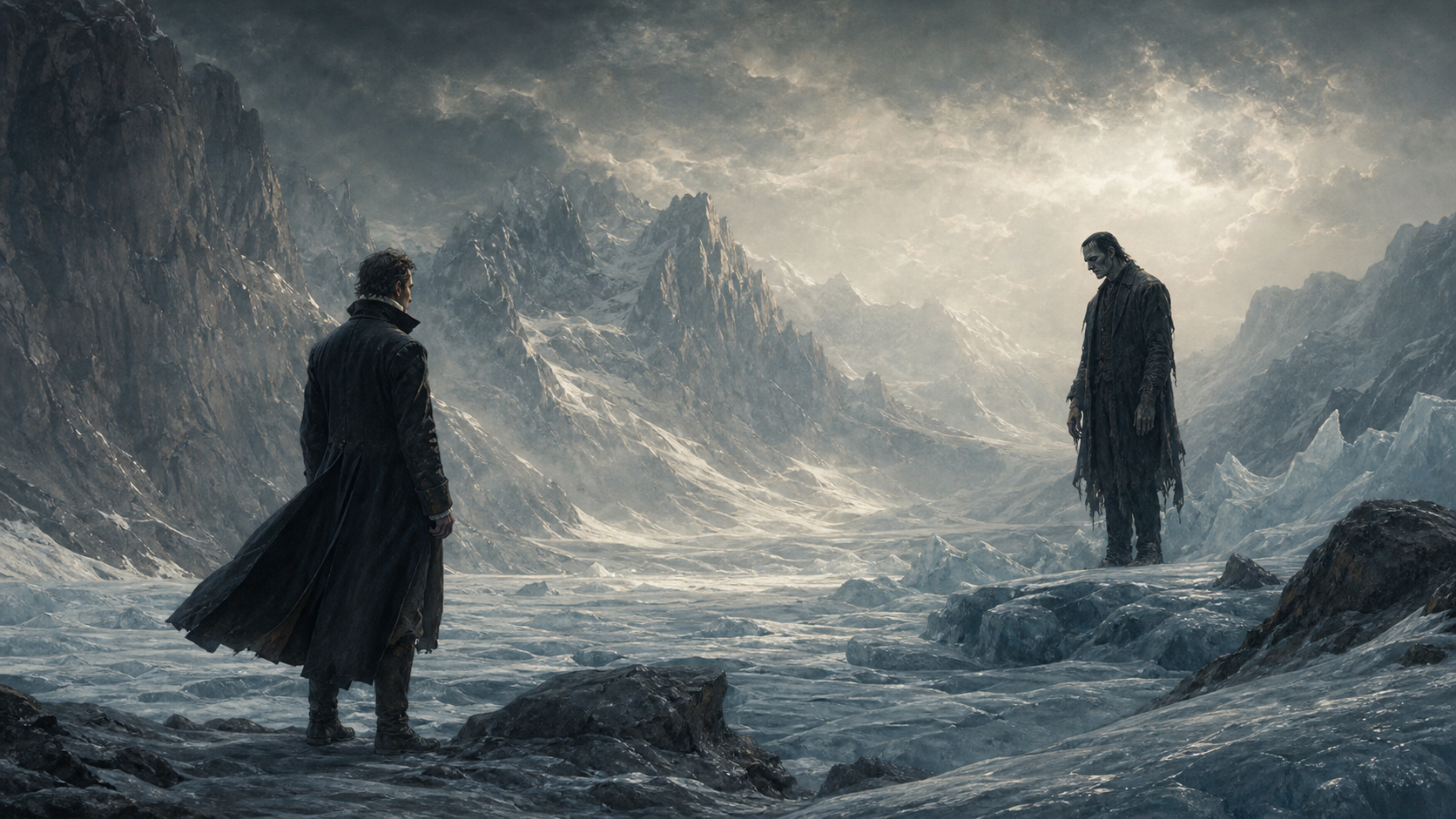
本指南适合谁
本指南适合 AP English Literature、SAT Reading、IB English 以及需要写文学分析论文的学生。目标不是背诵 creature 的复仇,而是解释 Shelley 如何通过 frame narration、Gothic setting、Romantic sublime、allusion、diction 与 moral contrast 创造意义。
1. Quick Review
- Original title: Frankenstein; Or, The Modern Prometheus
- Author: Mary Wollstonecraft Shelley
- Published: 1818; revised edition 1831
- Main settings: Geneva, Ingolstadt, the Alps, the Orkneys, Ireland, the Arctic
- Narrators: Walton, Victor Frankenstein, and the creature
- Central conflict: Victor creates life, abandons it, and is pursued by the consequences
- Core themes: creation and responsibility, isolation, ambition, appearance and judgment, revenge, education
- Common exam angles: frame narration, the Prometheus allusion, the creature's education, sublime nature, Victor's unreliable self-presentation
One-sentence summary:
Victor Frankenstein creates a living being and rejects him, turning scientific ambition into a tragedy about responsibility, loneliness, and revenge.
2. 考试用情节结构
Exposition
Walton 的北极书信建立了小说的基本模式:一个孤独的人通过危险发现追求荣耀。Victor 被从冰上救起,并把自己的故事讲成警告。
Rising Action
Victor 迷恋自然隐藏的力量,在 Ingolstadt 学习,创造 creature 并立刻遗弃他。William 被杀、Justine 被处死,私人实验变成公共痛苦。
Creature's Narrative
Creature 讲述自己的故事。他通过观察 De Lacey 一家学习语言与同情,阅读重要书籍,并试图进入人类社会。拒绝把痛苦变成愤怒。
Climax
Victor 摧毁未完成的女性 companion。Creature 发誓复仇,冲突从请求变成惩罚。
Falling Action
Henry 与 Elizabeth 被杀。Victor 的家庭崩溃,他把生活变成追逐。
Resolution
Victor 死在 Walton 的船上。Creature 哀悼他并宣告自己将死。Walton 返航,选择人的生命而不是危险荣耀。
考试要点:不要把小说简化为“科学是坏的”。更强的论点是 Shelley 批判把创造与照顾分离的野心。
3. 用于 close reading 的关键原文段落
这些 Passage 不只是值得记住的句子。每一段都是 close reading 的练习点:说话者、场景、diction、syntax、image、tone 和 theme 必须一起阅读。在 AP Lit、SAT Reading、IB English 和学校论文中,短引用只有在你能说明词语如何改变场景和整部作品意义时,才真正成为证据。
阅读时分三步。第一,确认 literal situation。第二,标出有压力的词语或意象。第三,把观察转化成可论证的 claim。目标不是复述情节,而是从 quotation 走向 commentary。
Context、Close reading、Essay use 保留英语考试用语。中文说明帮助读者理解这些英语材料如何作为证据使用。
Passage 1: Learn from me
Learn from me, if not by my precepts, at least by my example, how dangerous is the acquirement of knowledge.
语境: Victor turns his life story into a warning for Walton.
Close reading: Instructional diction makes narration ethically charged; suffering becomes evidence.
写作使用: Use it for frame narration, ambition, and knowledge versus wisdom.
Passage 2: Life and death appeared to me ideal bounds
Life and death appeared to me ideal bounds, which I should first break through, and pour a torrent of light into our dark world.
语境: Victor imagines creating life.
Close reading: Boundary and light imagery make discovery sound heroic while exposing hubris.
写作使用: Use it to critique ambition before responsibility.
Passage 3: a new species would bless me
A new species would bless me as its creator and source; many happy and excellent natures would owe their being to me.
语境: Victor imagines future beings praising him.
Close reading: The future-tense fantasy centers Victor’s glory before care.
写作使用: Use it for creation, pride, and ethical blindness.
Passage 4: Adam and fallen angel
I ought to be thy Adam; but I am rather the fallen angel, whom thou drivest from joy for no misdeed.
语境: The creature confronts Victor in the Alps.
Close reading: Biblical allusion gives him a language for innocence and exclusion.
写作使用: Use it for allusion, creature voice, and responsibility.
Passage 5: love and fear
If I cannot inspire love, I will cause fear; and chiefly towards you my arch-enemy, because my creator, do I swear inextinguishable hatred.
语境: The creature turns rejection into revenge.
Close reading: Balanced syntax makes violence a terrible substitute for denied affection.
写作使用: Use it to discuss sympathy without excusing revenge.
Passage 6: a hell within me
I, like the arch-fiend, bore a hell within me; and finding myself unsympathised with, wished to tear up the trees.
语境: The creature describes rejection’s aftermath.
Close reading: Allusion and inward imagery make monstrosity psychological before physical action.
写作使用: Use it for isolation, allusion, and destructive agency.
Passage 7: returning to England
I am returning to England. I have lost my hopes of utility and glory; I have lost my friend.
语境: Walton turns back from the Arctic quest.
Close reading: Plain syntax turns renunciation into the frame’s ethical answer to Victor.
写作使用: Use it for endings, restraint, and Walton as foil.
4. Close Reading 步骤
Close reading 《Frankenstein》时,要先问“谁在讲给谁听”。Walton、Victor、creature 的叙述层层包住同一个 ethical problem:ambition、creation、responsibility 和 abandonment 怎样互相牵连。
Step 1: Identify the narrator and audience
先确定 passage 属于 Walton letters、Victor narrative 还是 creature narrative。不同 narrator 会改变 sympathy 和 responsibility:Victor 警告 Walton,creature 控诉 Victor,Walton 决定是否重复 Victor 的错误。
Step 2: Place the passage in the responsibility chain
把场景放进责任链:Victor desire for discovery、animation、flight from the creature、Justine's death、creature's education、revenge、Walton's choice。每个 passage 都要问 creation 后的 obligation 是否被承认。
Step 3: Mark creation, kinship, and judgment words
标出 creator、creature、wretch、daemon、Adam、fallen angel、father、child、justice 等词。Shelley 用 naming 和 kinship language 让 moral failure 具体化。
Step 4: Track allusion and self-interpretation
Prometheus、Paradise Lost、Adam、fallen angel 等 allusions 不只是装饰。它们显示 characters 如何理解自己,也暴露这种 self-interpretation 的局限。
Step 5: Read setting as moral scale
Alps、Orkneys、Arctic 把 private guilt 放大成 sublime scale。setting 让 creator 和 creature 的冲突显得超出家庭,却仍回到 human obligation。
Step 6: Convert observation into a claim
不要只写 “Victor is ambitious.” 更强的 claim 要说明 Shelley 如何用 frame narration、allusion、diction 或 sublime setting 把 ambition 转化为 responsibility 的问题。
Worked example: Victor's “torrent of light”
Victor 想象 scientific discovery 像 “torrent of light” 一样涌入世界。literal situation 是他回忆创造前的兴奋;charged image 是 light,通常意味着 knowledge,但这里在 care 和 duty 之前出现。光的意象因此带着 transgression 的危险。
A strong paragraph claim could be:
Shelley makes Victor's image of discovery brilliantly attractive but ethically incomplete, showing that knowledge becomes dangerous when light arrives before responsibility.
5. Literary Devices 为什么重要
《Frankenstein》的 devices 把 Gothic terror 变成关于 ambition、creation 和 moral duty 的论证。写作时要说明某个 device 怎样让 reader 同时理解 Victor 的 aspiration、creature 的 suffering 和 Walton 的 warning。
Frame narration: one ambition warning another
Walton receives Victor's story while pursuing his own glory。Essay use: frame narration 让 Victor 的 tragedy 成为对另一个 ambitious listener 的 test。
Light and boundary imagery: discovery before care
light imagery 让 discovery 听起来崇高,但也暗示 crossing limits。Essay use: 可论证 Shelley 批判的不是 knowledge 本身,而是不带 obligation 的 discovery。
Prometheus allusion: forbidden creative power
Prometheus allusion 把 Victor 放在 transgressive creator 的传统中。Essay use: 用它讨论 creative power 与 suffering 的绑定关系。
Paradise Lost allusion: Adam and fallen angel
creature 同时把自己想成 Adam 和 fallen angel。Essay use: allusion 展示他有 moral imagination,也暴露 abandonment 如何把 innocence 推向 revenge。
Diction of naming: wretch, daemon, creature
Victor 的 labels 在 creature 说话前就剥夺其 personhood。Essay use: naming diction 能支撑关于 dehumanization 和 responsibility failure 的段落。
Sublime setting: Alps, Orkneys, and Arctic
sublime landscapes 放大 moral conflict。Essay use: setting 显示 ambition 和 revenge 的 scale,同时让人类关系在巨大自然中显得更脆弱。
Foils: Walton, Clerval, and Victor
Walton、Clerval、Victor 展示不同知识欲。Essay use: foil 可说明 curiosity 在 connection 与 isolation 之间的差别。
Irony: creator becomes destroyer
Victor 想创造生命,却通过 abandonment 和 revenge chain 促成死亡。Essay use: irony 揭示 creation 没有 care 会反转成 destruction。
Balanced syntax: love and fear
creature 的语言常在 longing 和 threat 之间平衡。Essay use: balanced syntax 能说明他既渴望 kinship,也被 rejection 推向 violence。
6. 把人物分析转化为论文语言
人物分析不是性格清单。文学论文中的人物承载压力:欲望、恐惧、社会规则、道德冲突、自欺或变化。强答案会把人物、技巧和主题放在同一条论证线上。
写作前先问四个问题。
- Role: 人物在作品中起什么功能
- Pressure: 什么欲望、恐惧或规则推动人物
- Device: 作者用什么手法呈现人物
- Essay sentence: 这个人物能支持什么 claim
Victor functions as a creator who refuses responsibility, and Shelley's frame narration reveals how ambition becomes destructive when it rejects care.
下面的卡片用于把人物笔记转化成可以继续加入文本证据的 essay claim。
Victor Frankenstein
creator, transgressor, and unreliable moral witness
Victor 追求知识却拒绝 care。他的语言常把责任改写成痛苦。
Essay sentence: Victor's tragedy lies not in discovery itself, but in his attempt to separate creation from the obligations of nurture and confession.
The creature
rejected creation and moral accuser
Creature 既是受害者也是施害者。他学会同情,却在反复拒绝后选择复仇。
Essay sentence: Shelley makes the creature morally complex by showing that his violence is chosen, but not born in a vacuum.
Robert Walton
ambition that can still turn back
Walton 映照 Victor,但因为愿意倾听而幸存。
Essay sentence: Walton's decision to return home gives the novel a final contrast between destructive ambition and responsible restraint.
Elizabeth Lavenza
domestic love endangered by secrecy
Elizabeth 代表亲情与日常义务。
Essay sentence: Elizabeth's fate shows that Victor's private secrecy produces public and familial catastrophe.
Henry Clerval
friendship, imagination, and care
Henry 是 Victor 的 foil,因为他把学习与人情连接起来。
Essay sentence: Clerval's care for Victor highlights Victor's failure to offer care to his own creation.
7. Thesis Builder for Major Themes
Creation
Responsibility
Weak thesis: Victor creates a monster.
Strong thesis: Shelley presents creation as an ethical act, showing that Victor's greatest failure is not making life but abandoning it.
Ambition
Knowledge and Limits
Weak thesis: Science is bad.
Strong thesis: Through Victor and Walton, Shelley warns against ambition that pursues glory while ignoring community, humility, and consequence.
Isolation
Loneliness
Weak thesis: The creature is lonely.
Strong thesis: The creature's isolation reveals that identity is formed through recognition, language, and social belonging.
Voice
Narration
Weak thesis: The novel has many narrators.
Strong thesis: Shelley's layered narration makes moral judgment difficult by allowing Victor, Walton, and the creature to frame suffering in their own terms.
8. SAT Reading Sample
以下 SAT-style 题目保留英文题干和选项,训练美国考试语境下的证据判断。做题时先锁定题干问的是 function、inference、diction 还是 structure,再用场景证据排除只概括情节或脱离文本的选项。
Question 1
Victor's warning to Walton suggests knowledge is dangerous when it is:
- A. shared through letters
- B. connected to family memories
- C. pursued without responsibility or human connection
- D. studied abroad
Answer: C. 解析:Victor 并不是谴责 knowledge 本身,而是警告 Walton 不要追求越过 human limits 和 obligations 的 discovery。A、B、D提到 frame 周边细节,却没有抓住 ethical danger。
Question 2
In "ideal bounds," "bounds" most nearly means:
- A. limits
- B. decorations
- C. promises
- D. rewards
Answer: A. 解析:Victor 想象 life 和 death 是他能突破的 boundaries。B、C、D都不符合 boundary image 带出的 transgressive ambition。
Question 3
"A new species would bless me" reveals Victor's:
- A. fear of fame
- B. ordinary medical interest
- C. commitment to family duty
- D. desire to be adored as creator
Answer: D. 解析:imagined blessing 把 Victor 作为 creator 的荣耀放在中心,却还没有考虑对被造生命的 care。A、B低估 ambition,C与他脱离 family duty 的状态相反。
Question 4
The creature's Adam allusion functions to:
- A. prove legal innocence
- B. frame abandonment as broken creator-creation bond
- C. make the Alps peaceful
- D. show he has no language
Answer: B. 解析:creature 把自己比作 Adam,是在说 Victor 违反了 creator 对 creation 的 duty。A转向 law,C忽略 confrontation,D违背 creature 的 learned eloquence。
Question 5
Victor's first response after animation supports the claim that his central failure is:
- A. lack of intelligence
- B. excessive patience
- C. abandonment rather than discovery alone
- D. obedience to professors
Answer: C. 解析:核心失败是 Victor 逃离自己创造的 being,把 creation 变成 neglect。A把问题缩成 intellect,B颠倒 impatience,D漏掉 animation 后的 ethical break。
Question 6
The De Lacey episode shows the creature:
- A. cannot learn
- B. wants wealth above all
- C. controls society
- D. develops sympathy and language before rejection
Answer: D. 解析:观察 De Laceys 教会 creature language、care 和 social feeling,然后 rejection 才使他变硬。A否认 education,B、C发明他没有的 motive 或 power。
Question 7
Victor's silence during Justine's trial is best understood as:
- A. guilt becoming another form of violence
- B. proof of innocence
- C. comic misunderstanding
- D. Walton's failure
Answer: A. 解析:Victor 的 private knowledge 没能拯救 Justine,他的 silence 让 experiment 通过 legal system 伤害 innocent person。B把 guilt 误认为 innocence,C轻描淡写,D属于 frame plot。
Question 8
The Arctic setting at the end symbolizes:
- A. domestic comfort
- B. social popularity
- C. isolation and ambition at an extreme
- D. religious certainty
Answer: C. 解析:Arctic 把 ambition 变成 frozen limit,把 Victor、creature、Walton 都隔离在 survival 的边缘。A、B违背 setting,D不是 frame 的主要 symbolic work。
Question 9
Walton's return home shows that:
- A. all exploration is foolish
- B. Victor's warning has been heard
- C. the creature controls the ship
- D. Elizabeth is unrelated
Answer: B. 解析:Walton 在 Victor 没有停下的地方 turn back,使 frame 成为 listener 是否能从 tragedy 学习的 test。A过度概括,C发明 control,D忽略 family losses。
Question 10
"If I cannot inspire love, I will cause fear" marks a shift from:
- A. education to farming
- B. science to comedy
- C. ambition to success
- D. longing for affection to chosen revenge
Answer: D. 解析:balanced line 把被拒绝的 love 变成 deliberate intimidation,显示 creature 从 appeal 转向 revenge。A、B无关,C误把 threat 当 triumph。
Question 11
Which evidence best supports dehumanization?
- A. Victor calling the creature "wretch" or "daemon"
- B. Clerval studying languages
- C. Walton dating letters
- D. Elizabeth waiting
Answer: A. 解析:Victor 的 labels 在读者听到 creature 自述前就否认其 personhood。B、C、D或许在别处重要,但不能显示 dehumanizing diction。
Question 12
The Prometheus subtitle connects Victor to:
- A. a comic traveler
- B. a neutral narrator
- C. forbidden creative power and punishment
- D. a caretaker
Answer: C. 解析:Prometheus 指向 transgressive creative power 和随后的 suffering。A、B不合 mythic frame,D让 Victor 比行动显示的更 responsible。
Question 13
The creature's books help Shelley show:
- A. his inability to speak
- B. his moral and emotional development
- C. his lack of memory
- D. his total innocence
Answer: B. 解析:books 给 creature language、history、comparison 和 moral imagination,使 rejection 更悲剧。A、C否认 learning,D在 revenge 开始后过度强调 innocence。
Question 14
Victor's narration is unreliable because it:
- A. reports no events
- B. belongs to the creature
- C. avoids emotion
- D. mixes confession with self-defense
Answer: D. 解析:Victor 警告 Walton 并承认 failure,但也把自己写成 unique sufferer,经常回避 full responsibility。A错误,B归错 narrator,C漏掉叙述的情感强度。
Question 15
The Alps scenes connect nature with:
- A. moral scale and sublime confrontation
- B. school routine
- C. commerce
- D. comic relief
Answer: A. 解析:Alpine landscape 放大 creator 与 creature 的 confrontation,使 moral conflict 显得 vast。B、C、D不符合 sublime setting。
Question 16
Henry Clerval serves as Victor's foil because he:
- A. rejects friendship
- B. commits the crime
- C. connects learning with care
- D. narrates the frame
Answer: C. 解析:Clerval 的 learning 与 friendship、language、human sympathy 相连,对照 Victor 的 isolating ambition。A、B颠倒角色,D属于 Walton。
Question 17
"Fallen angel" suggests the creature sees himself as:
- A. Victor's chemistry teacher
- B. unable to read
- C. a successful explorer
- D. excluded from an intended place
Answer: D. 解析:这个 phrase 让 creature 把自己描述为从本应包含 love 和 belonging 的角色中被驱逐。A给错角色,B违背 education,C引入 Walton explorer identity。
Question 18
Shelley's critique of ambition is best stated as:
- A. all curiosity is immoral
- B. ambition is dangerous when separated from responsibility
- C. knowledge never changes anyone
- D. exploration always succeeds
Answer: B. 解析:Victor 和 Walton 显示 curiosity 若忽视 human obligation 就会危险,并非所有 inquiry 都错。A太宽,C、D违背 plot。
Question 19
The frame narrative functions by:
- A. making Victor's tragedy a test for another ambitious listener
- B. silencing the creature
- C. removing Walton
- D. proving Victor objective
Answer: A. 解析:Walton 听到 Victor 的 warning 后,必须决定是否重复或抵抗同样的 glory pursuit。B错误,因为 creature 会说话;C抹掉 frame,D忽略 Victor self-defense。
Question 20
The final ship scene emphasizes:
- A. comic closure
- B. victory for science
- C. the cost of abandonment for creator and creation
- D. Elizabeth's authority
Answer: C. 解析:Victor 在追逐自己遗弃的 being 后死去,creature 又哀悼拒绝他的 creator。A、B误读结尾 grief,D提到一个已死人物。
9. AP Lit Essay Questions
Use these AP Lit-style practice questions to turn a specific scene into a thesis, outline, and evidence-based commentary.
Essay Question 1
Walton’s letters frame Victor’s confession before readers meet Victor directly. Analyze how Shelley uses frame narration to turn one man’s tragedy into a warning for another ambitious listener. Include one detail from Walton and one from Victor.
Essay Question 2
Victor’s ambition begins as intellectual aspiration but becomes a refusal of responsibility. Explain how this shift shapes the novel’s central conflict. Use two scenes that show discovery and avoidance.
Essay Question 3
The creature’s education changes him from a silent body into a reader, speaker, and moral interpreter. Analyze how this education changes the reader’s judgment of him. Include one De Lacey episode detail.
Essay Question 4
The Prometheus allusion appears in the novel’s title and moral design. Analyze how Shelley uses the myth to frame creation as transgression, gift, punishment, or responsibility. Use evidence from Victor’s experiment and its aftermath.
Essay Question 5
Creation in the novel is not condemned simply because it is unnatural; it is condemned because it is abandoned. Analyze how Shelley presents creation as an ethical responsibility. Include Victor’s first reaction to the creature.
Essay Question 6
Isolation shapes both Victor and the creature, but it affects them differently. Compare how isolation turns private suffering into public harm. Use one scene for each character.
Essay Question 7
Gothic settings such as laboratories, mountains, storms, and Arctic ice do more than create mood. Analyze how one or two settings externalize secrecy, guilt, fear, or pursuit.
Essay Question 8
Nature and the sublime sometimes console Victor and sometimes expose his limits. Analyze how Shelley uses landscape to measure human ambition against forces larger than the self.
Essay Question 9
Victor’s silence during Justine’s trial is one of the novel’s central ethical failures. Analyze how secrecy becomes another form of violence. Include one consequence for Victor and one for an innocent person.
Essay Question 10
The De Lacey episode briefly imagines sympathy before rejection returns. Analyze how this episode complicates the creature’s role as both victim and future aggressor.
Essay Question 11
The creature’s revenge is understandable in motive but destructive in action. Analyze how Shelley creates sympathy without excusing violence. Use two moments from the creature’s narrative.
Essay Question 12
Victor’s narration is confession, warning, and self-defense at once. Analyze how his storytelling shapes the reader’s judgment. Include one moment where his language seems self-protective.
Essay Question 13
Walton mirrors Victor, but he also makes a different final choice. Analyze how Walton’s role changes the meaning of Victor’s warning. Use the frame ending as evidence.
Essay Question 14
Choose a secondary character, such as Elizabeth, Justine, Clerval, or William. Explain how that character reveals the human cost of Victor’s private ambition.
Essay Question 15
The creature reads texts such as Paradise Lost and uses them to understand himself. Analyze how allusion gives him a language for identity, grievance, and judgment.
Essay Question 16
The novel distinguishes knowledge from wisdom. Analyze how Victor can discover the secret of life while failing to understand care, limits, and consequence.
Essay Question 17
Appearance shapes moral judgment throughout the novel. Explain how Shelley critiques a society that sees the creature’s body before hearing his speech.
Essay Question 18
Choose a morally flawed character for whom Shelley still creates sympathy. Analyze how the novel asks readers to hold compassion and judgment together.
Essay Question 19
The ending leaves Victor dead, Walton changed, and the creature speaking over a future disappearance. Analyze how this ending revises Victor’s warning about ambition.
Essay Question 20
Analyze how Frankenstein critiques creation without care. Your answer should connect the animation scene, the creature’s abandonment, and the final consequences of that abandonment.
10. Model Thesis Bank
Use these as models, then adapt them to the exact question.
- Shelley uses Walton's frame narrative to show that Victor's tragedy can become a warning only if another ambitious man chooses to listen.
- Victor's desire to break the bounds of life and death becomes tragic because it separates discovery from responsibility.
- The creature's education makes him morally legible, forcing readers to judge both his violence and the rejection that shaped it.
- The Prometheus allusion presents Victor's experiment as a modern act of transgression whose punishment is intimate rather than cosmic.
- Shelley presents creation as an ethical act by making abandonment, not animation, Victor's decisive failure.
- Isolation transforms both Victor and the creature, turning private suffering into public harm.
- Gothic settings externalize Victor's secrecy, guilt, and fear of what he has made.
- The sublime landscapes of the Alps and Arctic measure human ambition against forces larger than the self.
- Victor's silence during Justine's trial shows that guilt without confession can become another form of harm.
- The De Lacey episode proves that the creature's monstrosity is socially produced as well as personally chosen.
- Shelley makes revenge destructive by showing that it gives the creature power while emptying him of hope.
- Victor's narration is compelling but self-protective, turning confession into a form of self-dramatization.
- Walton mirrors Victor's ambition but avoids Victor's fate by accepting limits.
- Elizabeth's death shows that Victor's private ambition destroys the domestic world he claims to value.
- The creature's biblical allusions transform him from silent object into a reader capable of judging his creator.
- The novel distinguishes knowledge from wisdom by showing that Victor can discover life without understanding care.
- Shelley critiques a society that judges by appearance before allowing speech.
- The creature's moral complexity lies in the gap between the sympathy he deserves and the violence he chooses.
- Walton's return home turns Victor's tragedy into a final argument for responsible restraint.
- Frankenstein warns that creation without care produces not mastery, but abandonment returned as judgment.
11. Academic Vocabulary for Essays
- frame narrative: 一个叙事包含另一个叙事的结构
- transgression: 越过道德、自然或社会边界
- sublime: 产生敬畏、恐惧或道德尺度的巨大感
- allusion: 对其他文本、神话或传统的间接引用
- dehumanization: 把人当作低于人的存在
- moral agency: 选择行动并承担责任的能力
- alienation: 与社会、情感或自我理解分离
- hubris: 导致毁灭的过度骄傲
- ethical responsibility: 由行动或权力产生的义务
- unreliable narration: 受偏见、自辩或有限视角影响的叙述
- foil: 通过对照突出另一人物的人物
- Gothic: 使用恐惧、秘密、黑暗与心理不安的文学模式
- Romanticism: 强调想象、自然、情感与个人经验的运动
- vengeance: 以正义名义追求却常制造更多伤害的复仇
- nurture: 发展所需的照顾、教育与社会支持
- marginalization: 被排除在社会承认或归属之外
- self-fashioning: 有意识地建构身份
- consequence: 行动的结果或代价
- pathos: 通过 suffering 产生的情感诉求
- critique: 揭示限制、失败或矛盾的论证