Hướng dẫn học Frankenstein - AP Lit, SAT Reading, đọc gần và luyện viết luận
Hướng dẫn thực dụng cho AP English Literature, SAT Reading, IB English và bài luận ở trường, với passage quan trọng, thủ pháp văn học, câu hỏi luyện tập và thesis mẫu.
Tài liệu học này được dịch từ bản gốc tiếng Anh và có thể tiếp tục được chỉnh sửa.
Hướng dẫn này dành cho học sinh cần bàn về Frankenstein bằng chứng cứ văn bản. Nếu muốn đọc phần giải thích cốt truyện đầy đủ trước, hãy bắt đầu với bài viết chính.
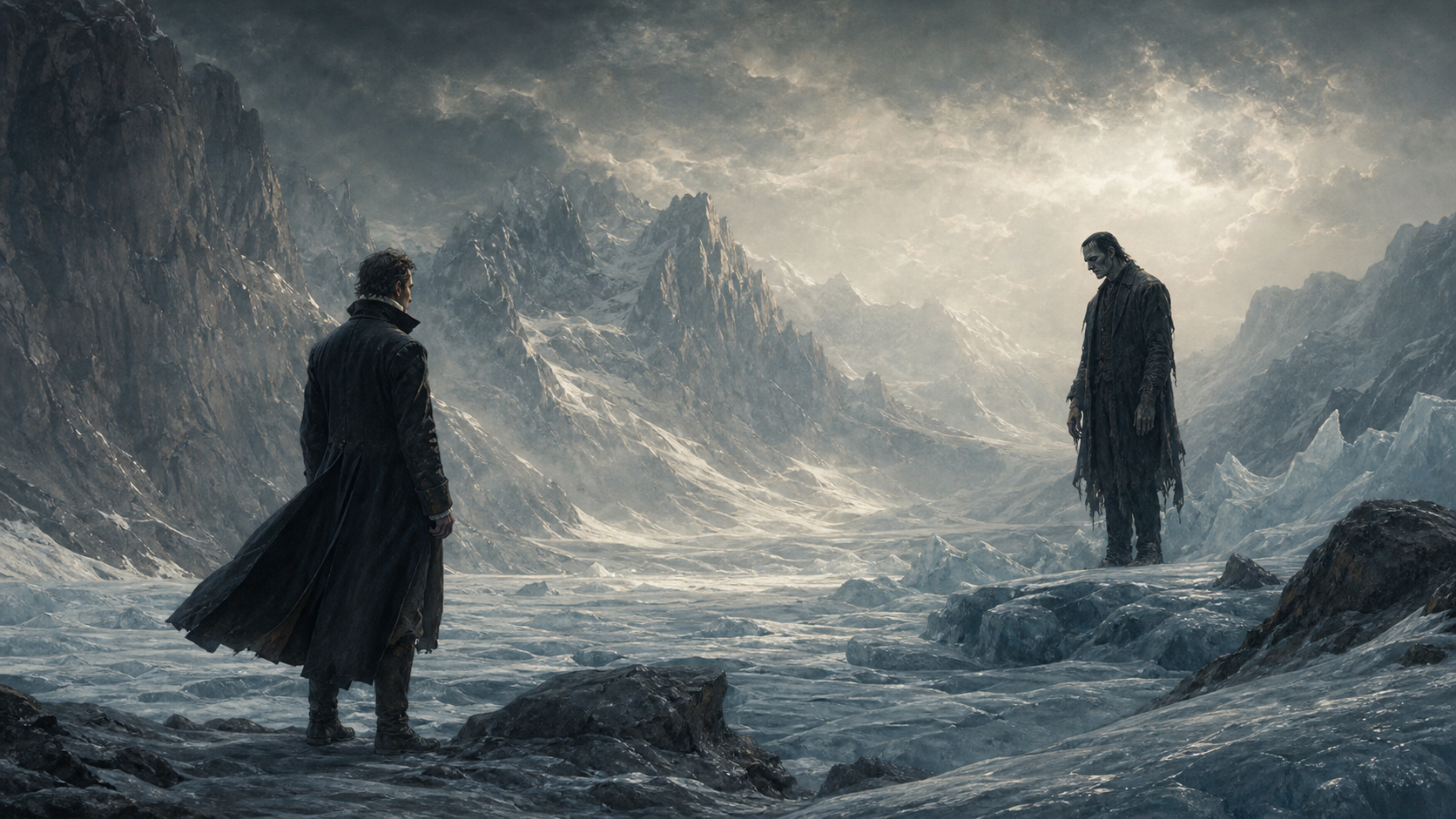
Hướng dẫn này dành cho ai
Hướng dẫn này dành cho AP English Literature, SAT Reading, IB English và học sinh cần viết về Frankenstein với dẫn chứng. Mục tiêu không phải học thuộc cuộc trả thù của creature, mà là giải thích cách Shelley tạo nghĩa qua frame narration, Gothic setting, Romantic sublime, allusion, diction và moral contrast.
1. Quick Review
- Original title: Frankenstein; Or, The Modern Prometheus
- Author: Mary Wollstonecraft Shelley
- Published: 1818; revised edition 1831
- Main settings: Geneva, Ingolstadt, the Alps, the Orkneys, Ireland, the Arctic
- Narrators: Walton, Victor Frankenstein, and the creature
- Central conflict: Victor creates life, abandons it, and is pursued by the consequences
- Core themes: creation and responsibility, isolation, ambition, appearance and judgment, revenge, education
- Common exam angles: frame narration, the Prometheus allusion, the creature's education, sublime nature, Victor's unreliable self-presentation
One-sentence summary:
Victor Frankenstein creates a living being and rejects him, turning scientific ambition into a tragedy about responsibility, loneliness, and revenge.
2. Cấu trúc cốt truyện cho bài thi
Exposition
Các lá thư Bắc Cực của Walton giới thiệu mô hình trung tâm: một người đàn ông cô độc tìm vinh quang qua khám phá nguy hiểm. Victor được cứu khỏi băng và kể đời mình như lời cảnh báo.
Rising Action
Victor ám ảnh với quyền năng tự nhiên ẩn giấu, học ở Ingolstadt, tạo creature và lập tức bỏ rơi nó. William bị giết, Justine bị xử tử, và thí nghiệm riêng tư biến thành đau khổ công cộng.
Creature's Narrative
Creature kể câu chuyện của mình. Nó học ngôn ngữ và đồng cảm bằng cách quan sát gia đình De Lacey, đọc những cuốn sách lớn và cố bước vào xã hội loài người. Bị từ chối khiến đau khổ biến thành giận dữ.
Climax
Victor phá hủy companion nữ mà anh đã bắt đầu tạo ra. Creature thề trả thù, và xung đột chuyển từ yêu cầu sang trừng phạt.
Falling Action
Henry và Elizabeth bị giết. Gia đình Victor sụp đổ, và anh biến đời mình thành cuộc truy đuổi.
Resolution
Victor chết trên tàu Walton. Creature thương tiếc anh và tuyên bố sẽ chết. Walton quay về, chọn mạng sống con người thay cho vinh quang nguy hiểm.
Điểm thi: đừng viết rằng tiểu thuyết chỉ nói “science is bad.” Luận điểm mạnh hơn là Shelley phê phán tham vọng khi nó tách sáng tạo khỏi chăm sóc.
3. Đoạn nguyên văn quan trọng cho close reading
Những Passage này không chỉ là các câu đáng nhớ. Mỗi đoạn là điểm luyện close reading: người nói, tình huống, diction, syntax, image, tone và theme phải được đọc cùng nhau. Trong AP Lit, SAT Reading, IB English và bài luận ở trường, một trích dẫn ngắn chỉ hữu ích khi bạn giải thích được cách ngôn ngữ của nó thay đổi ý nghĩa của cảnh và toàn bộ tác phẩm.
Hãy đọc mỗi passage theo ba bước. Một là xác định literal situation. Hai là đánh dấu từ hoặc hình ảnh có sức nặng. Ba là biến quan sát đó thành một claim có thể bảo vệ. Mục tiêu là đi từ quotation sang commentary, không dừng ở tóm tắt cốt truyện.
Các mục Context, Close reading và Essay use giữ thuật ngữ tiếng Anh vì đây là ngôn ngữ luyện thi và viết luận. Phần giải thích bằng tiếng Việt giúp người đọc hiểu cách dùng các câu tiếng Anh đó làm evidence.
Passage 1: Learn from me
Learn from me, if not by my precepts, at least by my example, how dangerous is the acquirement of knowledge.
Bối cảnh: Victor turns his life story into a warning for Walton.
Close reading: Instructional diction makes narration ethically charged; suffering becomes evidence.
Dùng trong bài luận: Use it for frame narration, ambition, and knowledge versus wisdom.
Passage 2: Life and death appeared to me ideal bounds
Life and death appeared to me ideal bounds, which I should first break through, and pour a torrent of light into our dark world.
Bối cảnh: Victor imagines creating life.
Close reading: Boundary and light imagery make discovery sound heroic while exposing hubris.
Dùng trong bài luận: Use it to critique ambition before responsibility.
Passage 3: a new species would bless me
A new species would bless me as its creator and source; many happy and excellent natures would owe their being to me.
Bối cảnh: Victor imagines future beings praising him.
Close reading: The future-tense fantasy centers Victor’s glory before care.
Dùng trong bài luận: Use it for creation, pride, and ethical blindness.
Passage 4: Adam and fallen angel
I ought to be thy Adam; but I am rather the fallen angel, whom thou drivest from joy for no misdeed.
Bối cảnh: The creature confronts Victor in the Alps.
Close reading: Biblical allusion gives him a language for innocence and exclusion.
Dùng trong bài luận: Use it for allusion, creature voice, and responsibility.
Passage 5: love and fear
If I cannot inspire love, I will cause fear; and chiefly towards you my arch-enemy, because my creator, do I swear inextinguishable hatred.
Bối cảnh: The creature turns rejection into revenge.
Close reading: Balanced syntax makes violence a terrible substitute for denied affection.
Dùng trong bài luận: Use it to discuss sympathy without excusing revenge.
Passage 6: a hell within me
I, like the arch-fiend, bore a hell within me; and finding myself unsympathised with, wished to tear up the trees.
Bối cảnh: The creature describes rejection’s aftermath.
Close reading: Allusion and inward imagery make monstrosity psychological before physical action.
Dùng trong bài luận: Use it for isolation, allusion, and destructive agency.
Passage 7: returning to England
I am returning to England. I have lost my hopes of utility and glory; I have lost my friend.
Bối cảnh: Walton turns back from the Arctic quest.
Close reading: Plain syntax turns renunciation into the frame’s ethical answer to Victor.
Dùng trong bài luận: Use it for endings, restraint, and Walton as foil.
4. Quy trình Close Reading
Close reading Frankenstein nghĩa là hỏi ai đang kể chuyện, ai đang nghe, và speaker đang cố nhận hoặc tránh responsibility nào. Shelley xây tiểu thuyết bằng nested narratives: Walton viết cho chị, Victor cảnh báo Walton, và creature biện hộ với Victor. Mỗi passage có speaker, audience và moral pressure.
Step 1: Xác định narrator và audience
Trước khi diễn giải một dòng, hãy hỏi ai nói và vì sao. Lời cảnh báo của Victor với Walton không phải lời khuyên trung lập; đó là nỗ lực của một người hấp hối biến failure thành instruction. Bài nói của creature trên núi Alps không chỉ là complaint; đó là argument gửi đến creator đã bỏ rơi nó.
Step 2: Đặt passage vào responsibility chain
Xác định cảnh nằm ở đâu trong chuỗi ambition, creation, abandonment, education, rejection, revenge và belated recognition. Điều này giúp paragraph không chỉ nói "Victor is ambitious" hoặc "the creature is lonely." Câu hỏi là responsibility nào đã được tạo ra và ai từ chối hoặc chấp nhận nó.
Step 3: Đánh dấu các từ về creation, kinship và judgment
Các từ như "creator," "source," "Adam," "fallen angel," "wretch," "daemon," "father," "friend" và "glory" mang trọng lượng đạo đức. Hãy giải thích diction đang tạo kinship, phủ nhận kinship, phán xét appearance hay phơi ra desire for praise của Victor.
Step 4: Theo dõi allusion và self-interpretation
Prometheus subtitle, ngôn ngữ Adam và fallen angel của creature, cùng hy vọng renewal gần kiểu Lazarus cho characters những inherited stories để hiểu pain của mình. Đừng chỉ gọi tên allusion. Hãy hỏi speaker muốn vai trò nào trong story đó và novel xác nhận hay làm phức tạp nó.
Step 5: Đọc setting như moral scale
Ingolstadt nén secret experiment; Alps phóng lớn confrontation; Orkneys cô lập ethical choice; Arctic biến ambition thành frozen extreme. Settings trong Frankenstein thường làm inner states hiện ra ở quy mô lớn hơn.
Step 6: Biến quan sát thành claim
Kết đoạn bằng claim gọi tên device, local effect và larger meaning. Tránh "science is bad." Claim mạnh hơn giải thích Shelley phê phán creation khi ambition bị tách khỏi care như thế nào.
Worked example: "torrent of light" của Victor
Khi Victor nói, "Life and death appeared to me ideal bounds, which I should first break through, and pour a torrent of light into our dark world," tình huống literal là fantasy trước creation. Boundary diction khiến life và death nghe như limits mà anh có quyền phá. Light imagery làm discovery có vẻ heroic, nhưng động từ "pour" gợi excess trước khi responsibility xuất hiện.
Một paragraph claim có thể viết:
Through boundary and light imagery, Shelley makes Victor's ambition sound grand before exposing its ethical blindness, showing that his real failure is not curiosity itself but the desire to create without care.
5. Vì sao Literary Devices quan trọng
Trong Frankenstein, literary devices quan trọng vì tiểu thuyết yêu cầu người đọc phán xét những câu chuyện được kể bởi các speaker wounded, ambitious và self-defending. Devices giúp bạn giải thích không chỉ what happens, mà Shelley biến creation thành câu hỏi về responsibility như thế nào.
Frame narration: một ambition cảnh báo ambition khác
Các letters của Walton bao quanh story của Victor, nên tragedy của Victor trở thành test cho một explorer tham vọng khác. Dùng frame narration để lập luận rằng storytelling có thể trở thành ethical warning khi listener đổi hướng.
Light and boundary imagery: discovery before care
Ngôn ngữ "torrent of light" và "ideal bounds" của Victor làm creation nghe như liberation trước khi novel tiết lộ cost. Dùng imagery này cho essay phân biệt knowledge với wisdom.
Prometheus allusion: forbidden creative power
Subtitle nối Victor với myth về stolen power và punishment. Nó không có nghĩa invention tự động evil. Nó framing creation như ethically dangerous khi creator tìm glory mà không nhận consequence.
Paradise Lost allusion: Adam và fallen angel
Creature nói nó "ought to be" Adam nhưng cảm thấy như fallen angel. Allusion này cho nó language của innocence và rage cùng lúc. Dùng nó để bàn về sympathy mà không xóa violence về sau.
Diction of naming: wretch, daemon, creature
Những tên Victor dùng cho being thường dehumanize nó trước khi reader nghe câu chuyện của nó. Diction này hỗ trợ essay về appearance, prejudice và cách language tạo moral distance.
Sublime setting: Alps, Orkneys và Arctic
Alps làm confrontation giữa creator và creation có quy mô đạo đức rộng lớn; Orkneys cô lập lựa chọn của Victor; Arctic biến ambition thành near-death emptiness. Dùng sublime để nối landscape với ethical scale.
Foils: Walton, Clerval và Victor
Walton phản chiếu desire for glory của Victor, trong khi Clerval nối learning với friendship và care. Foils giúp bạn cho thấy Shelley không chống knowledge; bà chống ambition tự cắt khỏi human obligations.
Irony: creator becomes destroyer
Victor mơ một new species sẽ bless him, nhưng hành động đầu tiên của anh là abandonment. Irony này là trung tâm của essay work vì nó phơi ra khoảng cách giữa imagined glory và actual responsibility.
Balanced syntax: love và fear
Câu "If I cannot inspire love, I will cause fear" của creature biến denied affection thành revenge qua cấu trúc cân bằng. Dùng syntax để giải thích agency của nó: suffering giúp hiểu violence, nhưng không excuse violence.
6. Biến phân tích nhân vật thành ngôn ngữ bài luận
Phân tích nhân vật không phải danh sách tính cách. Trong bài luận văn học, nhân vật quan trọng vì mang áp lực: ham muốn, sợ hãi, kỳ vọng xã hội, xung đột đạo đức, tự lừa dối hoặc thay đổi. Bài luận mạnh nối nhân vật, kỹ thuật và theme trong cùng một lập luận.
Trước khi viết, hãy hỏi bốn câu:
- Role: nhân vật giữ chức năng gì trong tác phẩm?
- Pressure: ham muốn, nỗi sợ hoặc quy tắc nào tác động đến nhân vật?
- Device: tác giả trình bày nhân vật bằng kỹ thuật nào?
- Essay sentence: nhân vật này có thể hỗ trợ claim nào?
Victor functions as a creator who refuses responsibility, and Shelley's frame narration reveals how ambition becomes destructive when it rejects care.
Các thẻ bên dưới giúp biến ghi chú nhân vật thành claim có thể phát triển bằng textual evidence.
Victor Frankenstein
creator, transgressor, and unreliable moral witness
Victor tìm tri thức nhưng từ chối care. Ngôn ngữ của anh thường biến trách nhiệm thành đau khổ.
Essay sentence: Victor's tragedy lies not in discovery itself, but in his attempt to separate creation from the obligations of nurture and confession.
The creature
rejected creation and moral accuser
Creature vừa là nạn nhân vừa là kẻ gây hại. Nó học đồng cảm, rồi chọn trả thù sau nhiều lần bị từ chối.
Essay sentence: Shelley makes the creature morally complex by showing that his violence is chosen, but not born in a vacuum.
Robert Walton
ambition that can still turn back
Walton phản chiếu Victor, nhưng sống sót vì biết lắng nghe.
Essay sentence: Walton's decision to return home gives the novel a final contrast between destructive ambition and responsible restraint.
Elizabeth Lavenza
domestic love endangered by secrecy
Elizabeth đại diện cho tình yêu gia đình và nghĩa vụ con người bình thường.
Essay sentence: Elizabeth's fate shows that Victor's private secrecy produces public and familial catastrophe.
Henry Clerval
friendship, imagination, and care
Henry là foil của Victor vì anh nối học hỏi với cảm xúc con người.
Essay sentence: Clerval's care for Victor highlights Victor's failure to offer care to his own creation.
7. Thesis Builder for Major Themes
Creation
Responsibility
Weak thesis: Victor creates a monster.
Strong thesis: Shelley presents creation as an ethical act, showing that Victor's greatest failure is not making life but abandoning it.
Ambition
Knowledge and Limits
Weak thesis: Science is bad.
Strong thesis: Through Victor and Walton, Shelley warns against ambition that pursues glory while ignoring community, humility, and consequence.
Isolation
Loneliness
Weak thesis: The creature is lonely.
Strong thesis: The creature's isolation reveals that identity is formed through recognition, language, and social belonging.
Voice
Narration
Weak thesis: The novel has many narrators.
Strong thesis: Shelley's layered narration makes moral judgment difficult by allowing Victor, Walton, and the creature to frame suffering in their own terms.
8. SAT Reading Sample
These are SAT-style practice questions, not official College Board questions. Each question is tied to a specific scene, passage, or recurring device from the work.
Question 1
Victor's warning to Walton suggests knowledge is dangerous when it is:
- A. shared through letters
- B. connected to family memories
- C. pursued without responsibility or human connection
- D. studied abroad
Answer: C. Victor không condemn knowledge itself; ông cảnh báo Walton về discovery vượt past human limits and obligations. A, B và D nhắc chi tiết quanh frame nhưng không chạm ethical danger trong warning của Victor.
Question 2
In "ideal bounds," "bounds" most nearly means:
- A. limits
- B. decorations
- C. promises
- D. rewards
Answer: A. Victor tưởng tượng life và death như limits mình có thể break through. B, C và D không khớp boundary image làm ambition của anh nghe transgressive.
Question 3
"A new species would bless me" reveals Victor's:
- A. fear of fame
- B. ordinary medical interest
- C. commitment to family duty
- D. desire to be adored as creator
Answer: D. Blessing được tưởng tượng đặt glory của Victor as creator ở trung tâm trước khi anh nghĩ đến care cho being mình sẽ tạo. A và B giảm ambition, còn C nói ngược isolation khỏi family duty.
Question 4
The creature's Adam allusion functions to:
- A. prove legal innocence
- B. frame abandonment as broken creator-creation bond
- C. make the Alps peaceful
- D. show he has no language
Answer: B. So sánh mình với Adam, creature lập luận Victor đã vi phạm creator's duty to creation. A chuyển sang law, C bỏ qua confrontation, còn D mâu thuẫn learned eloquence của creature.
Question 5
Victor's first response after animation supports the claim that his central failure is:
- A. lack of intelligence
- B. excessive patience
- C. abandonment rather than discovery alone
- D. obedience to professors
Answer: C. Failure then chốt là Victor chạy khỏi being mình tạo ra, biến creation thành neglect. A giảm vấn đề thành intellect, B đảo ngược impatience, còn D bỏ lỡ ethical break sau animation.
Question 6
The De Lacey episode shows the creature:
- A. cannot learn
- B. wants wealth above all
- C. controls society
- D. develops sympathy and language before rejection
Answer: D. Watching the De Laceys dạy creature language, care và social feeling trước khi rejection làm nó cứng lại. A phủ nhận education, còn B và C bịa motives hoặc power nó không có.
Question 7
Victor's silence during Justine's trial is best understood as:
- A. guilt becoming another form of violence
- B. proof of innocence
- C. comic misunderstanding
- D. Walton's failure
Answer: A. Private knowledge của Victor không cứu Justine, nên silence của anh để experiment hại innocent person qua legal system. B nhầm guilt với innocence, C trivializes scene, còn D thuộc frame plot.
Question 8
The Arctic setting at the end symbolizes:
- A. domestic comfort
- B. social popularity
- C. isolation and ambition at an extreme
- D. religious certainty
Answer: C. Arctic biến ambition thành frozen limit, cô lập Victor, creature và Walton ở edge of survival. A và B mâu thuẫn setting, còn D không phải symbolic work chính của frame.
Question 9
Walton's return home shows that:
- A. all exploration is foolish
- B. Victor's warning has been heard
- C. the creature controls the ship
- D. Elizabeth is unrelated
Answer: B. Walton quay lại nơi Victor không quay lại, khiến frame thành test xem listener có học từ tragedy của người khác không. A overgeneralizes, C bịa control, còn D bỏ qua family losses shape warning.
Question 10
"If I cannot inspire love, I will cause fear" marks a shift from:
- A. education to farming
- B. science to comedy
- C. ambition to success
- D. longing for affection to chosen revenge
Answer: D. Balanced line biến denied love thành deliberate intimidation, cho thấy creature đi từ appeal sang revenge. A và B unrelated, còn C biến threat thành triumph sai.
Question 11
Which evidence best supports dehumanization?
- A. Victor calling the creature "wretch" or "daemon"
- B. Clerval studying languages
- C. Walton dating letters
- D. Elizabeth waiting
Answer: A. Labels của Victor deny personhood của creature trước khi readers nghe narrative của nó. B, C và D có thể quan trọng nơi khác, nhưng không cho thấy dehumanizing diction.
Question 12
The Prometheus subtitle connects Victor to:
- A. a comic traveler
- B. a neutral narrator
- C. forbidden creative power and punishment
- D. a caretaker
Answer: C. Prometheus gợi transgressive creative power và suffering theo sau. A và B không khớp mythic frame, còn D làm Victor responsible hơn actions của anh cho thấy.
Question 13
The creature's books help Shelley show:
- A. his inability to speak
- B. his moral and emotional development
- C. his lack of memory
- D. his total innocence
Answer: B. Books cho creature language, history, comparison và moral imagination, làm rejection tragic hơn. A và C phủ nhận learning, còn D overstates innocence sau khi revenge bắt đầu.
Question 14
Victor's narration is unreliable because it:
- A. reports no events
- B. belongs to the creature
- C. avoids emotion
- D. mixes confession with self-defense
Answer: D. Victor warns Walton và confesses failure, nhưng cũng framing mình as uniquely suffering và thường tránh full responsibility. A false, B gán narration cho sai speaker, còn C bỏ lỡ emotional intensity.
Question 15
The Alps scenes connect nature with:
- A. moral scale and sublime confrontation
- B. school routine
- C. commerce
- D. comic relief
Answer: A. Alpine landscape phóng lớn confrontation giữa creator và creature, khiến moral conflict vast. B, C và D không khớp sublime setting.
Question 16
Henry Clerval serves as Victor's foil because he:
- A. rejects friendship
- B. commits the crime
- C. connects learning with care
- D. narrates the frame
Answer: C. Learning của Clerval gắn với friendship, language và human sympathy, tương phản isolating ambition của Victor. A và B đảo ngược role của anh, còn D thuộc Walton.
Question 17
"Fallen angel" suggests the creature sees himself as:
- A. Victor's chemistry teacher
- B. unable to read
- C. a successful explorer
- D. excluded from an intended place
Answer: D. Phrase cho creature mô tả mình bị cast out khỏi role lẽ ra phải có love và belonging. A cho nó wrong role, B mâu thuẫn education, còn C nhập explorer identity của Walton.
Question 18
Shelley's critique of ambition is best stated as:
- A. all curiosity is immoral
- B. ambition is dangerous when separated from responsibility
- C. knowledge never changes anyone
- D. exploration always succeeds
Answer: B. Victor và Walton cho thấy curiosity thành dangerous khi ignore human obligation, không phải mọi inquiry đều wrong. A quá broad, còn C và D mâu thuẫn plot.
Question 19
The frame narrative functions by:
- A. making Victor's tragedy a test for another ambitious listener
- B. silencing the creature
- C. removing Walton
- D. proving Victor objective
Answer: A. Walton nghe warning của Victor và phải quyết định repeat hay resist cùng pursuit of glory. B false vì creature speaks, C xóa frame, còn D bỏ qua self-defense của Victor.
Question 20
The final ship scene emphasizes:
- A. comic closure
- B. victory for science
- C. the cost of abandonment for creator and creation
- D. Elizabeth's authority
Answer: C. Victor chết sau khi pursuing being mình abandoned, và creature mourns creator đã rejected him. A và B misread grief của ending, còn D gọi tên character đã chết.
9. AP Lit Essay Questions
Use these AP Lit-style practice questions to turn a specific scene into a thesis, outline, and evidence-based commentary.
Essay Question 1
Walton’s letters frame Victor’s confession before readers meet Victor directly. Analyze how Shelley uses frame narration to turn one man’s tragedy into a warning for another ambitious listener. Include one detail from Walton and one from Victor.
Essay Question 2
Victor’s ambition begins as intellectual aspiration but becomes a refusal of responsibility. Explain how this shift shapes the novel’s central conflict. Use two scenes that show discovery and avoidance.
Essay Question 3
The creature’s education changes him from a silent body into a reader, speaker, and moral interpreter. Analyze how this education changes the reader’s judgment of him. Include one De Lacey episode detail.
Essay Question 4
The Prometheus allusion appears in the novel’s title and moral design. Analyze how Shelley uses the myth to frame creation as transgression, gift, punishment, or responsibility. Use evidence from Victor’s experiment and its aftermath.
Essay Question 5
Creation in the novel is not condemned simply because it is unnatural; it is condemned because it is abandoned. Analyze how Shelley presents creation as an ethical responsibility. Include Victor’s first reaction to the creature.
Essay Question 6
Isolation shapes both Victor and the creature, but it affects them differently. Compare how isolation turns private suffering into public harm. Use one scene for each character.
Essay Question 7
Gothic settings such as laboratories, mountains, storms, and Arctic ice do more than create mood. Analyze how one or two settings externalize secrecy, guilt, fear, or pursuit.
Essay Question 8
Nature and the sublime sometimes console Victor and sometimes expose his limits. Analyze how Shelley uses landscape to measure human ambition against forces larger than the self.
Essay Question 9
Victor’s silence during Justine’s trial is one of the novel’s central ethical failures. Analyze how secrecy becomes another form of violence. Include one consequence for Victor and one for an innocent person.
Essay Question 10
The De Lacey episode briefly imagines sympathy before rejection returns. Analyze how this episode complicates the creature’s role as both victim and future aggressor.
Essay Question 11
The creature’s revenge is understandable in motive but destructive in action. Analyze how Shelley creates sympathy without excusing violence. Use two moments from the creature’s narrative.
Essay Question 12
Victor’s narration is confession, warning, and self-defense at once. Analyze how his storytelling shapes the reader’s judgment. Include one moment where his language seems self-protective.
Essay Question 13
Walton mirrors Victor, but he also makes a different final choice. Analyze how Walton’s role changes the meaning of Victor’s warning. Use the frame ending as evidence.
Essay Question 14
Choose a secondary character, such as Elizabeth, Justine, Clerval, or William. Explain how that character reveals the human cost of Victor’s private ambition.
Essay Question 15
The creature reads texts such as Paradise Lost and uses them to understand himself. Analyze how allusion gives him a language for identity, grievance, and judgment.
Essay Question 16
The novel distinguishes knowledge from wisdom. Analyze how Victor can discover the secret of life while failing to understand care, limits, and consequence.
Essay Question 17
Appearance shapes moral judgment throughout the novel. Explain how Shelley critiques a society that sees the creature’s body before hearing his speech.
Essay Question 18
Choose a morally flawed character for whom Shelley still creates sympathy. Analyze how the novel asks readers to hold compassion and judgment together.
Essay Question 19
The ending leaves Victor dead, Walton changed, and the creature speaking over a future disappearance. Analyze how this ending revises Victor’s warning about ambition.
Essay Question 20
Analyze how Frankenstein critiques creation without care. Your answer should connect the animation scene, the creature’s abandonment, and the final consequences of that abandonment.
10. Model Thesis Bank
Use these as models, then adapt them to the exact question.
- Shelley uses Walton's frame narrative to show that Victor's tragedy can become a warning only if another ambitious man chooses to listen.
- Victor's desire to break the bounds of life and death becomes tragic because it separates discovery from responsibility.
- The creature's education makes him morally legible, forcing readers to judge both his violence and the rejection that shaped it.
- The Prometheus allusion presents Victor's experiment as a modern act of transgression whose punishment is intimate rather than cosmic.
- Shelley presents creation as an ethical act by making abandonment, not animation, Victor's decisive failure.
- Isolation transforms both Victor and the creature, turning private suffering into public harm.
- Gothic settings externalize Victor's secrecy, guilt, and fear of what he has made.
- The sublime landscapes of the Alps and Arctic measure human ambition against forces larger than the self.
- Victor's silence during Justine's trial shows that guilt without confession can become another form of harm.
- The De Lacey episode proves that the creature's monstrosity is socially produced as well as personally chosen.
- Shelley makes revenge destructive by showing that it gives the creature power while emptying him of hope.
- Victor's narration is compelling but self-protective, turning confession into a form of self-dramatization.
- Walton mirrors Victor's ambition but avoids Victor's fate by accepting limits.
- Elizabeth's death shows that Victor's private ambition destroys the domestic world he claims to value.
- The creature's biblical allusions transform him from silent object into a reader capable of judging his creator.
- The novel distinguishes knowledge from wisdom by showing that Victor can discover life without understanding care.
- Shelley critiques a society that judges by appearance before allowing speech.
- The creature's moral complexity lies in the gap between the sympathy he deserves and the violence he chooses.
- Walton's return home turns Victor's tragedy into a final argument for responsible restraint.
- Frankenstein warns that creation without care produces not mastery, but abandonment returned as judgment.
11. Academic Vocabulary for Essays
- frame narrative: cấu trúc trong đó một câu chuyện chứa một câu chuyện khác
- transgression: vượt qua ranh giới đạo đức, tự nhiên hoặc xã hội
- sublime: sự lớn lao gây choáng ngợp, sợ hãi hoặc thang đo đạo đức
- allusion: tham chiếu gián tiếp đến văn bản, thần thoại hoặc truyền thống khác
- dehumanization: đối xử với một người như kém con người
- moral agency: khả năng lựa chọn và chịu trách nhiệm
- alienation: bị tách khỏi xã hội, tình cảm hoặc tự hiểu
- hubris: kiêu ngạo quá mức dẫn đến sụp đổ
- ethical responsibility: nghĩa vụ sinh ra từ hành động hoặc quyền lực
- unreliable narration: lời kể bị định hình bởi thiên lệch, tự bào chữa hoặc góc nhìn hạn chế
- foil: nhân vật làm nổi bật nhân vật khác bằng đối lập
- Gothic: mode văn học dùng fear, secrecy, darkness và psychological disturbance
- Romanticism: phong trào nhấn mạnh imagination, nature, feeling và individual experience
- vengeance: trả thù được theo đuổi như công lý nhưng thường tạo thêm hại
- nurture: care, education và social support cần cho phát triển
- marginalization: bị loại khỏi recognition hoặc belonging
- self-fashioning: chủ động xây dựng identity
- consequence: kết quả hoặc cái giá của hành động
- pathos: sức gợi cảm xúc qua suffering
- critique: lập luận phơi bày giới hạn, thất bại hoặc mâu thuẫn