Wuthering Heights - Love, Revenge, and the Violence of Inheritance
A detailed guide to Emily Bronte's storm-dark novel about Heathcliff, Catherine Earnshaw, two houses, and the damage love can do when it becomes possession.
Sua's Quick Take
Wuthering Heights is not a sweet romance that happens to be stormy. It is a novel about what happens when love refuses limits, grief turns into ownership, and one wounded child grows into a man who makes two households pay for what was done to him.
That is why the book can feel brutal and strangely cleansing at the same time. Emily Bronte does not ask us to approve of Heathcliff or Catherine. She asks us to watch how desire, class shame, family violence, property, and storytelling lock together until a younger generation has to learn a different grammar of attachment.
What the Book Is Really About
The novel begins with Lockwood, a tenant at Thrushcross Grange, visiting his landlord Heathcliff at the bleak farmhouse called Wuthering Heights. Lockwood sees hostility, confusion, and emotional debris, but he does not understand the history. The housekeeper Nelly Dean then tells him the long story of the Earnshaws, the Lintons, Catherine Earnshaw, and Heathcliff.
At its center is a childhood bond between Catherine and Heathcliff that becomes so intense Catherine claims it as part of her own being. But the social world around them will not let that bond remain innocent. Hindley's abuse, Catherine's attraction to Edgar Linton's refinement, Heathcliff's humiliation, and the inheritance rules of two houses turn passion into revenge. The novel's real question is not whether Catherine and Heathcliff love each other. It is whether love that refuses moral responsibility can become anything other than violence.
The book is also about storytelling. Lockwood is fascinated by the household because he cannot read it; Nelly explains the past, but she is not outside that past. Bronte makes the reader assemble the truth from partial testimony, overheard confessions, letters, servant memory, and the visible arrangement of rooms, names, and property. The mystery is not just "what happened?" It is "how do people retell damage in ways that protect or expose themselves?"
That structure matters because the novel's violence is never only emotional. The fierce private language of soul and self keeps colliding with ordinary social machinery: who owns a house, who receives education, who can marry, who can inherit, who is treated as kin, and who is reduced to labor. Wuthering Heights feels stormy because the weather outside the house and the legal weather inside the house are working together.
Plot Summary
1. Lockwood enters a house already haunted by history
Lockwood arrives as an outsider who thinks of himself as sensitive and detached. His first visits to Wuthering Heights quickly expose how little he understands. The house is physically harsh, socially hostile, and emotionally illegible. Heathcliff is not a genial landlord; young Cathy is bitter and trapped; Hareton looks rough but carries hints of hidden gentleness; Joseph speaks in severe religious language that feels more like accusation than comfort.
The social arrangement confuses him because he reads status through surfaces. Hareton looks like a servant but carries the old Earnshaw name carved into the house itself. Young Cathy looks refined but is imprisoned in a bitter marriage history Lockwood does not yet know. Heathcliff looks like a gentleman in dress and bearing, yet his relation to the house is built from exclusion, acquisition, and revenge. The opening therefore teaches readers not to trust first impressions of class, manners, or domestic order.
Lockwood's nightmare in Catherine's old chamber frames the whole novel. He sees the name Catherine written in different forms, reads fragments of the past, and dreams of a ghostly Catherine trying to enter through the window. Whether the scene is supernatural, psychological, or Lockwood's imagination, it gives the book its first major image: the past is outside, inside, and trying to break through the glass.
Nelly Dean becomes the main storyteller after Lockwood falls ill. This frame matters. We do not receive a simple omniscient truth. We receive a story told through memory, judgment, class position, and delay. Nelly knows the families intimately, but she is also involved in what happens. Lockwood records her account, but he often misunderstands what he sees. The novel is Gothic not only because of ghosts and storms, but because truth itself arrives through layered, imperfect voices.
Nelly's position also gives the plot its moral tension. She can comfort children, carry messages, hide information, scold Catherine, pity Heathcliff, and still misjudge the damage unfolding in front of her. The story therefore asks readers to evaluate not only Heathcliff's cruelty or Catherine's choices, but the quieter failures of witnesses who think they are merely watching.
The household's speech reinforces that difficulty. Joseph's religious severity, Hareton's withheld education, Cathy's sharpness, and Heathcliff's controlled silences all make the house hard to read. Before the reader understands the family tree, Bronte makes language itself feel like a damaged inheritance: names are repeated, mispronounced, carved into stone, written in books, and used to decide who belongs.
2. Catherine and Heathcliff: wild kinship before social injury
Mr. Earnshaw brings Heathcliff home from Liverpool as a foundling. Catherine quickly becomes his closest companion, while Hindley, the Earnshaw son, resents him. After Mr. Earnshaw dies, Hindley returns as master of Wuthering Heights and degrades Heathcliff into a servant. This is the first major social wound in the novel: Heathcliff is not merely disliked; he is pushed downward until the household teaches him that love and humiliation can occupy the same room.
Catherine and Heathcliff find freedom on the moors. Their bond is rebellious, physical, and anti-domestic. They escape the control of the house by running into the weather. Yet Bronte never presents this wildness as pure innocence. The same force that makes them seem alive also makes them resistant to ordinary care, social negotiation, and tenderness toward others.
Heathcliff's origin remains deliberately unstable. The novel marks him as a foundling from Liverpool, a child whose race, ethnicity, family, and social place are made uncertain by other people's language. That uncertainty gives Hindley and later others permission to treat him as someone who can be renamed, demoted, and used. Bronte does not turn that mistreatment into an excuse for everything Heathcliff later does, but she does make the original violence concrete.

The visit to Thrushcross Grange changes Catherine's imagination. After she is injured by the Lintons' dog, she stays with the refined Linton family and returns altered: cleaner, more mannered, more aware of social polish. Heathcliff feels the insult immediately. Catherine's divided desire begins here. She belongs to the moor with Heathcliff, but she also sees that Edgar Linton can offer status, gentleness, and a version of adulthood Wuthering Heights cannot provide.
Her choice to marry Edgar is not simple calculation. Catherine believes marrying Edgar will raise her socially and allow her to help Heathcliff. But the logic is impossible. She tries to separate social marriage from soul-bond, public identity from private intensity. Heathcliff overhears enough to understand her marriage as betrayal, but he leaves before hearing her full confession that he is "more myself than I am." The damage comes partly from social pressure and partly from failed listening.
Catherine's mistake is not that she sees no difference between Edgar and Heathcliff. She sees the difference too clearly. Edgar offers a livable house, gentleness, education, and public legitimacy; Heathcliff offers a version of the self she thinks cannot be spoken inside polite life. Her tragedy is the fantasy that she can possess both worlds without changing either one. Once Heathcliff disappears, that fantasy begins to punish everyone around her.
The years of Heathcliff's absence are important because they let the surface plot seem settled. Catherine becomes Mrs. Linton, Edgar inherits the role of orderly husband, and Wuthering Heights sinks further under Hindley's grief and misrule. But the emotional accounts have not been closed. Heathcliff's return does not create the original wound; it proves that the household tried to cover it with marriage, manners, and silence instead of healing it.
3. Heathcliff returns and makes revenge into a system
Heathcliff's return transforms the novel. He comes back educated enough, wealthy enough, and controlled enough to make revenge practical. He does not simply rage. He studies weakness. Hindley's gambling and alcoholism give him a way to acquire Wuthering Heights. Isabella Linton's romantic fantasy gives him a way into the Linton family. Catherine's emotional instability gives him a way to reopen the wound Edgar wants sealed.
This middle section is painful because Bronte makes every relationship triangular. Heathcliff does not merely want Catherine. He wants Edgar to suffer for having the social legitimacy he was denied. He wants Hindley ruined. He wants Isabella disillusioned. He wants property, children, and marriage laws to become instruments of revenge. The private injury of childhood expands into a legal and domestic machine.
That is why Heathcliff's revenge often looks like bookkeeping rather than melodrama. He waits, lends, watches debts accumulate, studies who is ill, who is lonely, who can inherit, and who can be forced to sign away a future. The novel's cruelty is frightening because it does not remain in outbursts. It learns the timetable of sickness, adulthood, marriage, and legal possession. A reader following only the romance will miss half the plot; Bronte asks us to track wills, debts, guardianship, tenancy, rooms, and signatures as carefully as declarations of love. This is how a love story becomes an ownership plot rather than only a romance.
Hindley's decline after Frances's death is crucial here. His grief becomes drinking, gambling, and neglect, and Heathcliff uses that collapse with precision. Hareton, Hindley's son, should inherit the old Earnshaw line, but Heathcliff slowly turns him into an uneducated dependent. This is revenge by repetition: Heathcliff re-creates his own childhood degradation in the child of the man who degraded him.
Isabella's marriage to Heathcliff is one of the clearest warnings in the book. She mistakes his darkness for romance and discovers that his contempt is real. Bronte uses Isabella to show that the charisma of suffering can be dangerous when it is detached from compassion. Heathcliff has been injured, but injury does not make him morally innocent.
Isabella's letters also widen the narrative frame. For a time, readers hear the inside of Wuthering Heights from someone other than Nelly or Lockwood, and the result is domestic horror rather than romantic mystery. Heathcliff's cruelty is not only mood, posture, or Byronic glamour. It is daily control, insult, fear, and bodily danger.
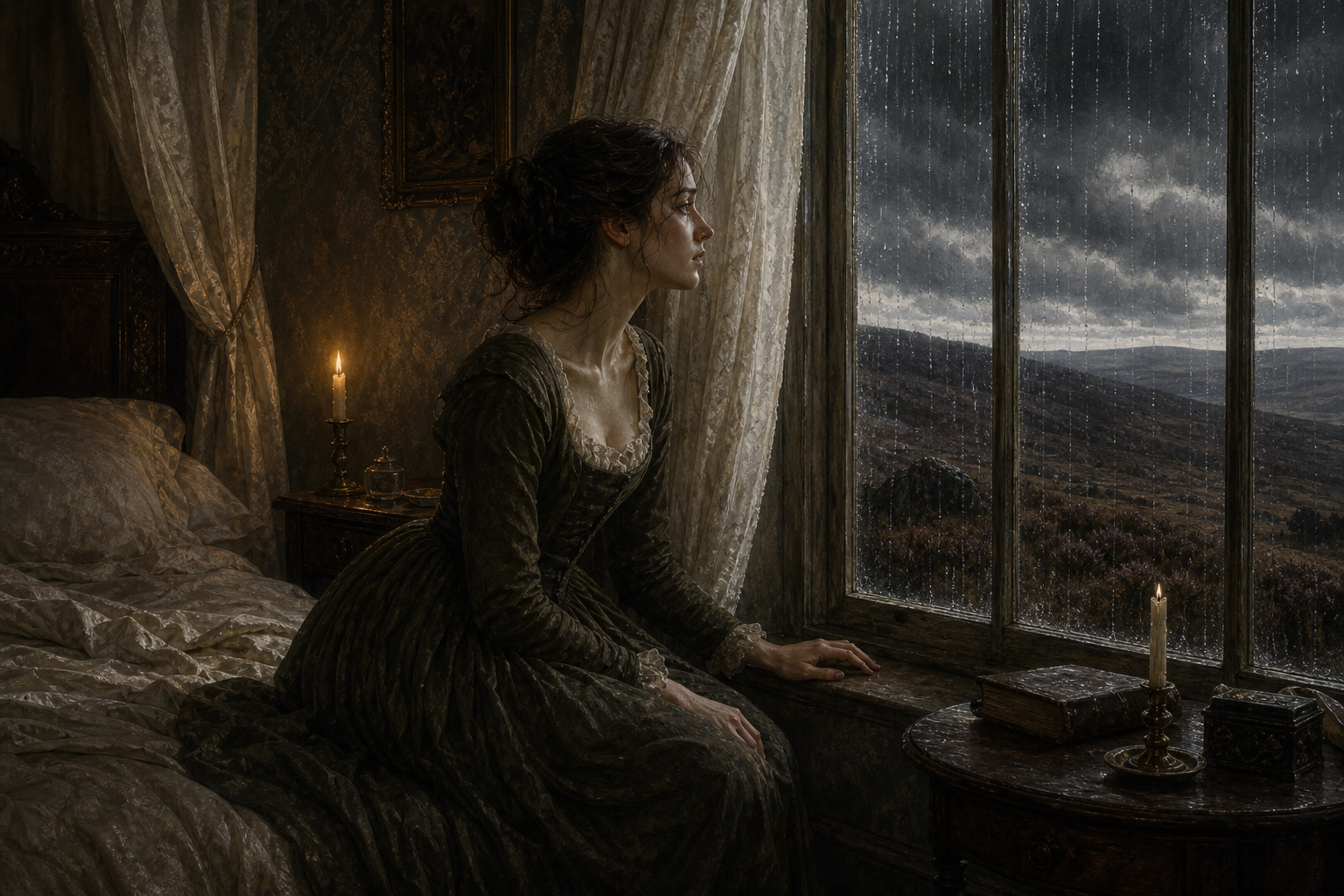
Catherine's illness at Thrushcross Grange turns the conflict inward. She feels trapped between Edgar's civilized house and the moorland self she associates with Heathcliff. Her window scenes make the Grange feel like a beautiful prison. Catherine does not know how to live with the consequences of a choice that split her social body from her imagined soul.
Edgar's position is painful because he is not simply a false husband. He offers real care, but he also believes the household can be protected by closing doors against Heathcliff. Catherine's crisis shows the limits of that strategy. The Grange can shelter her body, but it cannot reorganize the divided identity that her marriage has produced.
The conflict also exposes how little safety polite space can guarantee. Thrushcross Grange looks bright, ordered, and cultivated beside Wuthering Heights, but it cannot keep jealousy, manipulation, illness, or grief outside. Bronte repeatedly lets the two houses contaminate each other: the Heights sends violence into the Grange, while the Grange sends status, inheritance, and marriage law back into the Heights.
4. Catherine's death and Heathcliff's long afterlife of revenge
Catherine and Heathcliff's final meeting before her death is not a peaceful reconciliation. It is accusation, hunger, tenderness, cruelty, and mutual recognition all at once. They speak as if each has murdered the other by living separately. Catherine dies after giving birth to young Cathy, and Heathcliff's grief becomes one of the novel's most famous refusals of closure. He does not pray for peace; he asks Catherine to haunt him.
The scene is devastating because Bronte refuses to purify either person. Catherine's suffering is real, but she also wounds Edgar and Heathcliff with the force of her need. Heathcliff's grief is real, but it is already turning into a permission structure for future cruelty. Their language makes separation sound like death, and after Catherine dies Heathcliff tries to make the living world obey that logic.
Ending Explained: the second generation breaks the patternThis section contains major ending spoilers.
After Catherine's death, Heathcliff's revenge becomes dynastic. He gains control of Wuthering Heights through Hindley's ruin. He later forces young Cathy into marriage with his sickly son Linton, making her inheritance vulnerable and pulling Thrushcross Grange into his possession. Hareton Earnshaw, Hindley's son, is deliberately kept ignorant and rough, as if Heathcliff wants to reproduce his own degradation in the next generation.
Even Heathcliff's relation to the dead becomes possessive. He cannot accept Catherine's burial as separation; later he imagines coffins opened, earth disturbed, and bodies joined beyond social rules. That detail is not decorative Gothic excess. It shows that his love has become an effort to defeat every boundary: class, marriage, property, body, grave, and finally death itself.
Linton Heathcliff is one of the bleakest instruments in that design. He is frail, frightened, selfish, and used by his father as a legal bridge into the Linton estate. Young Cathy's kindness toward him is gradually turned against her. By forcing the marriage before Edgar dies, Heathcliff turns a sickroom, a courtship, and a daughter's filial love into parts of the same property strategy.
Young Cathy's plot matters because she is not simply a substitute Catherine. She grows up sheltered at the Grange, curious about the forbidden world beyond its borders, and vulnerable because she believes visits, letters, and sympathy can remain private acts. Heathcliff exploits that innocence. Her movement between the two houses repeats the first Catherine's movement, but this time the trap is more explicit: confinement, legal coercion, and inheritance replace youthful wandering.
Yet the second generation does not simply repeat the first. Young Cathy begins proud and sometimes cruel toward Hareton, but she gradually recognizes his desire to learn. Hareton, unlike Heathcliff, can feel shame without making revenge his identity. Their reading lessons become the quiet opposite of the earlier moorland passion: language, patience, and mutual correction replace possession.
Heathcliff's final decline is strange because he does not repent in ordinary moral terms. Instead, his obsession loses its practical interest. He sees Catherine everywhere, stops caring about property, and drifts toward death as if the boundary between the living and the dead has thinned. His revenge machine collapses not because the law defeats him, but because desire has consumed the person who built it.
The ending moves toward repair, not simple happiness. Young Cathy and Hareton plan to marry and move to Thrushcross Grange, leaving Wuthering Heights behind. Lockwood sees the graves of Catherine, Edgar, and Heathcliff and wonders how anyone could imagine unquiet sleep in that quiet earth. The question remains open. The novel offers social renewal through the younger pair, but it also preserves the possibility that Catherine and Heathcliff belong to a wilder order that cannot be fully domesticated.
5. Why the younger Cathy and Hareton matter
The final movement is easy to underread because Heathcliff and Catherine dominate the cultural memory of the novel. But young Cathy and Hareton are essential to Bronte's design. They inherit damage without being required to worship it.
Young Cathy has Catherine Earnshaw's pride and Edgar Linton's education. Hareton has Earnshaw blood, Heathcliff's abuse, and an unexpectedly loyal heart. At first, Cathy mocks him and Hareton reacts with wounded anger. Then the rhythm changes. She apologizes; he accepts slowly; she teaches; he learns; both become less imprisoned by the roles Heathcliff assigned them.
Their bond also corrects the novel's earlier failures of interpretation. Cathy learns to read Hareton's roughness as deprivation rather than natural inferiority, while Hareton learns that shame does not have to become revenge. In a book full of overheard fragments and misunderstood confessions, their relationship depends on patient rereading: of words, gestures, family names, and inherited stories.
Lockwood's late return makes that change visible. Earlier he could only misread the household; now he sees a different arrangement of bodies and voices. Cathy and Hareton are no longer trapped in Heathcliff's script. Nelly has moved back to Wuthering Heights, books are being shared instead of withheld, and the house that once felt like a sealed chamber begins to open toward a future.
Their repair is practical rather than spectacular. It happens through shared books, corrected words, embarrassed apologies, and the gradual discovery that pride can soften without disappearing. That matters because Heathcliff's revenge works by controlling education and language. When Cathy teaches Hareton to read, she is not just being kind; she is undoing one of the central methods by which the household has been kept violent.

Their relationship is not as theatrically intense as Catherine and Heathcliff's, but that is the point. Bronte does not replace destructive passion with a sentimental lecture. She shows a smaller, more livable form of love: one that can apologize, read, wait, and share a future without turning the beloved into property.
Major Characters
Heathcliff
Foundling, outsider, lover, and architect of revenge
Heathcliff begins as an abused child brought into a hostile household. Hindley's degradation teaches him that class power can remake a person from the outside.
His tragedy is that he answers humiliation by mastering the same tools: property, marriage, inheritance, and cruelty. He loves Catherine, but he turns that love into a system that damages everyone near him. A strong reading keeps both truths in view: he is shaped by violence, and he later chooses to reproduce it.
Catherine Earnshaw
Wild daughter of Wuthering Heights and divided self
Catherine is restless, proud, charismatic, and self-divided. She understands Heathcliff as part of her own being, yet she chooses Edgar's social world because it offers refinement and status.
Her tragedy is not simply choosing the wrong man. It is believing she can split public life from inward identity without destroying both. Her language of soul-level union is beautiful, but it also helps explain why ordinary care, compromise, and ethical limits feel intolerable to her.
Edgar Linton
Civilized husband and fragile alternative to storm
Edgar represents gentleness, order, education, and class legitimacy. He genuinely loves Catherine, but his world cannot absorb the force of Catherine and Heathcliff's bond.
He is not merely weak. He shows what domestic tenderness can offer, while also revealing how refinement can depend on exclusion and protected property. His failure is not lack of feeling; it is the belief that manners and walls can keep the moorland past from entering the Grange.
Nelly Dean and Lockwood
Frame narrators and imperfect witnesses
Nelly tells most of the story, but she is not neutral. She judges, intervenes, withholds, and remembers from inside the household hierarchy.
Lockwood gives the outer frame. His misunderstanding makes readers cautious: the novel teaches us to ask who is telling the story, what they saw, and what they cannot interpret. Their combined narration makes the novel a study in evidence as much as emotion.
Young Cathy and Hareton
The generation that learns repair
Young Cathy and Hareton inherit the wreckage of the first generation. Heathcliff tries to make them repeat humiliation, dispossession, and resentment.
Their slow movement toward reading and mutual respect creates the novel's counterplot. They prove that inheritance can be revised, not only obeyed. Their love is less quotable than Catherine and Heathcliff's, but it is more capable of sustaining a shared life.
Best Quotes
He's more myself than I am.
Catherine's line is the clearest statement of the novel's dangerous intimacy. She does not describe Heathcliff as a partner she loves from a distance; she imagines him as the self beneath her social self.
For close reading, notice the comparative "more." Catherine does not say Heathcliff is like her; she says he is more truly herself than she is. The line makes passion feel metaphysical, but it also warns that a love built on identity collapse may struggle to respect another person's separate life.
Whatever our souls are made of, his and mine are the same.
This is why ordinary marriage logic fails Catherine. She can distinguish Edgar and Heathcliff socially, but spiritually she places Heathcliff in a category beyond comparison.
The sentence also exposes the trap she has made for herself. If Heathcliff and Catherine share the same substance, then marrying Edgar cannot simply be a practical social choice; it becomes a kind of self-division. The grandeur of "souls" collides with the practical world of houses, names, and inheritance.
I am Heathcliff!
The exclamation is famous because it is both passionate and alarming. Catherine's identity claim sounds transcendent, but it also erases boundaries that ethical love needs.
This is a useful AP Lit line because its simplicity is part of its force. Subject, verb, name: the sentence leaves no room for relation, only identification. Bronte lets the reader feel the intensity while also seeing why this kind of identity claim can become destructive.
Be with me always--take any form--drive me mad!
Heathcliff's grief rejects consolation. He would rather be haunted than healed, which tells us why his love cannot become ordinary mourning.
The verbs are commands, not prayers for peace. "Be," "take," and "drive" turn Catherine's death into an ongoing demand on the living world. Heathcliff's grief is sincere, but it also chooses madness over responsibility to anyone still alive.
I cannot live without my life! I cannot live without my soul!
The repetition makes Catherine's death feel like metaphysical amputation. Heathcliff's language turns bereavement into a refusal to remain a separate living person.
The line also shows why his later revenge cannot be dismissed as ordinary bitterness. He has converted Catherine into "life" and "soul," so every obstacle appears to him as an assault on existence itself. That emotional extremity gives the novel its power and its danger.
Time brought resignation, and a melancholy sweeter than common joy.
This quieter line matters because the novel is not only about storm. It also asks whether grief can become livable memory rather than endless retaliation.
Its paradox creates an alternative to Heathcliff's haunting. Melancholy does not become happiness, but it can become something bearable and even tender. That possibility prepares readers for the more ordinary, restorative ending of young Cathy and Hareton.
Major Themes
Obsession
Love Becomes Violence When It Refuses Limits
Catherine and Heathcliff's bond feels absolute, but Bronte shows the cost of love that cannot respect separation, marriage, death, or the dignity of other people. The novel does not deny that the feeling is real; it denies that intensity alone is a moral defense.
Inheritance
Property Turns Emotion into Structure
Houses, names, marriages, and wills make private hatred durable. Heathcliff's revenge works because the social system gives him legal tools. This is why the plot keeps returning to ownership, guardianship, education, and marriage contracts.
Narration
Truth Arrives Through Imperfect Witnesses
Lockwood and Nelly do not simply report the story. Their limitations make the reader practice interpretation, suspicion, and ethical judgment. Bronte's form turns reading into a test of how evidence, sympathy, and bias interact.
Repair
The Second Generation Revises the First
Young Cathy and Hareton do not erase the past, but they learn a less destructive form of attachment. Reading together becomes an image of shared future. Repair appears not as grand passion, but as teachability, apology, and daily patience.
Emily Bronte and the Gothic Context
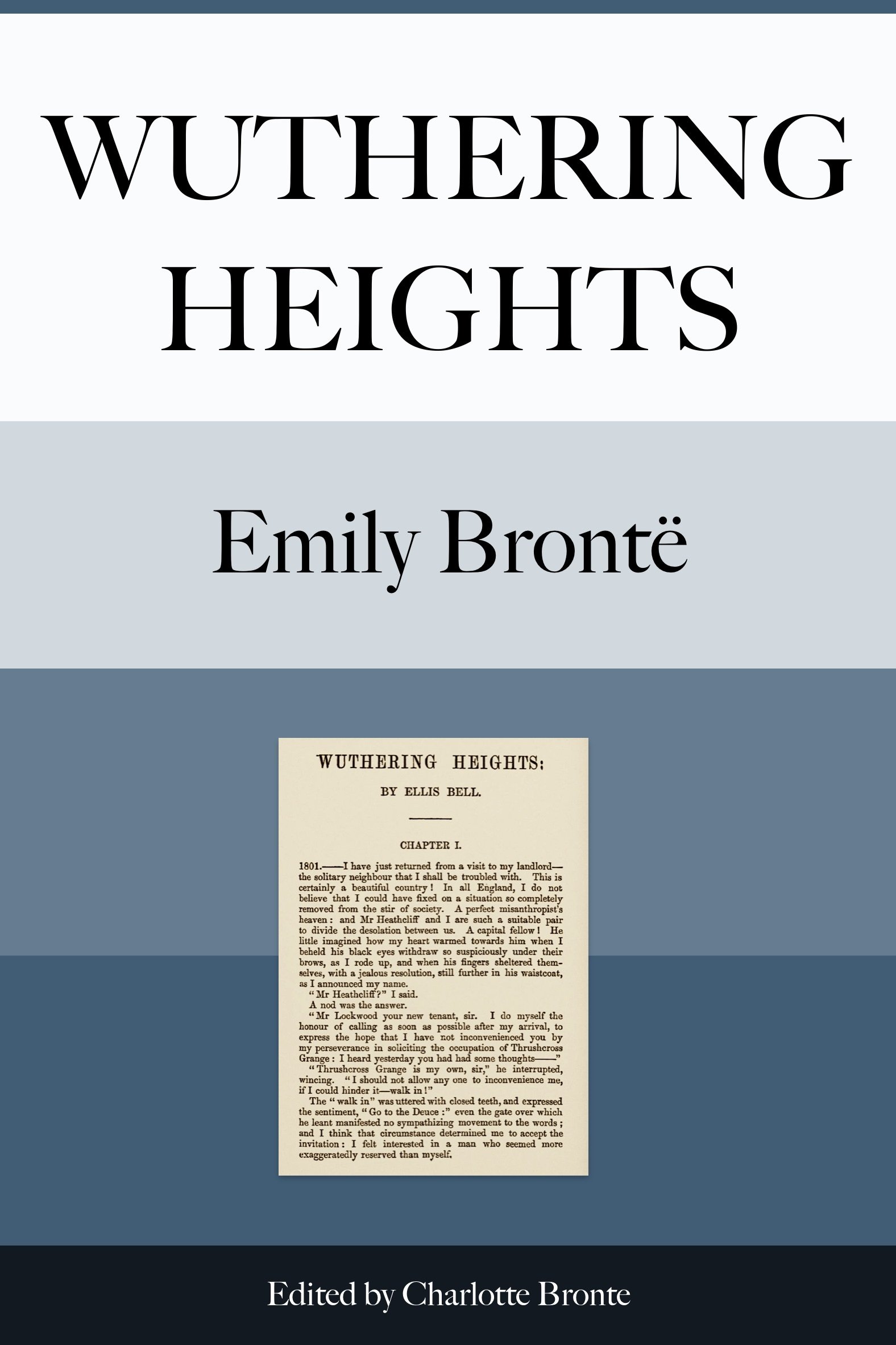
Emily Bronte published Wuthering Heights in 1847 under the name Ellis Bell. The pseudonym placed the novel inside a literary marketplace that was uneasy with women's authorship, especially when the work contained violence, cruelty, sexual intensity, and moral ambiguity.
The book belongs to Gothic fiction, but it is not a simple haunted-house story. Its haunted spaces are also economic spaces: Wuthering Heights and Thrushcross Grange are homes, properties, inheritances, prisons, and emotional climates. The Gothic atmosphere makes social structures feel physical. A locked room, a window, a grave, or a threshold can carry legal and psychological force.
The Yorkshire moors matter just as much as the houses. The moor is freedom, exposure, danger, childhood, and the place where ordinary social distinctions seem temporarily suspended. But no one can live on pure moorland intensity forever. The tragedy begins when the characters try to carry that wild bond into a world of property, marriage, rank, and revenge.
The first reception of the novel was often uneasy because the book refuses the moral neatness expected from domestic fiction. It does not reward virtue in a simple pattern, and it does not punish passion in a reassuringly tidy way. That difficulty is part of its lasting force: Bronte writes a novel where cruelty is legible, sympathy is risky, and judgment has to stay alert.
Why It Still Matters
Wuthering Heights still matters because it refuses to flatter the reader's wish for clean categories. Heathcliff is victim and abuser. Catherine is trapped and selfish. Edgar is gentle and limited. Nelly is caring and compromised. The novel makes interpretation feel morally risky.
It is also one of the best novels for studying structure. The frame narration, doubled generations, paired houses, repeated names, and reversed relationships make form visible. AP Lit essays can use almost any major scene to discuss how narrative design creates meaning.
Most of all, the book remains unsettling because it separates intensity from goodness. A feeling can be deep and still destructive. A love can be real and still unjust. Bronte's storm is not a decoration around romance; it is the weather system of a world where unhealed injury becomes inheritance.
Modern readers also return to the book because it is sharp about romantic myth. It understands the attraction of the "soulmate" idea, but it asks what happens when that idea excuses control, cruelty, or the erasure of other people's lives. That makes the novel especially useful for classrooms: students can discuss desire without flattening it into either fantasy or moral slogan.
FAQ: Summary, Ending, and Themes
What is Wuthering Heights about?
Wuthering Heights is about the bond between Catherine Earnshaw and Heathcliff, Heathcliff's revenge against the Earnshaw and Linton families, and the second generation's attempt to escape inherited violence.
The plot moves through two households, two generations, and two narrators. Its central pattern is repetition with difference: Catherine and Heathcliff's destructive bond is echoed, tested, and partly revised by young Cathy and Hareton.
Is Wuthering Heights a romance?
It is a love story, but not a comforting romance. The novel treats Catherine and Heathcliff's love as intense, real, and destructive. It asks what happens when passion becomes possession.
Calling it only a romance misses the Gothic, legal, and ethical design of the book. Bronte is interested in desire, but she is equally interested in abuse, class injury, inheritance, narration, and whether a damaged household can be remade.
Why does Catherine marry Edgar?
Catherine marries Edgar because he offers refinement, social status, and a stable life at Thrushcross Grange. She believes she can still keep Heathcliff as her deeper self, but that division proves impossible.
Her decision is not shallow in a simple way. Catherine recognizes that marrying Heathcliff would degrade them both within the class system she inhabits. The tragedy is that she tries to solve a social problem by splitting her public future from her inward identity.
Why is Heathcliff so cruel?
Heathcliff is shaped by abandonment, racism or ethnic othering, class humiliation, and Hindley's abuse. But the novel does not excuse his cruelty. It shows how injury can become a deliberate system of domination.
His cruelty becomes most frightening when it stops looking impulsive. He learns how to use debt, marriage, inheritance, and education to hurt the next generation. That is why he is more than a brooding romantic figure; he is a planner of domestic and legal revenge.
What does the ending mean?
The ending suggests that the younger generation can revise the past. Young Cathy and Hareton build a relationship based on learning and mutual recognition, while Heathcliff's revenge loses force as he becomes absorbed by his longing for Catherine.
The ending is hopeful but not perfectly settled. The young couple's future points toward repair, yet the graveside image keeps a Gothic ambiguity around Catherine and Heathcliff. Bronte leaves readers with social renewal and lingering unease at the same time.
Read Next
Read Jane Eyre for another Bronte novel about love and moral selfhood, Frankenstein for Gothic questions about creation and responsibility, and The Great Gatsby for a later novel about desire, class performance, and a dream that damages everyone around it.