Middlemarch - The Immensity of Ordinary Lives
George Eliot turns marriage, vocation, money, reputation, and sympathy into one of the richest studies of provincial life.
Sua's Quick Take
Middlemarch is not difficult because nothing happens. It is difficult because George Eliot makes every small misunderstanding, ambition, debt, kindness, and silence matter.
The novel asks a sharp question: what if the most important moral drama in a life is not a grand public event, but the daily work of seeing other people more accurately?
What the Book Is Really About
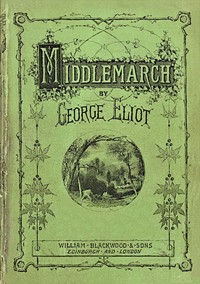
George Eliot's Middlemarch: A Study of Provincial Life was published in 1871-1872. It is set in an English provincial town around the early 1830s and follows several connected lives: Dorothea Brooke's idealistic marriage to Edward Casaubon, Tertius Lydgate's medical ambition and troubled marriage to Rosamond Vincy, Fred Vincy's slow education in responsibility, Mary Garth's clear moral judgment, and Nicholas Bulstrode's hidden past.
The novel is divided into eight books. Its structure is not built around one single adventure. Instead, Eliot creates a social web. Marriage, money, medicine, religion, inheritance, politics, gossip, and reputation all affect private choices. A decision made in one household can change the emotional and financial future of another.
That is why Middlemarch remains central to AP Lit and university literature courses. It is a major realist novel, but it is also a study of interpretation. Characters often suffer because they misread one another. Dorothea mistakes Casaubon's dry scholarship for greatness. Lydgate mistakes Rosamond's elegance for emotional compatibility. Rosamond mistakes marriage for social elevation. Bulstrode mistakes religious language for moral safety.
Plot Summary
1. Dorothea Brooke wants a life large enough for her ideals
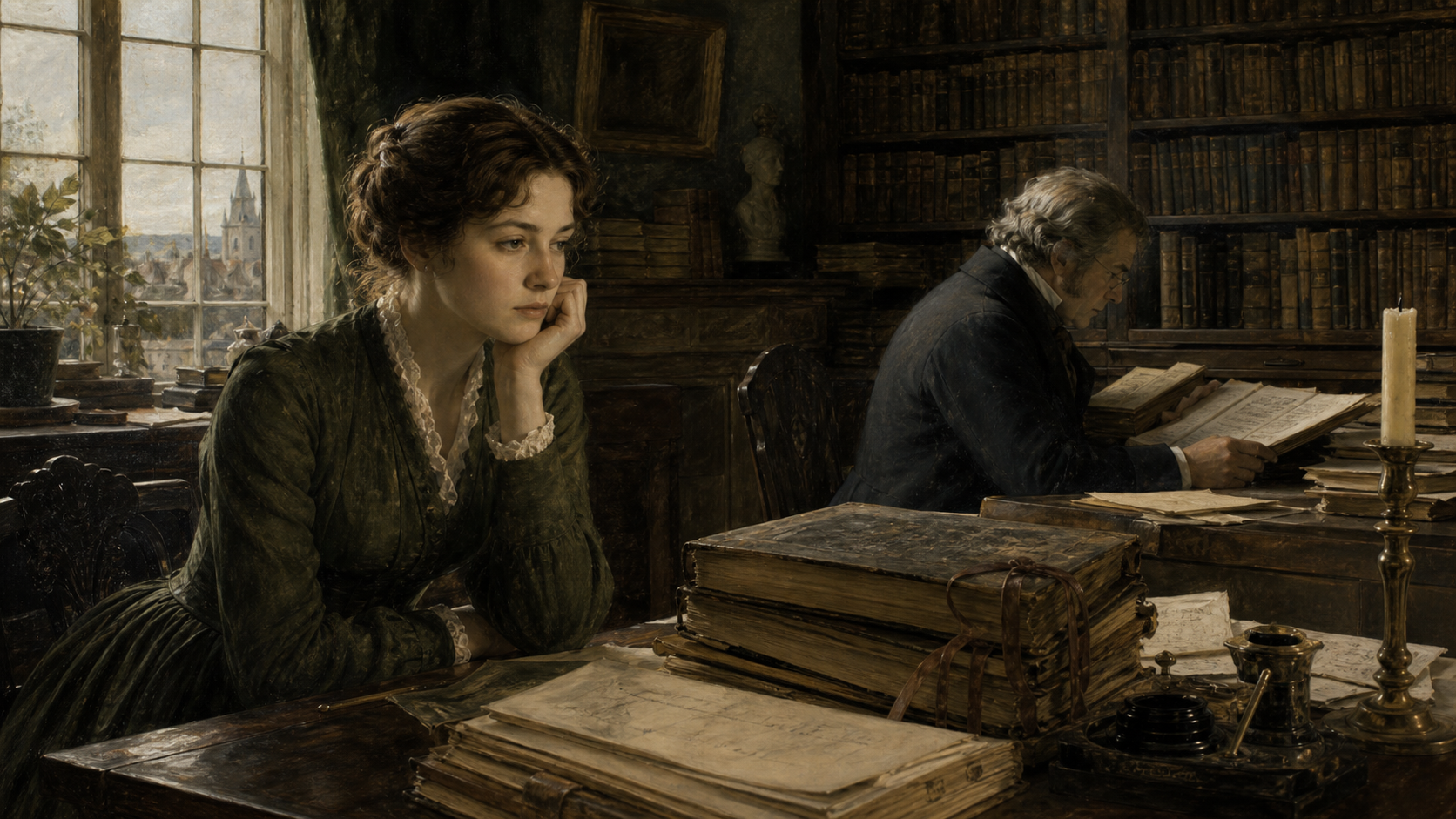
Dorothea Brooke begins the novel as a young woman with serious moral hunger. She is wealthy, beautiful, and marriageable, but she does not want a life of decoration. She wants purpose. She wants to serve, to learn, to make her life useful in some larger moral design. Eliot takes that desire seriously. Dorothea is not vain for wanting greatness; she is vulnerable because she does not yet know how to recognize the difference between greatness and the appearance of it.
Her social world offers limited scripts. Sir James Chettam is kind, stable, and ready to marry her, but Dorothea does not want comfort as her highest good. Her sister Celia loves her but often sees her seriousness as excessive. Mr. Brooke, her uncle, has liberal opinions but little discipline. Dorothea is surrounded by people who care for her, yet few can understand the scale of her inward ambition.
Edward Casaubon appears to offer what Dorothea wants: scholarship, seriousness, ancient learning, and a life of intellectual service. Casaubon is much older, emotionally dry, and not especially attractive, but Dorothea imagines him as a great mind engaged in a vast project. She believes that as his wife she can help him and enter a deeper world of knowledge. The tragedy begins in this imaginative mistake. Dorothea does not love Casaubon as he is. She loves the life she thinks he represents.
Casaubon also misreads Dorothea. He does not want an equal partner in discovery. He wants a respectful assistant, a young wife who will confirm his importance and not expose his insecurity. Their marriage is therefore an error on both sides. Dorothea expects intellectual enlargement; Casaubon expects quiet service. Each person has married an idea rather than the other human being.
The honeymoon in Rome makes the problem visible. Dorothea is surrounded by beauty, history, art, and ruins, but she feels lonely and intellectually starved. Casaubon's research appears less like a living work and more like a dead accumulation of notes. Dorothea begins to sense that the grand project she admired may never become anything. This discovery is not simply disappointing; it threatens the meaning she assigned to her marriage.
Will Ladislaw enters this atmosphere as a contrast. He is Casaubon's young relative, connected to art, politics, movement, and present life. Dorothea does not immediately understand her attraction to him, but his energy reveals what is missing in Casaubon. With Will, conversation has warmth and responsiveness. With Casaubon, even knowledge feels airless.
The first movement of the novel therefore establishes a central pattern: idealism can be morally beautiful and practically dangerous. Dorothea's mistake is not that she wanted too much from life. Her mistake is that she mistook a narrow man for a large one because she needed a form for her own aspiration. Eliot wants readers to pity her without simplifying her.
2. Lydgate brings medical ambition into a town ruled by reputation
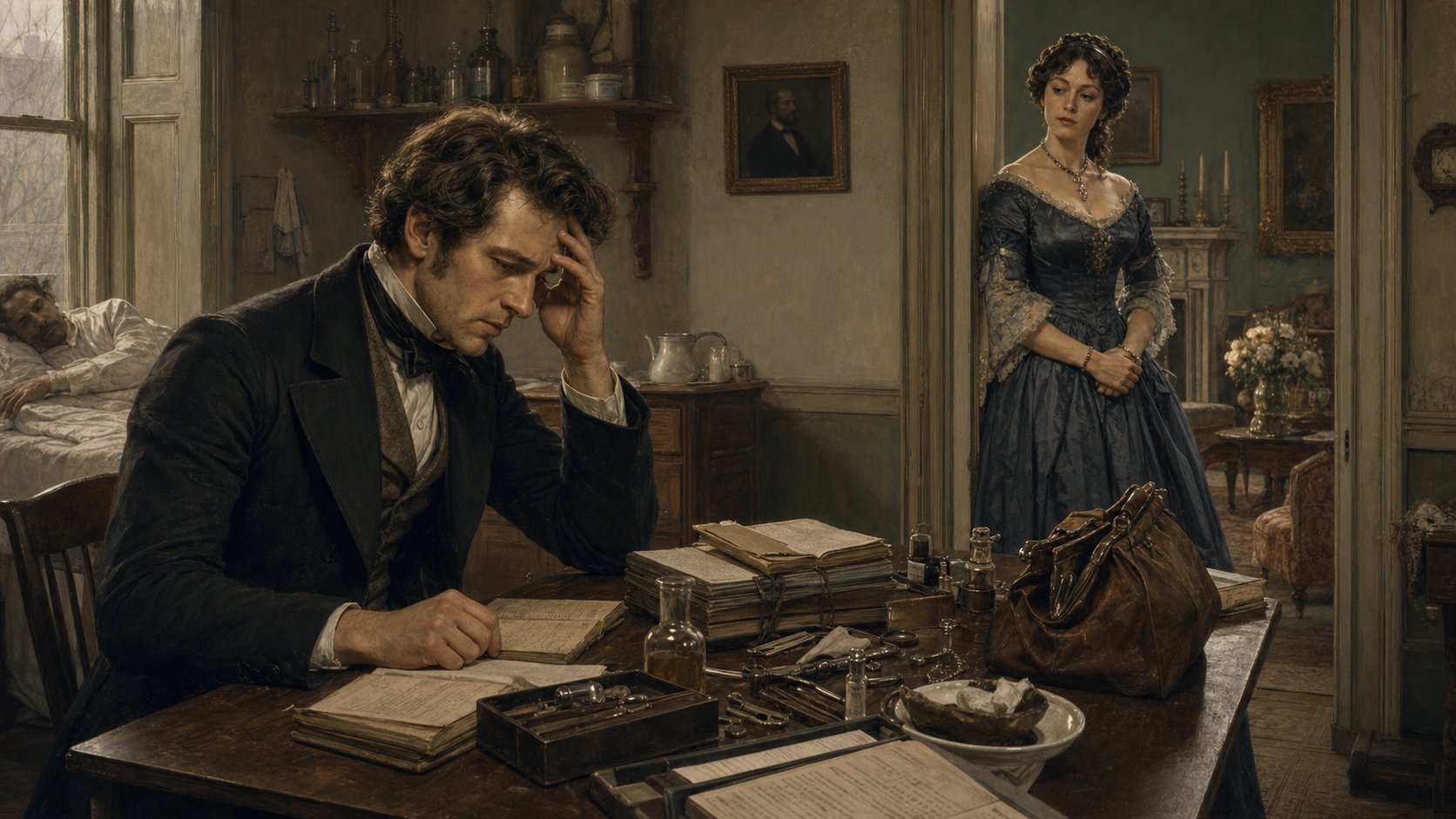
Tertius Lydgate arrives in Middlemarch with a different kind of ideal. He is a young doctor who wants to reform medical practice. He is interested in scientific progress, professional seriousness, and the possibility of doing work that matters beyond ordinary local success. If Dorothea's idealism is spiritual and moral, Lydgate's is professional and scientific.
Middlemarch, however, is not a neutral stage for talent. It is a town of old habits, local suspicions, professional rivalries, class assumptions, and gossip. Lydgate believes that ability and modern knowledge should be enough to establish his authority. Eliot shows why that belief is naive. In a provincial society, people judge not only what you know, but whom you know, whom you offend, what you owe, whom you marry, and what stories circulate about you.
Lydgate becomes involved with the new fever hospital and with Nicholas Bulstrode, a powerful banker and religious figure. This association helps his work at first, but it will later create danger. Lydgate does not fully understand how financial dependence can compromise moral independence. He wants to remain above local politics, but the town does not allow clean separations.
His attraction to Rosamond Vincy becomes another form of misreading. Rosamond is elegant, beautiful, musically accomplished, and socially ambitious. She sees Lydgate as a man from a wider world, someone who might lift her beyond provincial smallness. Lydgate sees her as graceful domestic refinement, a soft counterweight to his demanding vocation. Neither understands the other's deepest expectations.
After marriage, the mismatch becomes practical. Lydgate needs economy and concentration. Rosamond wants the style of life she imagined marriage would provide. Debt grows. Furniture, social display, pride, and silence become forms of conflict. Money in Middlemarch is never just money. It reveals what people think life should look like.
Lydgate's weakness is not stupidity. He is intelligent, ambitious, and capable of real work. His weakness is a confidence that does not include self-knowledge. He thinks he can manage marriage, social pressure, and debt without being fundamentally changed by them. He underestimates Rosamond's will, the town's judgment, and his own need for approval.
Eliot makes his decline painful because it is gradual. He does not fall in one dramatic act. He compromises, delays, hopes, borrows, conceals, and adjusts. A vocation can be lost by inches. The novel's realism lies in showing how ordinary pressures slowly alter what a person once thought was non-negotiable.
3. Fred Vincy and Mary Garth show the ethics of ordinary responsibility
The Fred Vincy and Mary Garth plot may seem lighter at first, but it is essential to the novel's moral design. Fred is not wicked. He is charming, hopeful, and immature. He expects inheritance to rescue him from responsibility and treats debt as something that will somehow be settled later. Mary Garth loves him, but she refuses to turn affection into indulgence.
Fred's debt harms Caleb Garth, Mary's father. Caleb is one of the novel's great figures of practical integrity. He values work, reliability, and honest competence. Through him, Eliot offers a model of goodness that is not theatrical. Caleb is not a grand intellectual or a romantic hero. He is a person who makes other lives steadier by doing work well and dealing honestly.
Mary's judgment is similarly grounded. She sees Fred clearly. She does not despise him, but she also does not sentimentalize him. Her love requires him to become more responsible, not because she wants to control him, but because she understands that a shared life cannot be built on fantasy. In this sense, Mary is one of the novel's clearest moral readers.
Fred's education matters because it offers a quieter alternative to the larger failures around him. Dorothea begins with a grand ideal and must learn practical sympathy. Lydgate begins with professional ambition and must confront social limitation. Fred begins with laziness and expectation, then slowly learns work. His growth is less glamorous, but it is real.
This plot also helps explain Eliot's realism. A moral life is not always made of rare heroic moments. It may consist of paying debts, learning a trade, keeping promises, accepting correction, and becoming someone another person can trust. Fred's eventual movement toward steadiness is one of the novel's least spectacular but most hopeful developments.
4. Bulstrode's hidden past turns private guilt into public scandal
Nicholas Bulstrode appears in Middlemarch as a religious and financial authority. He is powerful, stern, and outwardly moral. Yet his past contains secrets connected to questionable business, inheritance, and moral evasion. Eliot does not make him a simple villain. He believes in the language of repentance and Providence, but he also uses that language to protect himself from full honesty.
The return of Raffles threatens Bulstrode because Raffles carries knowledge of the past. Suddenly, what Bulstrode has buried becomes socially dangerous. The problem is not only guilt before God; it is reputation before Middlemarch. Eliot is especially sharp about this combination. Bulstrode's religious identity and public authority depend on a story about himself that the past can destroy.
Lydgate becomes dangerously entangled with Bulstrode because of money. Debt makes him vulnerable. When he receives financial help from Bulstrode and later makes medical decisions around Raffles's illness, the town has grounds for suspicion even if the full truth is more complicated. Eliot's point is not that appearances are always fair. It is that compromised circumstances make innocence harder to defend.
Raffles's illness and death form one of the novel's darkest ethical passages. Bulstrode does not fit a neat melodramatic category, but fear and self-interest corrupt his choices. He wants to preserve his life as a respected religious man, and that desire bends his conscience. Eliot shows how self-deception can look almost like moral reasoning from the inside.
The scandal damages Lydgate as well. He wanted medical authority based on knowledge, but he becomes trapped in a story about money and corruption. Middlemarch judges through gossip, partial knowledge, and emotional certainty. The town does not patiently separate fact from suspicion. It turns social interpretation into punishment.
This plot expands the novel beyond marriage. It connects conscience, finance, religion, medicine, and public opinion. Bulstrode's fall shows that private wrongdoing rarely remains private in a densely connected world. Lydgate's damage shows that even partial dependence on corrupt power can stain a person's public meaning.
5. Dorothea learns sympathy through pain
After Casaubon's death, Dorothea is still not fully free. His will attempts to control her future by attaching property to the question of Will Ladislaw. If she marries Will, she loses part of her inheritance. This clause reveals Casaubon's final insecurity. Even after death, he tries to convert jealousy into legal power.
Dorothea is wounded by the discovery, but she also changes through it. She begins to understand the difference between obedience to a dead form and fidelity to living truth. Her moral growth is not a simple liberation story. It is a process of learning how to choose without turning selfishness into freedom.
Her relationship with Will becomes increasingly important because he represents responsiveness, warmth, and present life. Yet the relationship is socially risky. Will's position is unstable, and gossip easily surrounds him. Dorothea must decide whether to live according to social security or according to a deeper recognition of what is true for her.
One of the novel's most powerful scenes comes when Dorothea visits Rosamond. Dorothea has reason to feel hurt and jealous because she misunderstands Rosamond's connection with Will. But instead of remaining inside her own wounded pride, she tries to see Rosamond's loneliness and misery. This is the novel's ethic of sympathy in action.
Rosamond, in turn, does something important. She tells Dorothea the truth about Will's feelings. The scene refuses to reduce the women to romantic rivals. Both are trapped in different forms of misunderstanding and dissatisfaction; both are capable, briefly, of moral clarity. Eliot gives the emotional breakthrough not to a dramatic male confession, but to a conversation between two women who begin to see each other more accurately.
6. The ending measures lives by influence, not fame
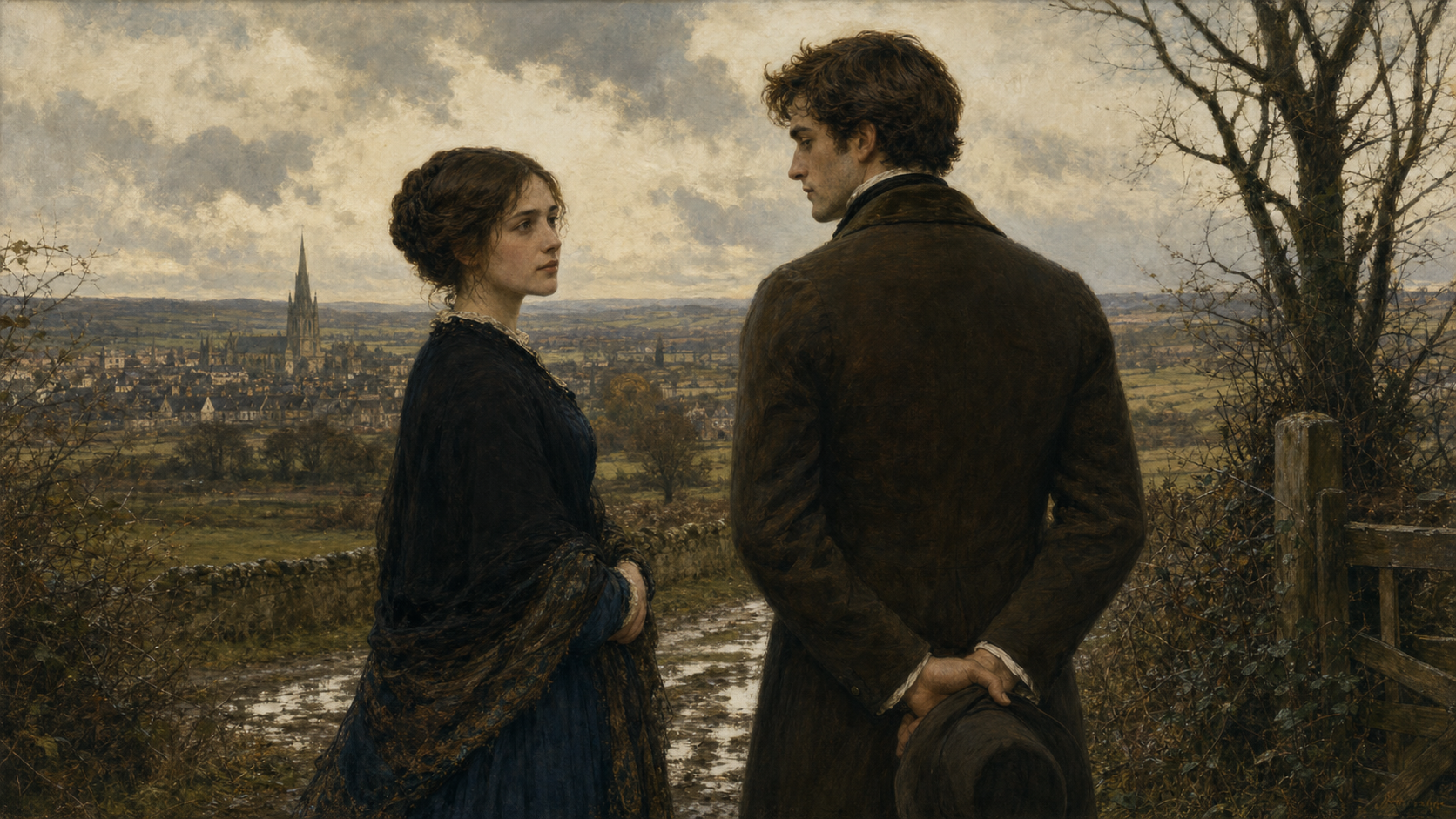
Dorothea eventually chooses Will. The choice costs her social approval and material advantage, but it restores her agency. She does not become the saintly public reformer she once imagined. She does not write a monumental book or transform national history. Instead, her goodness moves through smaller channels: marriage, influence, kindness, attention, and the lives of people changed by her presence.
Lydgate's ending is more bitter. He leaves Middlemarch and later achieves a kind of professional success, but not the kind he wanted. He does not become the medical reformer his younger self imagined. Rosamond gets much of the life she can recognize as success; Lydgate carries the loss of a deeper vocation. This is one of Eliot's harshest insights: a person can look successful from the outside and still have failed the central dream of his life.
Fred and Mary receive a quieter, healthier ending. Fred becomes more responsible under Caleb Garth's influence and builds a life that suits him. Their plot suggests that happiness is possible when affection is joined to practical truth. Mary does not save Fred by romantic devotion; she helps make responsibility a condition of love.
Bulstrode is disgraced and leaves the central social world of Middlemarch. His downfall is morally fitting, but Eliot avoids easy triumph. He is a guilty man, yet his guilt is mixed with fear, religion, self-justification, and dependence on public respect. The novel asks readers to judge him without pretending that judgment is simple.
The ending therefore does not divide characters into winners and losers. It asks what each life became under pressure. Dorothea's idealism survives by becoming less grand and more humane. Lydgate's ambition shrinks under debt and domestic pressure. Fred's weakness improves through work. Rosamond's self-protective imagination remains costly. Bulstrode's piety collapses when it cannot face truth.
7. Ending and final meaningThis section contains spoilers.
Dorothea marries Will Ladislaw and gives up the security Casaubon's will tried to use against her. She does not become famous. The novel's final emphasis is not public achievement, but the quiet influence of a life lived with sympathy and courage.
Lydgate's fate remains painful. He gains external respect but loses the deepest version of his vocation. His story warns that talent without self-knowledge can be captured by money, marriage, and reputation.
The final mood is subdued rather than triumphant. Eliot suggests that the world's good depends partly on lives that history does not record. Dorothea's importance lies in the unseen effects of her choices, not in public glory.
Major Characters
Dorothea Brooke
idealism learning sympathy
Dorothea wants a life of moral seriousness. Her early mistake is not selfishness but misdirected reverence: she mistakes Casaubon's dry scholarship for greatness and imagines marriage as intellectual service.
Her growth comes through painful re-education. She learns to see others more accurately, especially Rosamond, and her final choice becomes an act of living agency rather than adolescent idealism.
Tertius Lydgate
vocation under social and domestic pressure
Lydgate arrives as a reform-minded doctor, but he underestimates debt, marriage, gossip, and local power. His tragedy is the gradual erosion of a serious vocation.
He is one of Eliot's most realistic failures: capable, ambitious, and flawed enough to be captured by pressures he thought he could manage.
Rosamond Vincy
desire shaped by fantasy
Rosamond imagines marriage as social elevation and refinement. She loves Lydgate through an idealized picture of what he can provide, not through a full understanding of his work.
She is not a cartoon villain. Her danger lies in self-protective imagination, the ability to make reality submit to the life she wants to believe in.
Will Ladislaw
living responsiveness and alternative future
Will represents energy, art, politics, and present life in contrast to Casaubon's sterile scholarship. For Dorothea, he opens the possibility of being seen as alive rather than merely useful.
His unstable social position also makes Dorothea's choice costly. The relationship tests whether she will choose security or truthful connection.
Nicholas Bulstrode
religious authority compromised by the past
Bulstrode is outwardly pious and socially powerful, but his past undermines his public identity. Eliot makes him frightening because his self-deception is psychologically plausible.
His scandal shows how conscience, money, reputation, and religion can become tangled until moral language hides moral evasion.
Best Quotes
If we had a keen vision and feeling of all ordinary human life, it would be like hearing the grass grow and the squirrel's heart beat.
This phrase points to Eliot's central moral problem: seeing ordinary life too clearly would be almost unbearable, yet ethical life depends on trying to see more than ourselves.
We are all of us born in moral stupidity, taking the world as an udder to feed our supreme selves.
Eliot treats sympathy as an education. People are not born naturally skilled at imagining other lives; they have to learn their way out of narrowness.
The growing good of the world is partly dependent on unhistoric acts.
This famous idea explains Dorothea's ending. A life can matter profoundly even when history does not record it as heroic.
What do we live for, if it is not to make life less difficult to each other?
The novel's ethics can be stated simply: people live better when they make one another's lives less difficult, not more.
But anyone watching keenly the stealthy convergence of human lots, sees a slow preparation of effects from one life on another.
Eliot's plot is built on converging lives. No character's fate is sealed alone; private choices keep crossing social boundaries.
Major Themes
Sympathy
The Ethics of Seeing
Sympathy in Middlemarch is not sentimental softness. It is the difficult work of imagining another person's limits, fears, and desires without reducing them to your own story.
Marriage
Misreading in Intimacy
Marriage exposes interpretation. Dorothea and Casaubon, Lydgate and Rosamond, and Fred and Mary all show that love depends on how accurately people read one another.
Vocation
Ambition Under Pressure
Lydgate's plot asks whether a vocation can survive debt, domestic conflict, and local politics. Eliot shows that talent needs moral and practical conditions to endure.
Society
The Provincial Web
Middlemarch is small, but its social network is powerful. Gossip, finance, inheritance, and reputation reshape private meaning.
George Eliot and the Context of Middlemarch
George Eliot was the pen name of Mary Ann Evans, one of the most intellectually ambitious English novelists of the nineteenth century. She wrote under a male name partly because women writers were often treated with condescension, and partly because she wanted her fiction judged as serious art.
The novel is set around the period of the Reform Bill, medical change, religious debate, and shifting class power. Eliot does not turn these issues into a background lecture. She lets them enter households, marriages, professional ambitions, debts, elections, and gossip.
That is why Middlemarch is often described as one of the greatest realist novels. Its realism is not only about detail. It is about moral relation. Eliot shows how people explain themselves, misunderstand others, rationalize weakness, and still remain worthy of attention.
Why It Still Matters
Middlemarch remains modern because its problems have not disappeared. People still confuse aspiration with self-importance, love with projection, career ambition with identity, and public reputation with moral worth. Lydgate could belong to any age in which professional purpose is slowly drained by debt and domestic mismatch. Dorothea could belong to any age in which a person mistakes intensity for wisdom.
The novel does not tell readers to abandon ideals. It asks us to make ideals more accurate. Good intentions are not enough if they turn other people into symbols. Love is not enough if it refuses reality. Talent is not enough if it cannot survive ordinary pressure. The book's quiet demand is precision: see better, judge more humbly, and make another life less difficult where you can.
Frequently Asked Questions
What is Middlemarch about?
Middlemarch is about interconnected lives in an English provincial town: Dorothea's failed idealistic marriage, Lydgate's medical ambition and decline, Rosamond's social desire, Fred's moral education, Bulstrode's scandal, and the town's web of money, gossip, and reputation.
Why is Middlemarch important for AP Lit?
It gives students rich material for character complexity, realist narration, social context, marriage plots, moral development, irony, and thesis-driven essays about sympathy, vocation, and interpretation.
Is the ending happy?
Only partly. Dorothea gains a truer life with Will, but Lydgate's ideal shrinks under pressure. The ending is not simple reward and punishment. It measures how each life is changed by choices, limits, and social forces.
Read Next
- Pride and Prejudice: marriage, judgment, class, and social reading
- A Room with a View: young women, choice, convention, and emotional honesty
- Anna Karenina: marriage, desire, reputation, and social punishment
- Jane Eyre: moral autonomy and the self-respecting heroine
Adaptations
- 1994 BBC miniseries: detailed, respected adaptation of the novel's social web
- 2022 television adaptation: faster modern pacing with emphasis on politics and marriage
- Audiobook editions: especially useful for hearing Eliot's narrator and sentence rhythm