Dr. Jekyll and Mr. Hyde - The Self That Refuses Division
Stevenson's Gothic novella turns respectability, repression, and moral division into a terrifying case file.
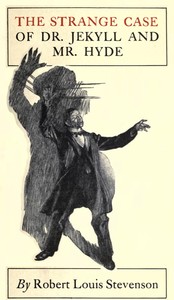
Sua's Quick Take
Jekyll's tragedy begins not because he has a dark side, but because he believes he can isolate that darkness, give it another name, and keep the benefits without the responsibility.
The novella is often treated as a simple split-personality twist. It is sharper than that. Stevenson writes a Gothic case file about respectability, secrecy, scientific ambition, and the dangerous fantasy that a person can divide desire from consequence.
What the Book Is Really About
Strange Case of Dr. Jekyll and Mr. Hyde is a Gothic novella first published in 1886. It is arranged in ten short chapters that move like an investigation: Enfield's story of a sinister door, Utterson's concern over Jekyll's will, Hyde's violence, Jekyll's temporary recovery, Lanyon's collapse, Poole's panic, the locked laboratory, Lanyon's statement, and Jekyll's final confession.
That structure matters because the truth does not arrive directly. Readers do not begin inside Jekyll's mind. They stand outside doors, read legal documents, hear rumors, follow a cautious lawyer, and wait for sealed statements to be opened. The novella's suspense is not only about who Hyde is. It is about why respectable society is so slow to name what it fears.
The book's central question is not simply whether human beings contain good and evil. Stevenson asks what happens when a person tries to separate moral identity from moral responsibility. Jekyll wants the freedom of Hyde without the accountability of being Hyde. The experiment fails because Hyde is not an outsider. He is Jekyll with the mask of respectability removed.
Plot Summary
1. The door, the will, and the name Hyde
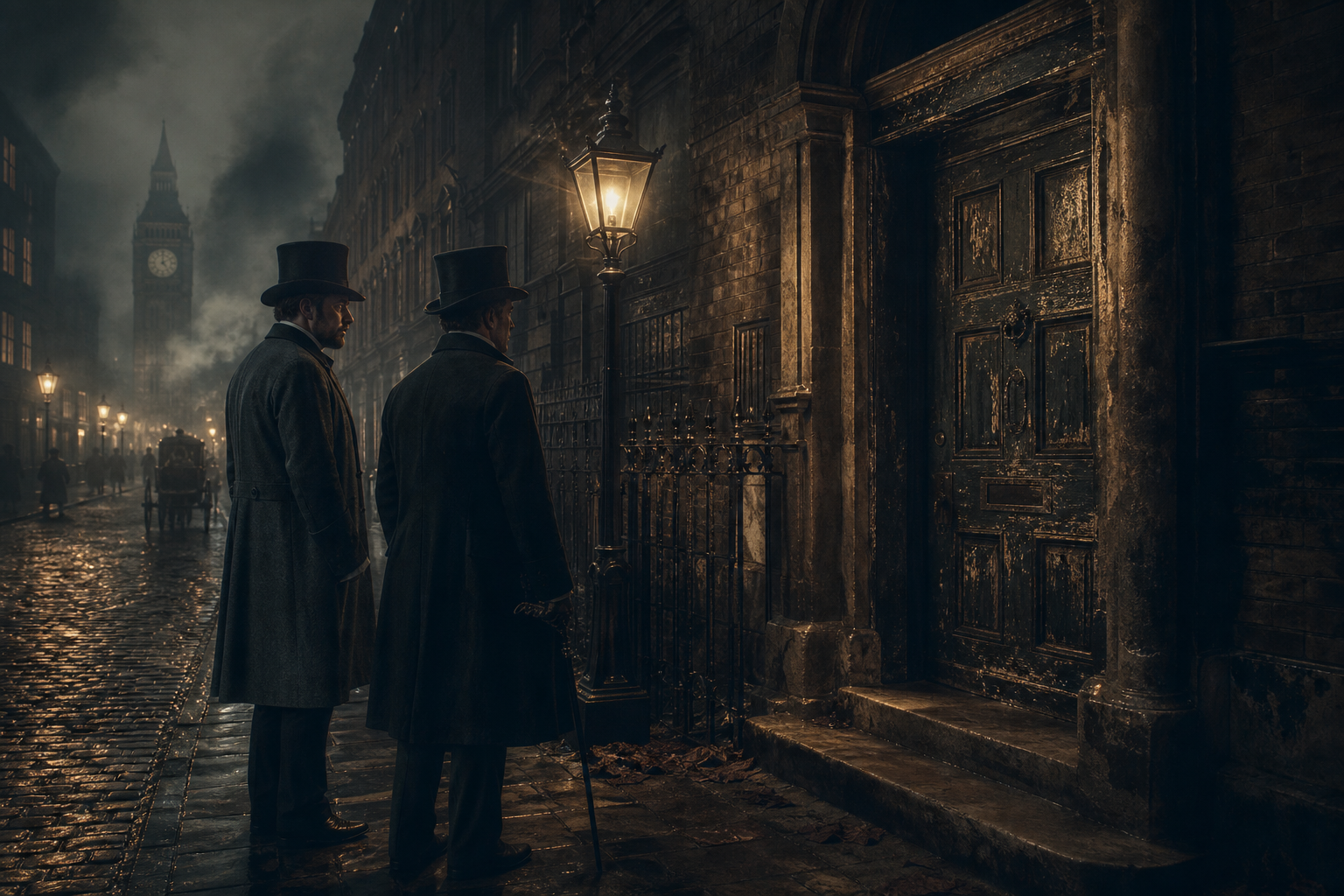
The story opens with Mr. Utterson, a reserved London lawyer, walking with his relative Enfield. They pass a strange, neglected door in an otherwise ordinary street, and Enfield tells a disturbing story. One night, he saw a small, unpleasant man trample a child and continue walking. When bystanders forced him to pay compensation, the man produced a check connected to a respectable name.
That man is Edward Hyde. From the beginning, Hyde is described less as a clear visual monster than as a moral disturbance. People cannot precisely explain what is wrong with him, yet they feel revulsion. Stevenson uses that vagueness carefully. Hyde is frightening because he suggests something recognizable but unnamed inside human nature.
Utterson is disturbed because he knows Dr. Henry Jekyll's will. The document leaves Jekyll's property to Hyde if Jekyll dies or disappears. A legal document turns private friendship into mystery. Why would a respected physician attach his future to a man who produces disgust wherever he goes?
The door becomes the novella's first major symbol. It is not merely an entrance to a building. It marks the boundary between public respectability and hidden appetite. Jekyll's respectable house and Hyde's sinister entrance belong to the same structure, just as Jekyll's polished identity and Hyde's violence belong to the same moral problem.
Utterson suspects blackmail. That suspicion is reasonable but incomplete. He imagines Hyde as an external threat to Jekyll, because that explanation preserves Jekyll's respectability. The reader is invited to share that assumption at first. The novella's later power comes from forcing that assumption to collapse.
2. Utterson's investigation and Jekyll's silence
Utterson decides to meet Hyde. He waits near the door until Hyde appears, then confronts him. The encounter confirms Utterson's unease. Hyde is rude, guarded, and physically disturbing, but again the disturbance resists exact description. The failure to describe Hyde becomes part of the horror.
That vagueness is not a weakness in Stevenson's writing; it is the point. Hyde frightens respectable observers because they sense moral wrong before they can translate it into a stable physical feature. He becomes the form of something Victorian society would rather not name directly: appetite, violence, secrecy, and the fear that corruption might live inside respectability itself.
Utterson then visits Jekyll. Jekyll is sociable, wealthy, and admired, but his answers about Hyde are evasive. He asks Utterson not to worry and insists that he can be rid of Hyde whenever he chooses. That claim is one of the novella's first major self-deceptions. Jekyll speaks as if control still belongs to him.
Victorian discretion helps preserve the mystery. Utterson is loyal and cautious. He does not want to expose a friend's private life without cause. That restraint makes him humane, but it also delays confrontation. Stevenson shows how manners, privacy, and gentlemanly reserve can become tools that protect a dangerous secret.
The early investigation is therefore not a simple detective plot. Utterson is not just gathering clues; he is navigating a social code. He must decide how far friendship permits inquiry, how much scandal can be risked, and whether a respectable man's reputation should be trusted when the evidence begins to contradict it.
This is where the novella becomes more than a monster story. Hyde's violence matters, but Jekyll's silence matters just as much. The danger grows because a respected man refuses to speak plainly and because his friends are trained to respect that silence.
3. The Carew murder and Jekyll's temporary recovery
Hyde's violence becomes public when he murders Sir Danvers Carew. The crime changes the scale of the story. The earlier trampling of the child was ugly and alarming; the murder is a social crisis. Hyde is now not merely disturbing but criminally dangerous.
Utterson and the police search Hyde's rooms. The evidence is partial and suggestive: disorder, traces of flight, and a broken cane that links back to Jekyll. Hyde disappears, but his absence does not solve anything. If anything, it makes Jekyll's connection to him more troubling.
After the murder, Jekyll claims he is finished with Hyde. For a while he seems restored. He returns to society, receives friends, and appears calmer. Readers are allowed to feel temporary relief. But Stevenson makes the recovery feel fragile. Jekyll has not understood or confessed the root of the problem. He has only shut a door.
The novella's pattern resembles repression rather than healing. Jekyll wants to believe that Hyde can be dismissed after the consequences become frightening. But Hyde was not a passing acquaintance. Hyde was created by Jekyll's own desire to separate action from accountability. That origin means the problem cannot be solved by avoidance.
Meanwhile Dr. Lanyon, once Jekyll's friend, becomes gravely ill and refuses to discuss Jekyll. His decline signals that he has seen something that destroys his understanding of the world. Stevenson keeps that knowledge sealed for later, turning Lanyon's silence into another locked door.
4. The laboratory and the illusion of control
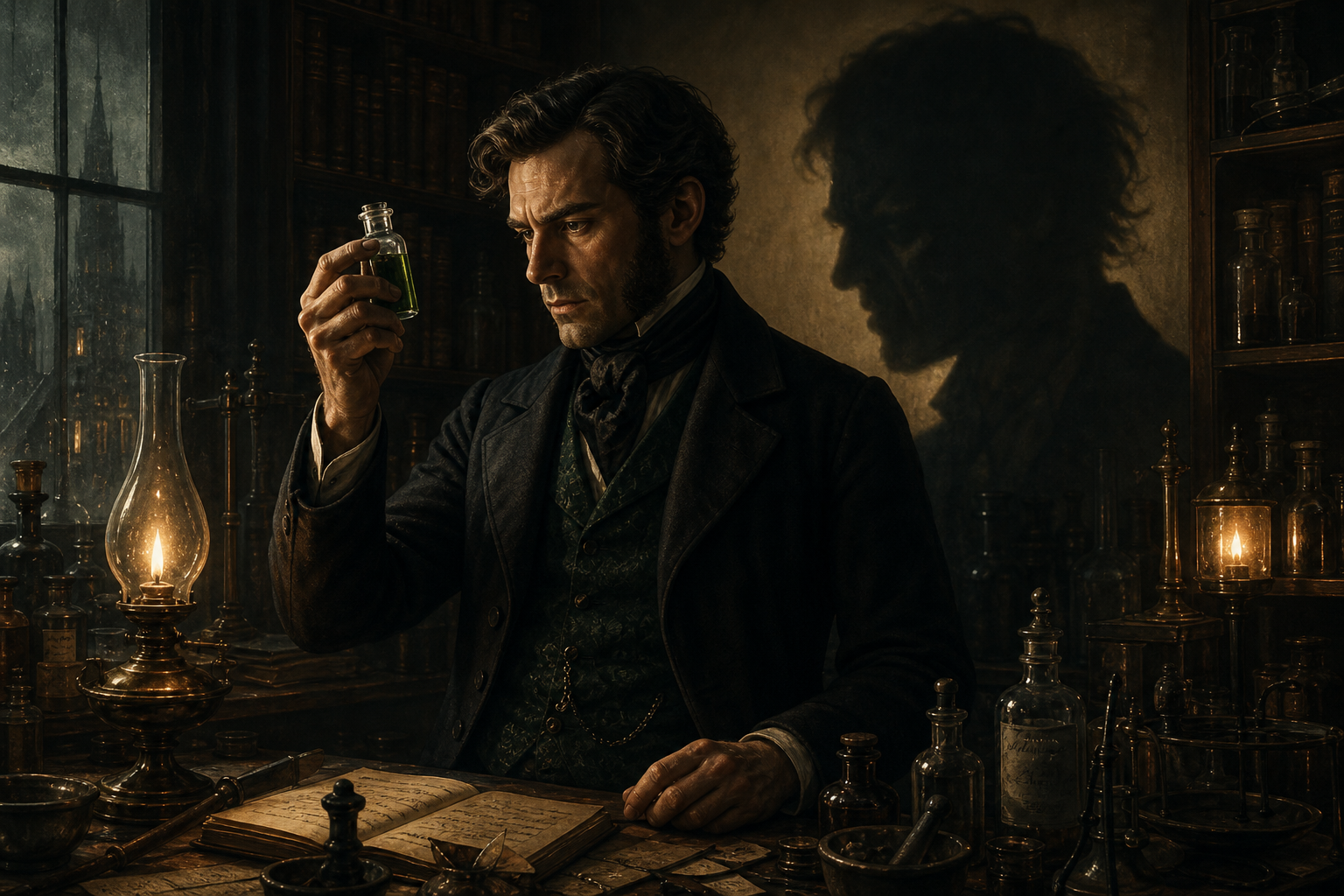
The true center of the novella is Jekyll's experiment. Jekyll does not merely discover that human nature is mixed. He tries to separate that mixture into bodies. He wants his respectable self to remain clean while another self carries appetite, impulse, and transgression.
At first, becoming Hyde feels like freedom. Hyde has no reputation to protect, no old age to soften him, no professional dignity to maintain. Actions that would ruin Jekyll can be displaced onto Hyde. This is the moral danger of the experiment. Jekyll mistakes a change of form for an escape from responsibility.
Hyde's smallness and ugliness matter. He is not the whole of Jekyll; he is the part Jekyll has fed in secret and released without moral discipline. He appears younger, smaller, and more primitive because he has been denied ordinary social development while growing in appetite. Stevenson turns moral repression into bodily distortion.
The laboratory objects - powders, salts, bottles, notebooks - carry a double meaning. They suggest scientific inquiry, but they also become instruments of self-deception. The novella is not simply anti-science. It is critical of knowledge used without ethical humility. Jekyll's problem is not curiosity alone; it is curiosity serving evasion.
The experiment therefore does not cure hypocrisy. It intensifies it. Jekyll does not become honest about his divided nature; he invents a way to deny ownership of part of it. Hyde lets him imagine that desire can act without consequence and that a name change can become a moral escape. The tragedy is that the body created for evasion slowly becomes the body that exposes him.
5. The window scene and the collapsing boundary
One of the novella's quietest scenes is also one of its most chilling. Utterson and Enfield pass Jekyll's window and see him inside. For a moment, ordinary friendship seems possible. Jekyll speaks with them, but he remains behind the window, separated from the street and from normal social life.
Then his expression changes abruptly. Terror crosses his face, and the window closes. Utterson and Enfield leave in silence. The scene is brief, but it suggests that Jekyll is no longer secure inside his own body. The boundary between Jekyll and Hyde is breaking down even when no one names it.
By this point Hyde is no longer only a person Utterson can follow through London. Hyde has become a possibility inside Jekyll's own physical existence. The threat has moved inward. That shift is important: the story begins as external investigation and becomes internal collapse.
The window also revises the door symbol. The early door suggested a hidden entrance to a secret life. The window shows Jekyll visible but unreachable. He can still be seen by friends, but he cannot fully join them. The architecture of the story keeps translating psychology into space.
6. Poole's fear and the locked laboratory
Jekyll's butler Poole finally comes to Utterson in fear. Something is wrong inside the laboratory. The voice does not sound like Jekyll's, strange chemical orders keep arriving, and the household has become terrified. The respectable home is now a Gothic enclosure.
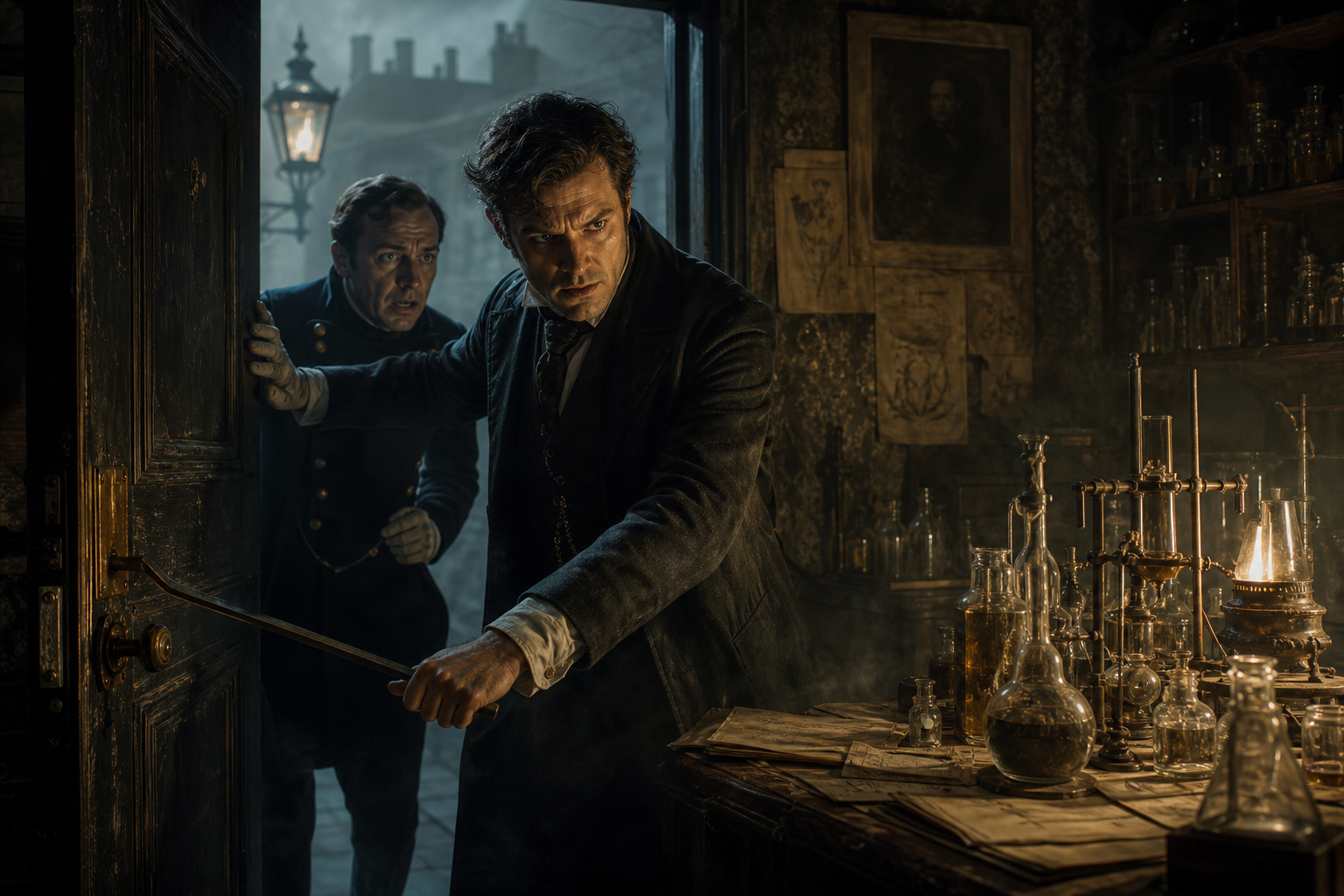
Utterson and Poole decide to break down the laboratory door. This is the moment when discretion fails. Polite waiting, legal caution, and loyalty to privacy can no longer contain the horror. The door that has symbolized secrecy must be physically destroyed.
Inside, they find Hyde dead, apparently by suicide. Jekyll is absent. The physical discovery answers one question while opening another. If Hyde is dead in Jekyll's laboratory, where is Jekyll? The room contains papers, chemical traces, and documents. The mystery shifts from pursuit to reading.
Stevenson controls revelation through documents. Utterson cannot understand the case merely by seeing the room. He must read Lanyon's narrative and Jekyll's confession. The novella's form matters here: truth is delayed, sealed, witnessed, written, and only then interpreted.
7. Lanyon's statement
Lanyon's statement reveals the event that destroyed him. At Jekyll's request, he receives chemicals and waits. Hyde arrives, takes the mixture, and transforms into Jekyll before Lanyon's eyes. The scene is shocking not only because it is supernatural, but because it violates the categories Lanyon uses to understand reality.
Lanyon represents rational certainty. He can accept scientific disagreement, but not the collapse of bodily identity, moral identity, and empirical order in one event. Seeing Hyde become Jekyll breaks more than his friendship. It breaks his world.
For the reader, Lanyon's statement forces a rereading of everything before it. The will, the door, the murder, Jekyll's recovery, the window, and the locked laboratory all change meaning. Hyde was never merely Jekyll's enemy or blackmailer. Hyde was Jekyll's chosen escape from being fully Jekyll.
The final documents also change the detective structure. Utterson has not been uncovering a criminal outside his friend; he has been approaching the hidden logic of his friend's own life. Every locked door becomes psychological as well as architectural. The story's horror is not that Jekyll was attacked by Hyde, but that Jekyll made Hyde necessary and then could no longer contain him.
This is why the novella remains so useful for literary analysis. Its plot is short, but almost every object carries pressure: the will, the cane, the door, the cabinet, the letters, the powders, and the altered handwriting. Each item belongs to the respectable world and the hidden world at the same time. Stevenson builds horror out of evidence that keeps crossing boundaries.
By the time Jekyll's confession arrives, the reader has already seen the social form of the problem. Reputation has delayed truth, science has served denial, and friendship has been limited by discretion. The final revelation names the secret, but the whole plot has shown the culture that made the secret survivable for so long.
8. Ending and final meaningThis section contains spoilers.
Jekyll's final confession explains the whole case. He believed that human beings contain divided impulses, and he wanted to separate them. He did not create Hyde out of ignorance. He created Hyde because he wanted freedom from the burden of a unified moral identity.
At first Hyde seems liberating. Jekyll can act through Hyde without damaging Jekyll's public face. But the experiment changes. Hyde grows stronger, transformations become less voluntary, and Jekyll begins to fear that his respectable self may disappear altogether.
The ending is not simply the defeat of a monster. It is the collapse of Jekyll's fantasy that guilt can be assigned to another self. Hyde dies, but Jekyll's life ends with him because the two were never morally separable. The final horror is not that Jekyll had evil inside him. The horror is that he tried to make that evil weightless.
Major Characters
Dr. Henry Jekyll
respectable physician and divided self
Jekyll is wealthy, admired, intelligent, and morally divided. His experiment begins in a real insight: human beings are not simple. But he turns that insight into an evasion. Rather than live responsibly with mixed impulses, he tries to separate them into different identities.
His tragedy is pride disguised as self-knowledge. He believes he can design a moral arrangement in which reputation remains intact while appetite acts elsewhere. Hyde proves that the self cannot be divided so cleanly. What Jekyll refuses to own returns with greater force.
Edward Hyde
released appetite and moral violence
Hyde is Jekyll's hidden desire given bodily form. He is not merely ugly; he produces moral revulsion. His smallness and deformity suggest a part of Jekyll that has grown in secret without conscience, sympathy, or social restraint.
Hyde begins as release and becomes domination. He matters because he is not an external villain who attacks Jekyll from outside. He is the part of Jekyll that Jekyll wanted to enjoy without acknowledging as himself.
Gabriel Utterson
lawyer, friend, and cautious investigator
Utterson is the novella's main observer. He is loyal, restrained, and careful with evidence. Those qualities make him trustworthy, but they also slow him down. His respect for privacy becomes one reason the truth remains hidden.
He represents the moral habits of respectable society. He wants to protect his friend and avoid scandal, but the case forces him to break through silence. His investigation teaches readers how secrecy survives inside politeness.
Dr. Hastie Lanyon
rational witness destroyed by revelation
Lanyon represents conventional scientific rationality. He distrusts Jekyll's speculative experiments and believes in a more stable order of knowledge. That is why the transformation destroys him.
His death shows that the case is not only criminal but epistemological: it breaks ways of knowing. Lanyon's statement gives the plot its shocking explanation, but it also shows the cost of seeing what a mind is not prepared to contain.
Poole
servant who turns private terror into action
Poole is close enough to Jekyll's household to sense that something has gone terribly wrong. He is not a theorist or investigator, but his fear is practical and accurate.
His decision to seek Utterson's help moves the plot from polite suspicion to physical action. Through Poole, the sealed private horror of the house finally reaches the outside world.
Best Quotes
With every day, and from both sides of my intelligence, the moral and the intellectual, I thus drew steadily nearer to that truth, by whose partial discovery I have been doomed to such a dreadful shipwreck: that man is not truly one, but truly two.
This sentence compresses Jekyll's theory of divided human nature. The insight is not entirely wrong; people do contain conflicting impulses. The fatal mistake is Jekyll's belief that division can remove responsibility.
Ay, it must be that; the ghost of some old sin, the cancer of some concealed disgrace: punishment coming, pede claudo, years after memory has forgotten and self-love condoned the fault.
Utterson's sentence links the mystery to hidden guilt. The novella repeatedly suggests that the past does not vanish when it is concealed. It returns through doors, documents, bodies, and fear.
I bring the life of that unhappy Henry Jekyll to an end.
The confession ends as self-erasure. Jekyll's final words are not a clean victory over Hyde. They mark the collapse of the entire attempt to separate public virtue from private violence.
Major Themes
Duality
The divided self
The novella does not merely say that people contain good and evil. It critiques the fantasy that those sides can be cleanly separated into different moral accounts.
Repression
Repression and return
Jekyll's hidden desires do not disappear when suppressed. They return through Hyde with greater intensity because they have been denied responsibility and discipline.
Society
Respectability as mask
Reputation protects Jekyll for a time. Utterson's caution, Jekyll's status, and gentlemanly privacy all help delay the truth.
Form
Documents and delayed truth
Wills, letters, statements, and confessions control the structure of revelation. The story is about reading evidence as much as witnessing events.
Robert Louis Stevenson and the Victorian Context
Stevenson's novella belongs to a Victorian world of reputation, scientific experimentation, urban secrecy, and moral anxiety. Respectable identity mattered deeply, and the fear of scandal could shape how people spoke, investigated, and remained silent. Jekyll's public standing is therefore not background decoration. It is part of the machinery that lets Hyde exist.
The London setting turns psychology into architecture. Jekyll's respectable front and Hyde's sinister back entrance are attached to the same building. The city itself becomes a map of divided identity: public streets, private laboratories, locked doors, and foggy routes through hidden desire.
The book also reflects anxiety about science without reducing science to evil. Jekyll's experiment is dangerous because knowledge becomes a servant of self-exemption. Stevenson asks what happens when discovery outruns humility and when a person uses intellect to avoid moral accountability.
Why It Still Matters
Today, the novella speaks to compartmentalization. People often divide life into public and private selves, professional and personal selves, online and offline selves. Division is not automatically evil, but it becomes dangerous when one self is used to excuse the other.
Jekyll's error feels modern because he wants the pleasure of separation without the burden of integration. He wants to say, in effect, that Hyde's actions do not fully belong to him. The novella rejects that claim. A hidden self is still a self.
For AP Lit, SAT Reading, IB English, and essay writing, the text is valuable because its plot, symbols, and narrative form are tightly connected. Doors symbolize secrecy, documents shape revelation, Hyde's body carries moral meaning, and the ending forces readers to reinterpret earlier evidence.
Frequently Asked Questions
What is Strange Case of Dr. Jekyll and Mr. Hyde about?
It follows lawyer Gabriel Utterson as he investigates the strange connection between respected Dr. Jekyll and violent Edward Hyde. The plot moves through rumors, legal documents, violence, sealed statements, and a final confession that reveals the relationship between the two figures.
Is Hyde a completely separate person from Jekyll?
No. Hyde is the form Jekyll creates to release desires he does not want attached to his public identity. The novella's central point is that Hyde cannot be morally separated from Jekyll, even when he appears physically distinct.
Why is the novella Gothic?
It uses Gothic elements such as foggy London streets, sinister doors, locked rooms, secret documents, bodily horror, and moral dread. But its deepest Gothic space is not a castle or graveyard. It is Jekyll's divided self.
What should students focus on for essays?
Track repeated symbols like doors, documents, the laboratory, and Hyde's body. Then connect those details to duality, repression, respectability, and responsibility. The strongest essays explain how the delayed narrative structure changes the meaning of earlier scenes.
Read Next
- Frankenstein: science, responsibility, and Gothic consequence.
- The Picture of Dorian Gray: hidden corruption and public beauty.
- Dracula: Victorian fear, secrecy, and bodies under threat.
Adaptations
- 1931 film: fixed a popular visual image of Hyde in early horror cinema.
- Stage and musical adaptations: often center on transformation and double performance.
- Modern crime-psychology versions: frequently adapt the split between public identity and private violence.